


I thought about making these monotone, but I love the subtle blues that come out in photos of snow.
I thought about making these monotone, but I love the subtle blues that come out in photos of snow.
I’ve spent hours this winter shoveling snow, making snowballs, packing snowmen, and pulling a sled. My hands have stayed dry thanks to Fiebing’s Golden Mink Oil.
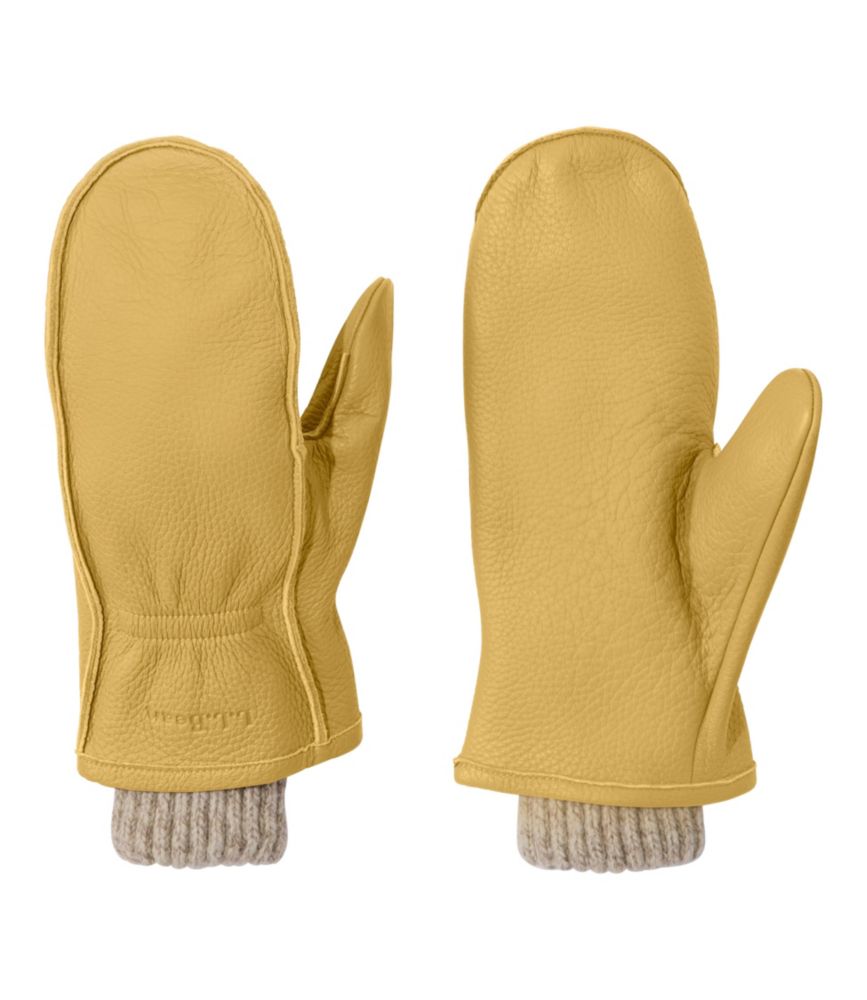
I bought these buckskin gloves a few years ago, but when they are brand new they aren’t waterproof. I needed a solution.
After just one coat of Fiebing’s Golden Mink Oil, these gloves became waterproof, and have held up very well so far this winter. My hands have stayed dry and warm.
The worst they’ve gotten so far this winter was a little damp on the surface after three hours of making a snowman and sledding in wet snow. The inside stayed dry.

I expect these to last a decade with a yearly coat of mink oil. I typically use Sno Seal on my boots, but I’m going to try switching to mink oil for my boots and see how that works for the rest of the season.
Winter Storm Fern ended up dumping 16″ of snow on us in 24 hours. I’m spending much of today digging us and a neighbor out with the fourth round of shoveling. Thankfully we still have power and we didn’t get ice here.
This is the most snow we’ve had at one time in our six years in Peekskill. We’ve had 12″ twice before.


I’m lifting with my legs when shoveling and the snow is powdery, but I’m still tired and sore. It doesn’t help that we all have colds in the house. I’m planning on making some chicken noodle soup this afternoon.
Charlie and I got out yesterday and started on an igloo. If he feels up to it, we might work on it again this afternoon. The temperatures are forecasted to stay below freezing here through at least the next 10 days, so we have plenty of time.


A friend who drives a snow plow sent a great photo of whiteout conditions on the Bear Mountain Bridge yesterday afternoon:

Update a couple hours later:
Little boys can’t resist a huge snow mound.


Some backyard play:


Charlie is a helper:


This week I planned on making some green lentils in mujadara for my weekly bean dish, but with the blizzard, we needed some hearty stew. I found this recipe in the Rancho Gordo Heirloom Bean Guide.
On the blizzard: Just before eating this, I measured 11 inches of snow. We have at least 3 more inches forecast. Charlie and I shoveled three times today and we’ll need to shovel again tomorrow.


The Christmas Lima beans are beautiful. I’m glad the recipe only takes half a bag so I can make it again!

I can’t find the recipe online to link to, so here it is:

I decided to pre-soak the beans even though this recipe didn’t call for it. It made the cooking a bit quicker.
I’m a fan of fennel. Nice to use it in this dish. For the carrots and celery, Amanda and Charlie chopped and froze and a bunch of packs from the CSA over the summer, so I used one that had leek in it, too.
Don’t skip the Parmesan rind. It was an excellent addition. Don’t toss them, save your rinds for soup!
Serve with some crusty bread and hot sauce.

I liked this recipe. It was easy to make and delicious. It only makes 4 servings, so to feed more or have leftovers you’ll have to double it. The beans held their shape in the finished dish.
We’ll definitely make this one again!
This week in Slack, Matt encouraged us to visit a museum for a couple hours during the work day.
We live ~30 minutes from Dia:Beacon, which I visited twice even before we moved here.
I messaged a couple coworkers who live in the area to see if they were free and wanted to join me. Automattic is a remote company, so I haven’t met the majority of my coworkers in person, only virtually. Ben Janes joined me and had heard great things about the new Tehching Hsieh exhibit.

It didn’t disappoint.
Tehching Hsieh is a performance artist, best known for his year-long performances of locking himself in a cell, punching a time clock hourly, living completely outside, being tethered to someone but unable to touch, and eschewing all art.
I’m not usually into performance art, but the way the projects were displayed at this exhibition made me reconsider.
In the prison cell gallery, I was drawn in by seeing the actual wooden cell, bed, and bucket, and imagining what daily life must have been like.
In the time clock gallery, I was delighted that you could see the pattern of missed hours by looking at the bottom of the rows. It might have been even more striking if they placed the empty spaced where the missed hours were, seeing blanks at random spaces around the room. Did he have an uberman sleep schedule or just a good alarm?
I was also captured by the timelapse video of the snapshots and seeing the timestamps work their way up the cards behind him. The pile of ~5280 chads was neat, too.


In the outdoor gallery, I couldn’t stop thinking about how difficult it must have been to take care of private things outdoors. I loved the maps he recorded daily, a forebearer to Foursquare and Strava.

In the tether gallery, I was less interested in the daily recordings and more deep in thought about the psychological consequences of the lack of physical contact, despite the proximity.
In the no art gallery, the emptiness made sense, but the artist statement sheet having the colors inverted was a nice touch.
The 13 years of private art gallery being the long empty gallery was nice as well.
At the end, I loved the visualization of the timeline, to scale by the day, of Hsieh’s performance art between 1978 and 1999. It put the galleries in perspective.
In all, a really well done exhibition that will stick in my mind for a long time, alongside the Sol LeWitt retrospective at MASSMoCA, the Matisse paper cuts exhibition a MoMA, and the Picasso museum in Malaga.
While at Dia:Beacon, I couldn’t help but walk though the Richard Serra pieces again. My favorite.


While I walked through them, there was a mother, grandfather, and a 3 year old in the space, too. The 3 year old was joyfully listening to her shouts echo, which reminded me of when I took Charlie there in 2022, when he was 9 months old, and he enjoyed listening to his little “ah!”s echos, too.

I also liked some aspects of the Renée Green exhibition, primarily around color assignments.

I love hand drawn maps.
I’ve been digging through old guidebooks looking for trout fishing spots, and two of them have hand drawn stream maps, complete with names of specific pools, runs, eddies, and points of interest. Newer digital maps, often based on state GIS data or Google Maps, are great for easy mobile access, but I haven’t come across any with the local knowledge marked on them. I’m thinking about photocopying and laminating some of these to keep in my bag.


A good legend is always a plus.

Another good one from a used bookstore here in Peekskill:

While on the topic of books, I remembered that early editions of The Hobbit included Tolkien’s map of Wilderland inside the cover:

Simple line drawings are my favorite style, but colorful ones are nice, too. Here is one my friend Erin made of her garden.

These have inspired me to sketch a map of our local woods with our specific points of interest: Charlie’s bridge, the big bridge, the tree where the raccoon family lives, where we usually find crawfish and frogs, the top of Blue Mountain, the sledding hill, One Dead Tree (where we think at least one Pileated woodpecker lives), the old rock walls, etc.
As part of my goal for this year to get back into photography, I charged my SLR’s batteries and went on a photo walk in the woods after a big snow.
I gave myself the theme of “cozy places” that small woodland creatures might hole up during the storm.


I couldn’t help but take a photo of the bridge that Charlie and I love:

And the creek:

Along the way I ran into a few mountain bikers and their well-trained pup:


And then a neighbor’s pup:

The goal was to help train my eye for noticing and framing again. I’m definitely rusty, but I like how some of these turned out. I need to make taking my camera out with me a habit again. As the deep freeze continues this week and next, I’m hoping to get some photos of river ice.
One of the things going around on Instagram right now is people making ice cream out in the snow. It sounded fun, so I pitched the idea to Charlie. I didn’t have to ask him twice!
To speed up the process, I opted for a recipe that didn’t involve adding eggs and heating everything up on the stove. Simple is the key, as things like this are more about the activity than the outcome.
I tossed the ingredients (heavy cream, powered sugar, vanilla) in a quart container and grabbed one of the metal mixing bowls while Amanda helped Charlie get his snow gear on, then we headed outside.

It took a lot of whisking and longer to freeze and thicken up than I expected, and certainly longer than the standard four year old has in them, so we took breaks to play in the fort and taste the icicles.

Eventually Charlie got cold and we went back inside. I moved the bowl up to the porch to keep freezing while I made dinner. I went out and whisked every 15 minutes or so.
By the time we ate dinner, it had set up nicely.


Admittedly, it tasted more like frozen whipped cream than ice cream, but Charlie was jazzed to share a dessert that we made together out in the snow. He put rainbow sprinkles on his, Amanda put peanut butter and chocolate on hers, and I put chocolate on mine.
Perhaps in a couple years we’ll try it again with a frozen custard recipe.
Still, it was fun, novel, and a good way to do something together. If you have a young one at home and snow on the ground, give it a try.

Life was busy in late September/early October when the habaneros in our garden ripened, and I didn’t have the gumption to make a batch of hot sauce out of them. Charlie and I bagged them up and froze them instead.

We ended up with ~60 orange and red habanero peppers, about twice as many as last year.

Fast forward to January, when I was making the chili on Saturday, I decided to cook down the peppers into sauce while I had to keep an eye on the simmering beans and chili.
This recipe from Rick Bayliss is my go-to. I change the proportions a bit, and this time around I made roughly a 5x batch.
I cooked the ingredients down, pureed it, then set the bowl out in the snow for a bit to cool.


I ended up with almost 2 quarts, which is roughly 12 5oz bottles.

After I bottled it, Amanda had a great idea. We’ve been saving the wax from the Babybel cheese that Charlie likes to eat for almost a year. The glass jar we store the wax in is now full, and she’s been interested in melting it down to use in some projects. She thought it would be cool to seal the bottles with wax, too. Great idea!
I melted it down and gave it a test dip.


It worked, and Charlie wanted to help, too. He dipped about half of the bottles.

I poured the rest of the wax into silicone cube trays to save for future projects.

Now, back to the hot sauce. It has a nice kick, a bit of fruitiness from the habaneros, and a noticeable but not overwhelming amount of garlic. It will be a good everyday house sauce, just like last year’s batch.
Compared to last year’s batch, this year’s is a bit deeper reddish orange and thicker. Favor-wise they are very similar. I used the same recipe.
The snow is still piled up on our deck railing, so I thought it would be fun to pull out the SLR and take a photo:

It snowed here all weekend. It is hard to tell exactly how much we got because Saturday the snow was fluffy and the wet, heavy snow on Sunday compressed it. There’s six inches on the porch railing as I write this, and it is still snowing.
Charlie and I spent a few hours playing out in the snow. We built a snowman, packed snow on his slide to make a sled ramp, and went sledding in the woods.


Oh, we shoveled four times. Charlie is getting pretty good at clearing the sidewalk.

When we came in for a break, Amanda made us hot chocolate (Charlie’s favorite!). I’ve started mixing a tablespoon of instant espresso into mine.
You’ve probably seen the Instagram trend of posting selfies from 2016. Here are some of mine.


Visiting the Sol LeWitt Retrospective at MASSMoCA. I spent hours in this building taking notes on the wall drawings. LeWitt is my favorite artist and this retrospective is well worth your time if you like his work, too.


Taking photos at Point Reyes.

Taking photos at Yosemite.

Amanda on the Mist trail at Yosemite.

Untermeyer Gardens in Yonkers.

Taking photos of coffee beans, with the help of a lovely assistant.


Amanda and I picnicking and watching a play at Boscobel, then a couple months later apple picking at Wilkins. Little did we know that four years later we’d move a few miles down the road from Wilkins. Ten years later we’d be driving past Boscobel every day taking our son to school.

In the summer of 2016, I drove coast to coast with my parents. I took pano-selfies along the way.
I can’t believe I thought that beard length looked good.
Looking back at my blog posts from 2016, it was a year of creativity and learning. I hope 2026 holds more of the same.
Three of my favorite photos I took that year, which are helping inspire me to dust off my SLR and start taking photos again:

Nevada Falls at Yosemite.

The national seashore at Point Reyes.

Golden hour at Point Reyes.
This week’s bean dish was chili with vaquero beans. My original plan for this week was a lentil dish, but after rummaging around in the basement freezer, I realized we had tomatoes, tomato paste, and beef, so a nice hearty bowl of chili came to mind. Perfect for today’s snowstorm, which dropped four inches of snow on us.

I used a conglomeration of three recipes: This one from Rancho Gordo, my mom’s, and this one from Serious Eats.
It had:
I liked the vaquero beans. They have great coloring, which they retain even after cooking. They also mostly retain their shape. They I soaked the beans for about 6 hours before cooking them, which sped up the cooking time.

A few thoughts on the chili:
I prefer Fritos with my chili:

I rarely make the same recipe twice. I can’t resist riffing on it and adapting to what we have on-hand. That said, there are elements of this I’d use in a future batch. I only make chili once a year or so. Perhaps I should make it more.
The hard part isn’t learning the finer points of prompt engineering, how to set up and use agents, or how to connect the right systems for necessary context.
The hard part is choosing when using AI is appropriate and when it isn’t. Choosing which output is acceptable and which isn’t. Choosing what to work on with this new tool at your disposal. Choosing when you need to lean in to doing things the slow, hard, old fashioned way or the new, fast, easy way. Choosing, then owning your decision.
In short, the hard part is discernment. It always has been. AI has only changed the calculus.
We are all figuring this out while the boat sails across the open ocean, picking up speed.
An email went out to the Shopsmith mailing list last night saying that they are under new ownership. Here is a link to the browser version of the email from Mailchimp.
TL;dr:
This is good news! Their website hasn’t been updated yet, but I bet that will happen soon.
Here’s a video with the new CEO:
I’m hoping for more access to discontinued parts and accessories, videos on how to maintain and upgrade old machines (mine is 50 years old!), and new tools/parts/accessories to upgrade old machines like mine to keep them going for another 50 years.
Tonight I went out to one of our local Trout Unlimited chapter’s monthly fly tying nights. Always nice to get out and tie together with some folks for a couple hours!
We had a couple new fly tyers come tonight, so I demo’d two simple patterns for beginners that fish well in the winter: Utah Killer Bugs and Eggs.

Both are simple patterns that only take two materials (wire and yarn, or a bead and egg yarn) plus thread and allow you to practice the basics: Tying materials on with thread, keeping tension as you wrap both thread and yarn, and whip finishing.
If you are just starting out and want to try these patterns, here are the two videos where I originally learned to tie them:
The only differences with the egg are that I opted to use orange EZ Egg yarn because the wild trout in our watershed are primarily brown trout (their eggs are orange), and I decided not to tie a hotspot to keep things simple. Once you have the basics down, then you can add more to it.
Here is tonight’s crew (minus me taking the photo) hard at work:

After tying a few killer bugs, the two beginners were getting the hang of it. We only had time to tie one egg together, but their first attempt was decent enough to fish. They are quick learners. I sent them home with some extra yarn for both killer bugs and eggs so they can practice some more.
This week’s bean dish was a gratin made with cassoulet beans, fennel bulb, onion, garlic, thyme, and breadcrumbs. Recipe from Rancho Gordo, which I’m sure you read about in the WSJ this weekend.


Amanda and I both loved it. Charlie wouldn’t try it, but he was very curious about what fennel bulb is, how beans grow, and whether or not they are seeds. I’ll take it.
The dish came together quickly since I had cooked beans in the fridge already from the weekend. I cooked a full pound of cassoulets for the cauliflower dish, which was essentially a double batch. Cooking dried beans is the most time consuming part.
When I went to cook this, I discovered that we didn’t have any breadcrumbs on-hand. I thought we had a bag of panko, but I was wrong. What we did have was a large open bag of plain pita chips, so I turned those into crumbs in the food processor.
I served this with Italian sausage links, a simple side salad, and a white wine from Côtes de Provence.
Both the fennel bulb and thyme gave it a great flavor. Even though this had the same base bean as the cauliflower dish, Amanda strongly preferred this one.
I’ll certainly make this again. It is a great way to use extra cooked beans. I think it would also make a nice side at Thanksgiving. I’ll keep it in mind for this November.
What’s next? I’m thinking something with lentils. I have some French-style green lentils on-hand. Maybe Mujadara if I have the time to be adventurous, or lentil soup with sausage and kale if not.
Henrique commented on my “Just hit publish” post with:
As a designer, I feel that the Post Featured Image blocks me from writing much more than ‘normal’ people would think. I need time to conceive and prepare it—which makes quick daily posts impossible. Maybe I should review my blog template and get rid of them as a test to blog more.
I agree! I think I dropped my post template’s reliance on a featured image in 2021, when I noticed that coming up with an image was getting in the way of just hitting publish.
I still have featured images in some posts, but my post template works with or without them. Archive templates, too. The Site Editor makes this easy…if there is a featured image it populates, but if not no placeholder or markup gets loaded. I often have featured image on project-type posts like my woodworking, but the majority of my posts do not have one. This is a big difference from 10 years ago when every post had a featured image.
While we are on the topic of optional features of posts, I also think titles are optional. You don’t need titles on Twitter, Bluesky, or Mastodon, so why do you need them on your blog?
My standard post type does use titles, but my Micro and Likes post types do not. I like separating my streams of content that way, but that is personal preference.
It is worth noting that ma.tt and scripting.com both treat titles as optional. Featured images, too.
This week’s bean dish was cauliflower with cassoulet beans and capers.

I really enjoyed the smoky tanginess that the sherry vinegar + smoked paprika added to the dish. I served this as our main side with a pork tenderloin.
This was tasty enough to make again, but probably not going into the standard rotation. I’ll keep it in my back pocket for that late summer period where we get cauliflower every week in the veggie share and need to change it up.
The recipe made enough that we have leftovers, so it will be an easy side for tomorrow’s dinner. I cooked a whole pound of cassoulet beans, but only needed half of that for this dish, so I’m thinking of using the other half in a gratin on Monday.
Cheers! 🫘
Non-fiction
Fiction
What are you reading this month?
Blog posts don’t have to be Atlantic-style essays, ground-breaking ideas, or heavily researched. Not everything has to be epic or viral. You can post whatever you want, whenever you want. Keep it low friction and hit Publish. Personal blogs are meant to be low stakes.
Some ideas:
Don’t overthink it or get caught up in what other people might think of your post.
Just hit publish.
Social networks are walled gardens. They are closed networks that restrict how users interact, what they see, and how data flows.
Outside of the walls is the blogosphere. It is diverse and distributed.
If the web is Westeros, social platforms are the Seven Kingdoms, run by mad kings from their Iron Thrones, and the blogosphere is Beyond the Wall. Free folk, wildlings. There are clans that sometimes fight each other and othertimes unite against common enemies.
Just as modern Westeros has some of its roots beyond the wall at Fist of the First Men, the modern Web has some of its roots in the blogosphere.
The Seven Kingdoms (social networks), though at times opulent and tempting, are feudal and exploitative. No place for free folk (bloggers and creators) to live.
Facebook is where you post stuff you are okay with your great aunt commenting on. Instagram is where you post pictures of your family, the meal you cooked, and where you went on vacation. Twitter is where you post hot takes. TikTok is where you post dance videos. LinkedIn is where you make stuff up about your job.
Your blog is where you can be you. You post what you want, when you want. Algorithms and mad king tech overlords be damned.
Like Virginia Woolf said, if you want to create art you need a room of your own. On the web that is your blog, at your own domain name. (h/t Joan).
To keep the Game of Thrones references going, I’ll misquote Mance Rayder:
“The freedom to
makepost my own mistakes was all I ever wanted.” – Mance Rayder.
The blogosphere is where creativity, individuality, and diversity thrive on the web.
Others have already said it better, so I’m going to do what we do here on the open web and link to them: Blogging is punk rock. A personal website is an act of rebellion. The IndieWeb is for everyone. Blogging is an investment in the future of the web. Blogging is infrastructure for thinking. Digital homesteading. Innovation. Discourse.
People keep claiming blogging is dead. To that I say, “You know nothing, Jon Snow.” Inside the Seven Kingdoms you are blind to the world Beyond the Wall. Out here we are living and blogging. Every day my feed reader is full of new interesting blog posts. Some times it is harder to blog than others, but we keep at it.
Check ooh.directory or blogroll.org for examples.
Blogging is very much alive, though it is constantly under threat, just as the web overall is. Some of the threats come from the nature of the closed social networks themselves, Other threats are from government overreach and censorship in some countries, AI, and centralized infrastructure like AWS and Cloudflare.
Where do we go from here?
Hodor! Hold the door against the things that threaten our independent blogosphere and the web in general: Closed networks, billionaires who want to own your content and attention, and AI White Walkers.
We need open standards, better independent blogging tools, and people willing to use them. People willing to step outside the closed networks and post on their own domain.
Unlike Westeros, there’s no Arya Stark in the blogosphere to save the open web. It is up to each of us. Keep blogging. Keep linking. Keep reading feeds. Encourage others to keep blogging, too. The open web depends on it.
Don’t have a blog yet? Set one up with WordPress or Micro.blog. Email me and I’ll help.
See also: Why blog?
Earlier this year I started noticing some runout on the spindle of my 50 year old Shopsmith Mark V. I did some reading about my specific model and came to two conclusions:
Replacing the bearing is straightforward. Alex’s Shopsmith Repair sells them and with a few tools you can replace it yourself.
What I also learned is a bit trickier: Replacing the single bearing might solve some of the problem, but won’t solve the entire problem. Later versions of the Shopsmith shipped with double bearing quills, adding a second bearing to further support the spindle. The spindle on the single bearing quill is still supported by the drive sleeve, but there is a bit of give there, which contributes to the runout.
The rabbit hole gets a bit deeper. It turns out that Shopsmith made many different kinds of quills. Everett Davis wrote an incredible guide to all the different kinds of bearings in 2017, which includes details about the different kinds of quills. I’ve reposted that here in its entirety:
To be certain what kind I had, Charlie and I pulled my quill out and took it apart. Looks like a 1970s single bearing quill, which matches with my machine’s serial number.


One design flaw of the double bearing quills that Shopsmith started shipping in 1984 is that the spindle changed from a single piece of machined steel to a two-piece spindle pinned together. According to James, this is prone to bending. Also, with the two bearings being so close together and the back one being smaller, the back one wears out faster, again causing runout.
So do you choose a single bearing quill and the runout, or a double bearing quill and risk bending it when doing heavy, unbalanced turning?
At first I chose the two-piece double bearing quill since I try to balance out my work pieces as much as possible. Then Shopsmith went out of business before they shipped it to me (and closed down all customer service avenues). I eventually got my money back through a chargeback, then went hunting for alternatives.
I was going to just order new bearings, change them myself, and live with it, until I came across this video from Skip Campbell:
Skip takes the one-piece spindle single bearing quills and machines them to fit a second bearing on the back. Great idea! Best of both worlds—same-sized bearings spaced far apart on a single-piece spindle. I ordered one from him at MKC tools.
Here it is where you can see the rear bearing and the

I put it in my machine and turned a small bowl. It works like a dream. No runout, and no chatter unless I’m using my bowl gouge incorrectly. With the old one the runout caused chatter even with light cuts.
Now that Shopsmith is shut down, I’m sourcing backups of critical non-standard parts, so I’m going to reach out to Skip and see if he’ll machine my original quill to fit a second bearing so I have a replacement. I’d love for this machine to last another 50 years.
This weekend a friend texted me a screenshot of a Pinterest link his wife sent to him.

It was a link to my climbing wall post. She wants him to build one for their son. He recognized Charlie and my blog right away. Someone had pinned it and it gets a decent amount of traffic.
In a nutshell, that is why I blog. It warms my heart that people are building swing sets and climbing walls for their kids after reading one of my posts. I know of at least eight swing sets built from my post, and I assume there are more based on how many views the post series gets.
I share things on this blog in an attempt to inspire others to share things on their blogs, too. I often get ideas from the blogging community for things to read, projects to make, dishes to cook, and places to go. Sometimes this sparks conversations in person, too!
I also blog things for future me. I am probably the single most frequent consumer of my old posts. I could keep it all buried away in Obsidian or Evernote, but I like sharing it.
I’d love if you shared the things you make, read, and do, too. Preferably on your own blog instead of locked inside a walled garden (Facebook, Instagram, etc.) When you do, send me a link. I’d love to read it.
I also blogged about blogging a couple years ago in Why Blog?.
One of the things I want to do in 2026 is to cook more beans. It occurred to me a few nights ago that I should try to make at least one bean dish each week.
I started on January 2 with a chicken, wild rice, and black eyed pea soup.
Here are some more ideas:
What else should I make? Please send me your favorite bean dishes!
For the past three years, we’ve started the new year by going for a walk in the woods to collect pinecones and make a little treat for the birds. We roll them in peanut butter and birdseed, then go back out the next day and leave them on logs, tree stumps, and branches for the birds.
It has become an accidental tradition and a fun way to start out the year by being out in nature, doing something together as a family, and being kind to the wild birds we enjoy watching in the woods.
Collecting:


Making:


Distributing:


While both collecting and distributing, we were fortunate to see the resident pileated woodpeckers hard at work hunting for bugs. The seed mix we used included sunflower seeds and peanuts, and we stuck a few pinecones in their trademark oval holes, so we hope they found them and had a snack.