We ended a long, challenging weekend of potty training on a high note and felt pretty confident about Charlie telling us when he needed to go to the bathroom and holding it until we got there. Then we hit a wall because Charlie refused to use the potty at daycare. They only have regular sized toilets there with inserts, and we trained him on a tiny toddler-sized toilet. He was so thrown off by having to use a big toilet that we are back to square one, using diapers and regrouping until we can get another three-day weekend to try again.
Then the next day we got hit by COVID after successfully avoiding it for three years. It was surreal seeing a positive test after having seen so many negative ones.
Charlie and Amanda got pretty mild cases and mine was the worst of the house. I had fevers, vomiting, chills, sweating, and intense headaches for three days. That finally stopped by the middle of the third day, but the sore throat, cough, and fatigue are still here. Amanda’s developed into a chest cough. I break out in a sweat whenever I try to do anything physical.
Taking care of a toddler who is at full energy while you have Covid is quite challenging.
Wildlife relocation count: Three groundhogs, two skunks. One groundhog eludes us.
We had a nice Friday night. We went to the local used book store and Charlie showed some real interest in browsing for books there. Then we ate outside at the new Gaucho’s Steakhouse, which was pretty good. N. Division St gets closed off Thursday-Saturday nights and all the restaurants on the street put out tables and hire local musicians. Charlie loved the live music.
I don’t think we’ll be going out to eat much this winter. Charlie is in a stage where he does not like to sit in one place in a restaurant, and if he can’t get down and move he starts to get loud. That is more acceptable outdoors at picnic tables than indoors, and since it is starting to cool down, it might be takeout only for us for a while.
Christie WrightArchived Link convinced me to carry a tourniquet in the car. She recommends this Bleeding Control Kit from SAM. I ordered one for the car and one for my workshop, the two places I’m most likely to be around an accident that causes severe blood loss.
This was part of a conversation about what we travel with that is non-standard. Blog post about that coming soon.
Our tomatoes are almost done for the season. I picked the second to last batch of Firmino plum tomatoes on Saturday and made a small batch of pizza sauce that I really liked, based on this Detroit-style sauce recipe. Now that I know we like it, I’m going to make a bigger batch to freeze in 4-pizza quantities (roughly 3 cups each).
The tomatillos are still trucking along! They tend to keep growing until the first frost.
Looks like it is time to switch these garden beds to ground-level raised beds. The posts rotted out. I knew it would happen eventually, but I thought I had another year or two. I thought the plywood would go first. Oh well. Ground-level will mean easier access for Charlie, too, and he loves helping with the garden. I’ll have to make the fencing easily removable. I’ll probably do that this fall after the first frost, and make sure I have enough time to get some garlic planted.
We decided to start potty training Charlie this weekend. As I write this we are halfway through day two. We are making progress and cleaning up fewer messes on day two, but holding in our poop. All three of us are pretty tired, but staying calm and sticking with it. We are hopeful that by Tuesday he’ll have the hang of it.
New app I’m enjoying: Texts.com, an inbox for all of your messaging apps. Been using it all week and am not looking back.
This week I kicked some home projects I’ve been neglecting into high gear.
Scheduled a quote for spray foam insulation in our two attic spaces
Had someone come out and get rid of our groundhogs
Scheduled someone to come out and do some maintenance on our boiler
Had our pile of tree limbs removed
Picked up what I need to fix the tile in our bathroom
Picked up what I need to replace the broken piece of flooring in the basement
Next up on the agenda:
Get a quote on installing a sump pump + radon mitigation system
Buying water sensors for the basement and under the sink. Probably going with YoLink once they have another sale.
Decide whether we want to replace the fence now or in the spring. Leaning toward the spring.
Charlie updates:
He is singing a lot more and making specific song requests for us to listen to in the car. They sometimes come out of left field and it is fun.
He is recognizing more letters and numbers by sight and saying what they are.
He is getting potty curious, so we think it is time to start potty training in the next couple weeks before this window closes.
He is doing a lot more imaginative play, such as pretending he is a bus driver or a chicken, or making some Duplo figures act out something, and building his Duplos a lot more in general.
Puzzles that were tough for him 6 months ago are a breeze now.
He got invited to a birthday party on Friday and it was fun to see him play with other kids. His friend Lorenzo ran up, grabbed Charlie’s hand, and they ran off to play.
He is more independent on the playground now and doesn’t feel the need to stick close to us.
I didn’t take many photos this week. I was busy at work getting caught up from being out for a week, and it was very hot here all week (weather station reported a high of 101.2F/38.44C), but I did take a couple. Here they are:
Most of our plans for the weekend fell through because of the rain. Bummer.
If your name is Dave Wasmer and you are still reading this, here is your reminder to start your weekly post 😄
Here is how I generally do mine:
Take notes throughout the week in my favorite notetaking app. Just a couple bullet points as I think of them.
Look through the photos I took that week and new bookmarks I made that week for inspiration.
Don’t proofread or stress about it. Just press post once I’m done.
I write them while Charlie is sleeping, either naptime or after bedtime.
In fact, I hear Charlie waking up from his nap, so it is time to press Publish on this and close my laptop 👋
As mentioned at the end of the last post, we spent the week in Cape Cod for an end-of-summer getaway. We had a great time.
The summer season was winding down, so the Cape wasn’t very busy, but almost everything was still open. We went once a couple years ago in late autumn and found summer to be a completely different vibe.
We stayed on West Yarmouth in an Airbnb next to a so-called cranberry bog (I went hiking in there and didn’t see a single cranberry bush) with lots of rabbits and turkeys as neighbors.
Some things we enjoyed:
Whale Watching! We went with https://whales.net (what a great domain!) and saw a bunch of humpback and minke whales. We even saw a breach!
Beaches
Mayflower – Bay side. Restrooms, lots of parking, big beach to explore.
Skaket – Bay side. Incredible tide pools and grassy mud flats with razor clams.
Chatham Lighthouse Beach – Nice beach to walk, lots of sand dunes, Atlantic side, but protected by some small outer islands.
Coast Guard – Atlantic side. Lots of surf, seals, and sand dunes. Very limited parking.
Race Point – Atlantic side. Lots of sea birds, seals, and sand dunes.
Restaurants
Sesuit Harbor Cafe – I really liked the stuffed quahog, Amanda liked the shrimp.
Captain Frosty’s – According to my friend (and former chef) Eric, this has the best fried food around.
Mac’s in WellfleetArchived Link. We tried to get into the main restaurant, but the wait was an hour long and we had a cranky toddler, so we went down the road to the place on the pier. Amanda and I shared a dozen Wellfleet oysters, then Amanda had a lobster and I had a pulled pork sandwich.
Cape and Island Distillers – Amanda liked their canned Sippewissett Gin & Tonic and I liked their canned Shark Bite Rum Punch. When you don’t have time or space for mixers and a shaker, canned cocktails are convenient.
Double Dragon Inn – This looks like a regular Chinese restaurant on the outside, but they have an old-school tiki bar inside serving up things like Zombies, Scorpion Bowls, Fog Cutters, and Navy Grogs. We had to go. We shared a Scorpion Bowl, the service was great, and the food was pretty standard Americanized Chinese food.
One thing we learned on this trip: For the next couple years, eating outdoors at picnic tables is much more our speed with a toddler.
It seems like the dockside places are all BYOB, which I wish we had figured out sooner. Everyone seemed to carry in a cooler and pull out their own drinks. Now we know.
Lighthouses
Chatham Light
Highland Light
Nauset Light
Sandy Neck Light
Signs
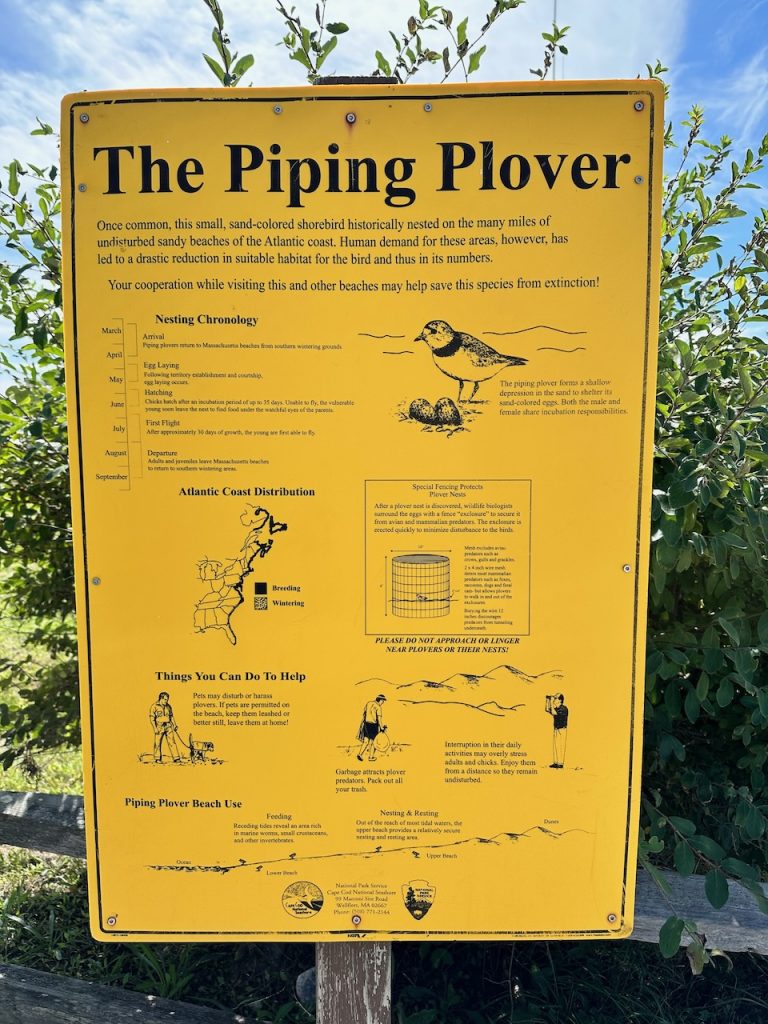
I love informational signs. There were some good ones in Cape Cod.
On the way back home on Friday we stopped for lunch in Providence, RI, to visit one of my teammates, Nate Allen. We also stopped in Danbury to eat at Frank Pepe’s (IYKYK) and shop at Stew Leonard’s (again, IYKYK).
Labor Day Weekend
Amanda and I both had things we wanted to do with friends on Saturday, so she hung out with Charlie in the morning while I went kayaking with my friend Jeremy Wall (we saw an eagle on Iona Island!), and I hung out with Charlie in the afternoon while she went to see the Barbie movie with Kristin Richer. Charlie and I cut the grass, rode bikes, fixed the screen door and Amanda’s bike handlebars, picked tomatoes, played on the swingset, and ate leftover pizza. You know, cool dude stuff.
Sunday we went grocery shopping, Amanda went horseback riding, then went to a friends’ house for an end of summer party. We all had a pretty good time.
Monday we hung around the house. I cleaned out the fridge and did laundry, we all picked up the house, and then I made some ribs on the grill for dinner. I used this quick method from Meathead, which I think turned out great. They had a bit of bite left in them, which I like, but Amanda prefers them a little more fall-off-the-bone, so I might cook them longer next time, or finish hers in the oven.
I also decided to replace the built-in soap dispenser with a glass rinser hooked up to the hot water line. It is awesome. $25 on Amazon.
Unfortunately I made a stupid mistake while replacing it and got sprayed with 5 gallons of hot water while frantically running around to find a towel and trying to turn the hot water shut-off completely off. What a mess. I thought I had checked it, but in retrospect I must have only checked the cold water on the single-handle faucet. That is a mistake I won’t make again.
This week it is back to work. The weather looks like a scorcher all week, so I made cold brew and have some easy dinner plans like taco salads and grilled chicken.
One cool thing that happened this week is one of my photos was selected to be in a special gallery at WordCamp US! I didn’t go this year, but some friends sent me photos. My photo is the one of the sheep, which I took in 2018. It was used in as a sign for a conference room, too.
Not much I can talk about from work this week other than I have a much better understanding of WordPress Multisite and I’ve been thinking a lot about link checkers. Hopefully I can point to some public announcements soon.
On Tuesday Charlie and I met our friend Dave and his daughter Lianella (one of Charlie’s friends from daycare) for dinner and some playtime down by the waterfront. To everyone’s relief, both kids were happily playing together and seemed to enjoy the outing. They shared well together, giggled a lot, and even carried on their own little conversation. Cool to see. It was nice to hang out with another Dad and let the kids play. We’ll definitely do it again soon.
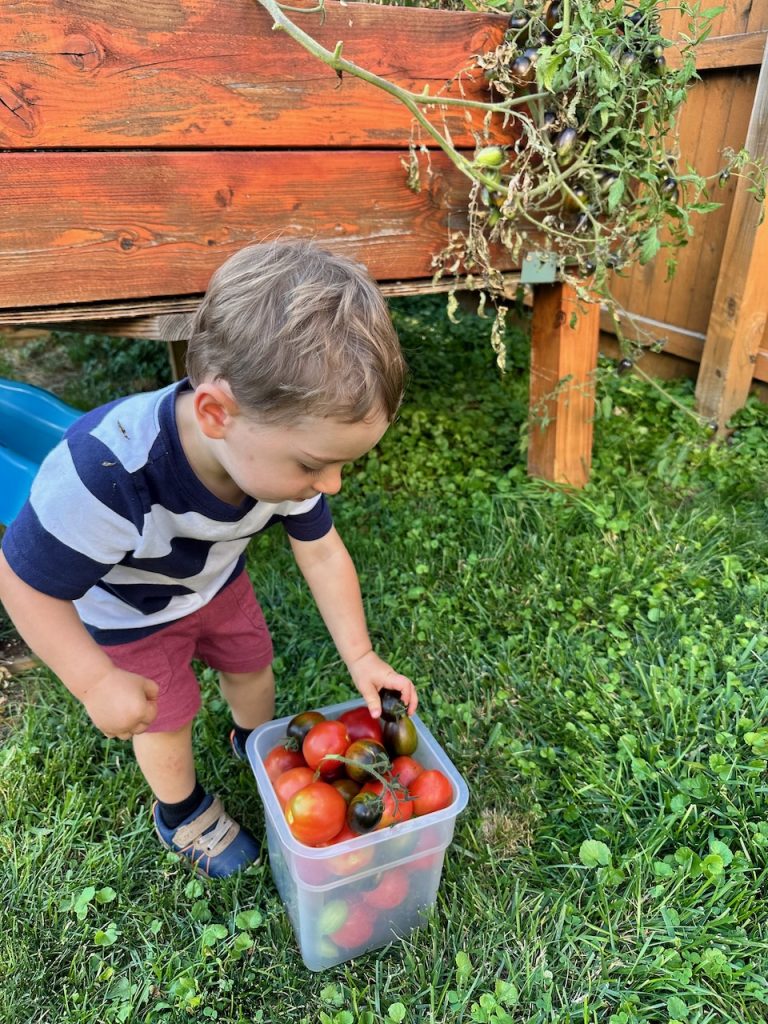
Charlie helped pick a lot of tomatoes this week, then helped us wash and freeze them. I have plans to make sauce once it cools down. He bit into them with gusto again this year. He has grown so much since this time last year!
While peeling the Firmino tomatoes after Charlie went to bed, I discovered the joys of the Sherry Cobbler. It is delicious, low abv, easy to make, and adaptable to whatever fruit is in season.
Charlie also helped Amanda make a galette. Galettes have become a go-to for us because they are faster and easier to make than pies and taste just as good. This one was blackberry peach.
Though I haven’t carved much recently, I reconnected with two carving friends, Julia and Fahd, who came to pick up some of the cherry wood from my fallen limb. Also, I got Emmet van Driesche‘s new book in the mail, Greenwood Spoon Carving.
We saw two frogs this week, both of which I think are gray treefrogs. In our four years of living here, I had only seen one other, but this week spoiled me. Charlie was pretty excited about seeing them, too.
On Saturday we left for Cape Cod. We are staying in this cute little cottage next to a cranberry bog and spending as much time as we can at the beach this coming week 🏖️
I’ve been working with and thinking about broken link checkers a lot lately. Here are some thoughts on what features link checkers should have, open questions, and what to do with broken links once you find them.
Features that should be standard, but aren’t
Link checkers should ignore share links.
Share links are pervasive on blogs and news sites. They show as links on a page, but I don’t consider them “real” links. They work to submit the page to the service and nothing else. Identify them and skip them.
Link checkers should ignore robots.txt on the sites they check.
Twitter blocks most broken link checkers. Every Twitter URL on every site I’ve checked comes back as broken, and upon further investigation they are almost always working.
Link checkers should follow redirects.
Redirects are valid, functioning links!
Link checkers should have robust support for services like YouTube and Vimeo.
Videos that appear missing on those services still return 200 status codes when checked, along with a message in the HTML that the video is not found. Most broken link checkers show those as false negatives.
Open questions
Should we ignore comments? Most commenting systems allow links and also tend to link back to the comment author’s site. Those tend to be a significant source of broken links. Should those be left alone because they aren’t the site’s content, but rather user-generated content?
What to do with the broken links once you find them?
I’m against changing historical content in a damaging way, so I do not support changing links.
I do support appending additional helpful information, such as a link to a working version of the broken link on the Wayback Machine in a format like this: Old link text with broken link (archive.org link)
We took Charlie out in the guideboat on Lake Sebago in Harriman State Park for the first time on Saturday and he had a blast. We did, too. Charlie loved rowing, did pretty well in the boat, was excited about his lifejacket, and was excited to catch a fish. I think we’ll be spending a lot of summers there.
My cartop carrying methods for the guideboat continue to evolve. I cut a 2×4 and wrapped the ends with the drawer liner we had laying around and I now rest the boat on that before strapping it down. It is a more stable base for the wide boat than the factory crossbars.
Next I need to figure out a way to secure the oars inside the boat before putting it on top so that I don’t have to set them in the car. They go all the way up to the dashboard.
Tomatoes are coming in hot! Picking a quart every other day. These are the Magic Bullet variety.
I traded our neighbor a quart today for an eggplant. We gave another quart to the neighbors across the street on Friday, who asked us to borrow our ladder to clean a clogged gutter. It is nice to have friendly neighbors.
Our hydrangeas are looking lovely this year and the bees love them. I think this variety is Limelight Panicle Hydrangea based on their hardiness, shape, and color (the flowers are green, then turn white.)
I finally got around to cutting and cleaning up the branches in our backyard from the fallen cherry limb. Charlie was a big help dragging the branches to the front yard so we can have them chipped up.
I’m glad our little guy likes helping!
My coworker Kyle Runner suggested that Charlie needs a bell at the top of the climbing wall, so I got one and put it up. Charlie promptly climbed to the top and rang it.
We took lots of walks and bike rides this week after dinner.
For dinner tonight we went to the Jet Set Tiki Bar and Restaurant in Newburgh, NY. It is set on the river walk in Newburgh and has a nice outdoor seating area. We’ll be back! Midnight Ferry, an ice cream place a block down, was pretty good too.
I used ChatGPT heavily this week at work. I had a ton of data to transform and work with and it excels at creating utility scripts. Some examples:
Taking an export of a full year’s worth of content in a Slack channel and extracting the links, deduplicating them, separating out the host and path from the links, detecting the RSS feed for each domain, and then turning that into an OPML file to import into feed readers.
Cleaning up the output from a broken link checker. Reduced the number of reported broken links from 75K to 13K on an old-school blog.
Filtering out all known social share links from sharing buttons.
Removing all Twitter links (Twitter blocks robots, so a lot of false positives)
Request each URL via cURL with a 5 second timeout and record the HTTP status code for each link in a spreadsheet.
This helped me weed out redirects vs 404s vs 500s vs timeouts (most like not on the internet anymore)
Filtering and converting a very large and needlessly normalized JSON export out of Contentful to a CSV
Taking the HTML of a large webpage and pulling out links with certain attributes and putting them in a structured JSON file
I took a bit of a summer break from blogging this past month. Here are some of the highlights:
I went to San Juan, PR, for work.
One of the cool things about working at Automattic is that meetups are a crucial part of our remote culture. We meet up twice a year to work together on a project in-person for 5 days and hang out. This time a couple teams decided to meet up together, so 12 of us were at the meetup.
We stayed in the Condado neighborhood at Stay at Mare and did most of our work there, with the exception of a few stints at a coworking space when our internet cut out.
We successfully shipped an MVP of an internal project and had plenty of time to hang out by the pool, have a picnic at the beach, and do a walking tour of Old San Juan.
When I got back, we had a week to prepare for Charlie’s birthday party, which we hosted in the backyard.
We trimmed the hedges, weeded, mowed and trimmed, etc. I also disassembled and fixed a problem with the feed on the weedeater.
Charlie turned two! We had a party with lots of his friends from daycare and some family friends. My parents came in from Ohio, too.
The theme was Wheels on the Bus and Amanda made all the decorations.
We served pizza from Pizzeria Baci, which was a hit.
Dan the Music Man provided the entertainment. He is great with kids. They loved the parachute.
After a scorchingly hot day, there was a torrential downpour just as the party was wrapping up. Thankfully we had tents, so we didn’t get too wet.
Charlie started learning how to ride a 2-wheeled balance bike.
I put in a big exhaust fan that mounts to the window frame on our second floor.
It is the best purchase we’ve made all year. I wish I had put it in 3 years ago. It pulls air in through the open windows downstairs and pushes it out upstairs, cooling the whole house down. It is essential at night when the outside temp drops to the mid 60s.
I finally bought a 24ft extension ladder. Another homeowner must-have.
Lots of time outside in the garden, mowing, eating ice cream, taking out recycling, catching lightning bugs, early mornings playing with .
On the recycling: Charlie has his own bag of bottles, cans, etc, that he carries out to the road and puts in the bin every Thursday.
A mishmash gallery from the last month:
2 years is a magical age. Their language skills and communication ability increases exponentially around 2 and it is so fun to watch. Charlie has been counting to 10, doing the ABCs, pointing to things and naming their colors (and names if he knows them!) and singing lots of songs.
His physical abilities are ramping up, too. He is making progress on climbing the stairs without holding on to the railing (not quite there, but on his way) and he figured out how to climb both up and down his climbing wall completely solo.
I worked from Automattic’s NYC offices this week for the first time in about a year. I had the privilege of working with Dave Winer, creator of RSS and podcasting, and early blogging pioneer. More to come on that soon. He even gave me a demo of his outliner, Drummer.
It was nice to work in the office for a couple days, but I’m glad that we are remote-first and I don’t have to do that commute every day.
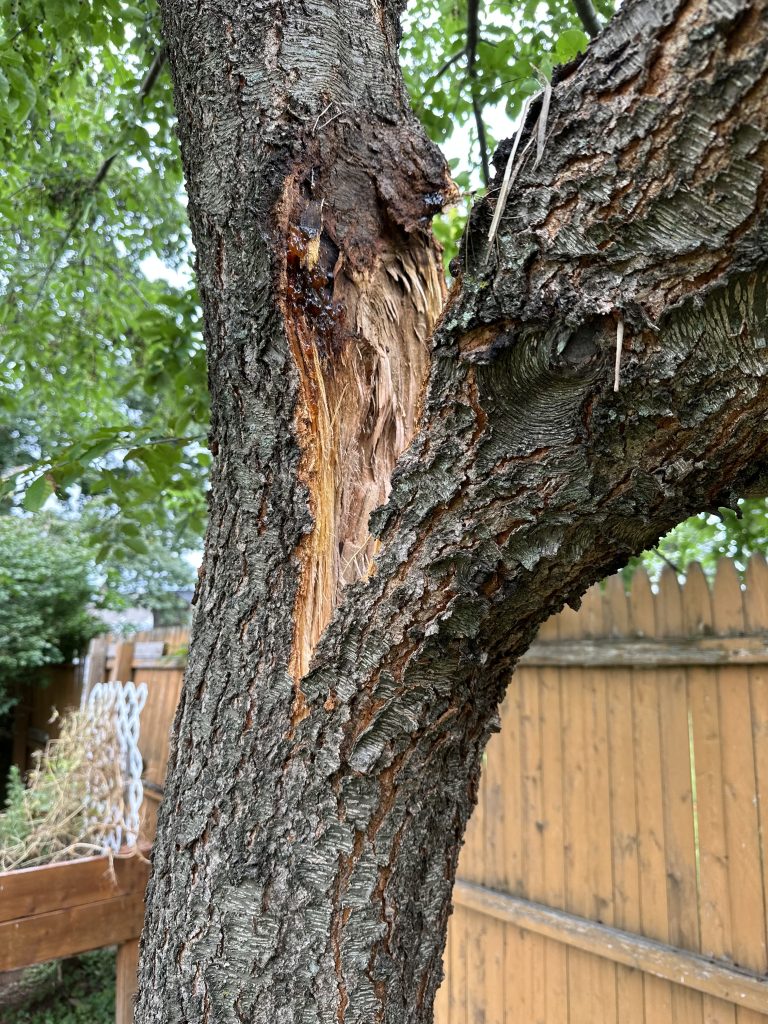
Our cherry tree split in a storm on Tuesday and a huge limb dropped on our fence and garden. Thank goodness for chainsaws, rope, hand saws, and axes. It might finally be time to get that fence replaced.
Despite the tree limb falling on the tomato and tomatillo bed, we are still getting plenty of tomatoes and tomatillos.
We got a mediocre potato harvest this year. A groundhog ate all the leaves off the plant in early July, so the potatoes stopped growing and stayed small.
We have black swallowtail caterpillars on our parsley. We go out every day with Charlie to look at them.
I tried a new orgeat recipe this week. It makes a decent Mai Tai. I was able to stop at Astor Wines & Liquors while I was in Manhattan this week (just a couple blocks from the office!), so I picked up an aged agricole rum (Rhum J.M Gold), a Black Jamaican rum (Hamilton), and the Clement Creole Shrubb, all of which where soon put to use in said Mai Tai.
I’m loving these Campfire Rudbeckia in our front yard.
We went to Sloop Brewing in East Fishkill on Friday night. They have a nice restaurant space adjacent to their brewery. We already knew we like their beer, but their food is also good. We’ll go back for sure!
Their website runs on WordPress and WooCommerce, which I love.
Amanda’s brother, Ben, visited this weekend. We spent Saturday exploring Beacon and Cold Spring, then made dinner, a blueberry pie, and played with Charlie at our house. Charlie made friends with the cat at Split Rock Books. Sunday we went to the Bronx Zoo and then had pizza on our porch for dinner.
Tip: Arthur Avenue, the Little Italy of the Bronx, is very close to the Bronx Zoo. You can get incredible sandwiches and stick them in a cooler for lunch instead of the overpriced and terrible concession food.
It has been a very damp week here. It rained 6 out of 7 days this past week.
We are glad we came back on Saturday, because there is a big chance the route we took would have been washed out around the time we would have encountered it on Sunday due to the storms. We got ~6in of rain on Sunday night/Monday morning and our basement flooded, along with everyone else in the neighborhood. We removed 80 gallons of water, which is less than most of our neighbors got. It was seeping up through the floor because the ground was so saturated. We were spared compared to Highland Falls and West Point, though.
It has been such a rainy and humid month that we haven’t sat out on the back porch for three weeks.
On one calm evening, I took Charlie out to ride his bike by the river again. He was so conscientious and stopped and moved to the side when groups were walking by. He also thanked me for pushing him up hill.
More water in the basement on Sunday the 16th. Much less than Monday, but still more than we’ve gotten at any other time living here. The last time we got close to this much was during Hurricane Ida in 2021. Probably time to put in a sump pump and re-seal the basement floor.
We also lost power for much of Thursday evening and early night, unrelated to weather. We came home from picking up Charlie to find the power out, so we decided to go to The Feast of Mt. Carmel in Verplanck to get sausage & peppers for dinner. It has become one of those yearly traditions for us. We went for the first time two weeks before Charlie arrived, then two weeks shy of his first birthday, and now two weeks shy of his second birthday.
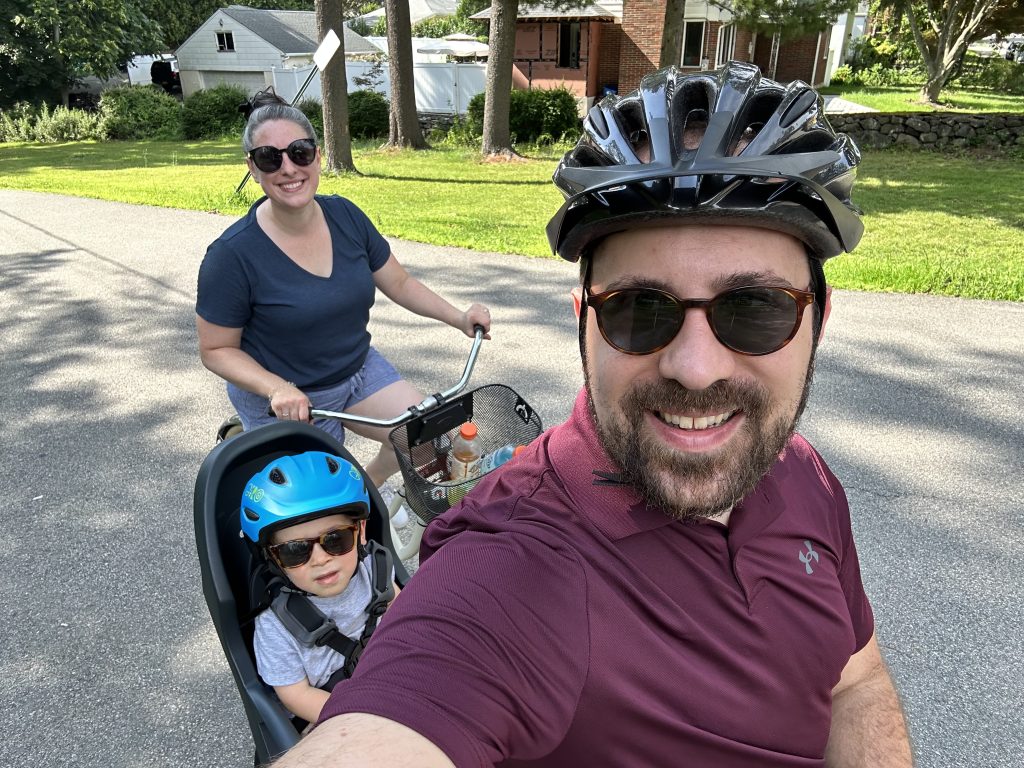
I got a new bike with a seat for Charlie. Looking forward to family bike rides! Charlie loves his “bike hat.”
Charlie is in a new “What’s this?” phase, except he is actually asking “What’s this?” instead of “Dat?” and when we tell him the word for the thing he is pointing to, he attempts the word, no matter how hard.
He is also getting consistent with some colors. He seems to have Blue, Orange, and Pink down, and a solid start on Yellow and Purple. Green and Red still seem a bit tough.
Big enough to push a child cart at Trader Joe’s, but not big enough to not run into people or displays.
Rough time at work this week. I found a UI bug in phpmyadmin the hard way 😣 I’m not ready to post about it yet, but will once we track it down and propose a fix.
We are entering my least favorite part of the year: The hot, humid season. I can deal with dry heat, but the 85+ % humidity we’ve been having just zaps my energy. The plants love it, though. Unfortunately so do the bugs.
We finally had to put the air conditioners in when more smoke rolled in from the Canadian wildfires and stuck around, which limited the only source of relief we had: Fresh air from open windows. In years past we’ve put them in around our anniversary, so this isn’t too far out of the norm.
This is our fourth year in Peekskill and the 10th year in the Hudson Valley. We’ve had more thunderstorms this summer than any other year we’ve been here. I hope smoke + heat + frequent storms isn’t the new normal, but I’m concerned that it will be.
Perhaps I should revisit my disaster prep plan again (which I blogged about last year). I think the focus will be on getting us through a week or two without power, at which point we’d probably pack up and go stay somewhere else until power comes back on. That primarily means propane for cooking + powering the generator for a few hours at a time to keep the freezer cold. If I wait until the power is out to get propane, I probably won’t be able to get it, so I should get a couple more tanks of propane and stick them in a dry place.
I also need to keep my garage clean so I can keep my car in there so it doesn’t get destroyed in a hail storm. We’ve had more of those here this year than all other years combined.
It has been an exciting couple of weeks at work. I shouldn’t say much other than I’ve been working with some OGs of the blogging world, which has been pretty cool.
I’m getting burned out on social media again. For how smooth the onboarding was, the content on Thread is completely terrible. Twitter is continuing to go downhill. Bluesky’s content is pretty good, but it isn’t yet a vibrant community (if you want an invite, hit me up). I’m enjoying the content on my Mastodon instance the most these days. There is a non-zero chance of my retreating to my feedreader again for a while.
I saw someone on Mastodon post that they heard someone call mindlessly scrolling “rubbing the glass.” Everyone I’ve mentioned that to has recoiled, but that phrase is so good.
Charlie decided two weeks ago that he really likes riding his bike. It is now one of his favorite activities. Cruising downhill on his bike fills his face with a smile and the air with giggles.
This has been a big week for Charlie’s language skills.
He is singing songs on his own more. Wheels on the Bus and Twinkle Twinkle Little Star.
He counted to 10 on his own on Saturday! I’m not quite sure he grasps the concept of numbers all that well yet, but he is getting the sequence down.
His vocabulary is growing rapidly. He remembers words for more and more things.
Even more Thank Yous than before.
He is communicating more of his wants and needs rather than just being upset. He still has a ways to go, of course, but the increase has been helpful. The flip side is that he is saying “No!” a lot more, but that is part of communication too.
Charlie is also getting more adventurous and capable every day. It seems like the 2 year mark is a time of incredible growth.
I learned how to recharge the AC in my car with refrigerant. It was a lot easier than I expected. My Dad says that it tends to go out over the winter when the system is not in use, so it might be good to turn on the car AC once a month in the winter.
We went to Ohio for the week of July 4 and had a great time. We spent time in the pool, Charlie had a lot of grandparent time, and we got to relax a little bit. It was nice to see Charlie open up around the rest of the family the way he does at home with just us.
As you can see, Charlie realllllly liked playing on and driving lawnmowers. He also learned how fun it is to run around in the rain and stomp puddles, which he did again on Sunday after we got home.
Ohio and New York are both in the Eastern timezone, but on opposite sides. Sunrise and sunset in New York are so much earlier than in Ohio that they almost need to be in separate timezones.
Charlie did great on the road trip. He is able to entertain himself more with imaginative play, he took a long nap, and we made a couple rest area stops to “run our sillies out.” The last hour and a half of the 8 hour journey is always the toughest, but Mamma sang lots of songs with Charlie and saved the day.
Here is Charlie’s Car Jams playlist:
It is amazing how having a 4-day weekend reinvigorates me a little bit. Ideas started flowing again for the first time in a while.
Reading: I finished Golden Son by Pierce Brown and listened to American Terroir by Rowan Jacobsen and Cod by Mark Kurlansky on the road trip.
From American Terroir:
“The Yupik have a word, slungak, that translates as ‘coming to.’ It describes when awareness first blossoms in a child, when the child stops living purely in the moment and becomes conscious of time and place and self and starts to lay down memories. For many Yupik, slungak kicks in when the kings run.”
Now I’m reading The House on the Lagoon by Rosario Ferré.
New additions to the to-read list:
My Confession by Samuel Chamberlain, inspiration for McCarthy’s Blood Meridian
Birdseye: The Adventures of a Curious Man by Mark Kurlansky
American Nations: A History of the Eleven Rival Regional Cultures of North America by Colin Woodard
Last Sunday after my weekly post, getting pizza at Hudson & Packard didn’t happen. After an hour drive with a toddler who didn’t want to be in his carseat, they were sold out. We’ll try again in the future. We did have dinner somewhere else in Poughkeepsie, then got ice cream in Wappingers Falls, where Charlie had a lot of fun riding his bike around the parking lot (it basically lives in the car these days.)
Amanda was off of work on Monday. I had to work, so we still sent Charlie to daycare and she was able to do some projects with the Cricut machine she just got. Tuesday, and Wednesday were pretty work-heavy for both of us, so I don’t have much of note to report. We opted for easy dinners and after dinner walks with Charlie.
Getting Charlie to bed seemed more difficult than usual this week. Not sure what is going on there.
Thursday was our 10th anniversary! We celebrated by making a nice dinner at home together (double cut ribeye, sauteed greens, side salad), then having a fire in the chiminea on the deck after we got Charlie to bed, sharing a bottle of wine, making s’mores, and writing down some of the big things from our first ten years of marriage. We’ve shared and grown a lot together.
Yeah, I overfilled the chiminea. It did burn down pretty quickly and was soon at a more reasonable level.
As I like to jokingly remind Amanda, our wedding anniversary and the day I started this blog are both on June 22. I’ve been blogging here for 15 years! On June 22, 2008, I was holed up in a hotel room in Tarrytown, NY, (not far from where we live now!), eating pizza, and learning how to install WordPress on my cheap shared hosting, writing my first post, and figuring out how to customize my theme. The rest is available via RSS.
I caught up with Jeremy Felt on Friday afternoon, which was nice. I’ve been enjoying our catch up calls once every couple months. It is nice to chat with someone who also does remote work a lot like my own and has a child around the same age. We go through so many similar things! Jeremy is also a WordPresser, IndieWebber, and blogger. It is a shame we live on opposite sides of the country.
Friday evening Amanda and Charlie hung out with some friends of ours while I opted to stay home for some quiet time. I ended up cleaning the dining room and kitchen, tidying living room, writing my weekly veggie share post, and reading a little bit.
Saturday we met one of Charlie’s daycare friends and her parents at Barnes & Noble’s Saturday Storytime, where they read a children’s book, do live music, and some coloring. Everyone was having a good time, so we went out to lunch afterward. We love seeing Charlie and other kids play so well together. The original plan was to go to Muscoot Farm, but it was raining all morning.
During naptime I worked on an iOS Shortcut for posting to this blog, Twitter, Bluesky, and Mastodon all at the same time.
You can download a stripped-down version here. It relies on the native Twitter app (which annoyingly prompts you to confirm posting), Ivory for Mastodon (you can swap out with your Shortcuts-friendly Mastodon app of choice), and two Get Contents of URL actions for Bluesky. You’ll need to swap in your Bluesky identifier and app password in the cURL sections. h/t to Eric Davis for sending me the Bluesky API calls.
Later after naptime we went grocery shopping and made taco salads for dinner.
Sunday I mowed and then replaced the shutters on our downstairs windows while Amanda and Charlie played in the sprinkler. I need a taller ladder to do the upstairs windows, so those will have to wait a few weeks.
The humidity the last couple days has been rough. If this keeps up, I’m seriously considering putting the window air conditioners in. We’ve held off so far this summer because the evenings have been cool and it is nice to have the breeze.
I remarked to Amanda that though Wednesday was the solstice, it still doesn’t feel like summer to me. Probably because we haven’t done the activities I typically associate with summer (swimming, rowing, kayaking, hiking, fishing.) We need to change that.
Happy Father’s Day! I’m feeling extra thankful for our little family today. It has been a tough week with Charlie being home from daycare most of the week while we both had to work (all three of us were frustrated and no one had a good time or got enough work/play in), but it has been a nice weekend and I’m looking forward to the family outing we have planned this afternoon.
Three times this week when Charlie is flopping around and having trouble getting comfortable at bedtime, he has crawled into my arms and fallen asleep. It melts my heart every time.
Charlie has started to sing to himself recently, and gets excited when we recognize the song and join in. The past couple days it has been Twinkle Twinkle Little Star. Also on the music front, he has been playing music with Amanda on a small music set he has. He stays in beat on the drum while Amanda plays Wheels on the Bus on the xylophone! Thank goodness he got her musical abilities instead of mine. I can’t even keep a beat.
Charlie has also started to address us directly by saying “Momma” or “Dada” or “Mommy” or “Daddy” and then what he wanted to say. That is new in the last week or so.
He’s requested going on a walk every day (sometimes multiple), which we are more than happy to oblige. We follow his lead, which usually means going to the end of the street and into the woods, where he likes to pick up and throw rocks. We saw a rabbit on Tuesday and he has stopped every day since at the same spot to look for it again. He brought his first rock home on Saturday. That has to be a little boy milestone, right? I know I had a rock collection. Still do.
The garden is looking good! Potatoes on the left and tomatoes/tomatillos on the right. No photos of the other garden bed this week, but plenty of peas and kale to pick.
I was most interested in the generative landscapes that Leo McElroy made (I made some generative art last year as well, so I enjoyed chatting with him about his process) and some studies of natural leaf patterns by Jenn Karson, who I think did a great job showing her process and some of her experiments along the way. She also showed some of the same pieces in different mediums, and sometimes inverted (milling the lines vs empty space on aluminum).
I chatted with Jenn about what it might take to do some of the same work on wood from the same tree species as the leaves, and if done on greenwood what kind of interesting elements the natural drying process would add to the piece.
There is another show on July 22 with a slightly different cohort.
Going to the show made me start thinking about how I can create art again. One idea I had is to make an ongoing series of bookmarks for places I visit. I love picking up bookmarks from local bookstores, so why not make some of my own? I’ll need to cut some cardstock and leave it in my backpack with some pens.
Also, perhaps I can start by making some for Peekskill. Perhaps an outline of this section of the Hudson River (I bet I can turn the GIS data from naturalearthdata.com into an SVG that is plottable or cuttable), or maybe a sketch of the view from the waterfront.
WordCamp Europe happened last weekend and I got a bunch of photos from friends who attended, letting me know that one of my pieces from the Museum of Block Art was included as a postcard for the attendees. Each person got a pack of all of the same kind and was encouraged to trade with others to get a full set. I love that.
Two meals that turned out better than expected this week:
Whole grilled chicken. I spatchcocked it, then grilled it over direct heat on each side for a little bit, moved it to indirect heat, and finished over direct heat again. We ate it with sauteed chard with garlic and lemon, and orzo rice. Again, I’m pleased with the grill we got last month. The spatchcocked chickens I tried on the old one got burnt to a char from all the flareups and it was too small to set up two zones (direct and indirect heat).
Rigatoni with sausage and kale. The tomato paste/wine/onion/garlic/fennel seed/cream sauce was quick and easy to make. We all loved it. One to remember.
It is strawberry season. We’ve been getting fruit every week from local farms (as well as our regular veggie CSA), so we’ve been eating a lot of strawberries the last two weeks. some made it into this quick cobbler.
The weather this week was weird. We had a hail storm on Tuesday, then smokey, hazy orange skies on Wednesday and Thursday as smoke from the Canadian wildfires moved in. I didn’t take photos of the smoke, but you probably saw them on the news.
Thursday night Charlie refused to go to bed without Bunny, who we had not seen for a week. So we turned the house and car upside down looking for Bunny, who I eventually found between the covers at the foot of the bed, where we tuck the covers under the mattress. Bunny had made a little warren down there.
Saturday morning we had over some parents with kids around Charlie’s age to play and have breakfast in the backyard. We made pancakes out there on the Blackstone and generally had a good time.
Though after two out of the three families left, Charlie finally opened up. He seems to do better with small groups, so going forward we’ll probably prioritize playdates with just one family at a time.
It is interesting seeing kids a couple months older than Charlie. It is amazing how much language use and independent mobility (like stairs!) spikes around the 2 year mark. A couple months ago we thought that stuff was still far off for Charlie, but we notice weekly improvements in both areas now. It is so cool watching him grow.
I spent some time Sunday morning doing yard work (mowing, mending a hole in the mower’s grass collecting bag, watering and fertilizing the plants, pulling out some poison ivy that popped up), and moving some things out of the basement and garage to post on the local Buy Nothing group, and cleaning up two used window air conditioners a friend gave us. Amanda and Charlie played with the hose and washed some stuff outside. Charlie absolutely LOVES playing with the hose.
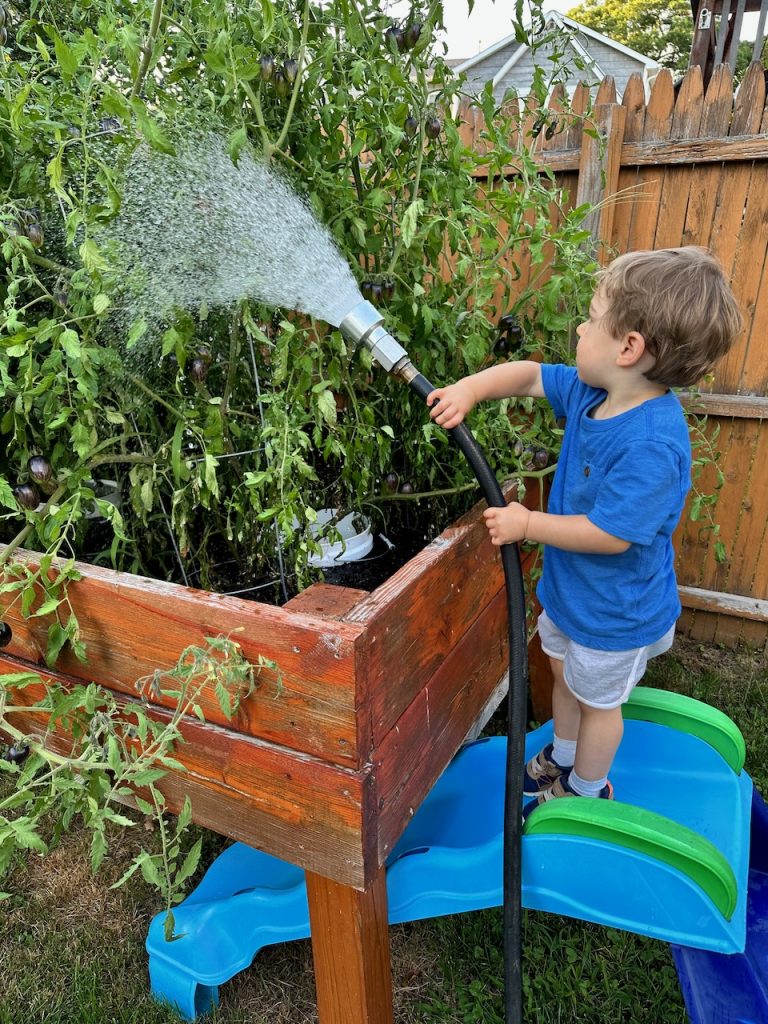
Scenes from the garden. Charlie loves helping water the plants. Purple peas are starting to come in.
Sometimes Charlie likes wearing his cowboy hat around 🤠
I finished Critical Mass by Daniel Suarez yesterday and started Golden Son by Pierce Brown.
I started my weekly veggie CSA ideas posts again over at cooklikechuck.com. Here is the first one:
Back in 2017 and 2018 I wrote about how I planned to use the veggies in our weekly CSA. Writing these weekly posts helped me come up with dinner plans and helped me get out of ruts of repeatedly making the same things, so I’m doing it again this year.
I prioritized spending time with family and friends last weekend, so I am doing a combined post this week.
My parents came to visit over Memorial Day weekend, and it was great to spend time with them. The weather was beautiful and we spent a lot of time outside. We got the tomatoes and tomatillos planted in the garden, added more dirt to the potatoes (which are doing great!), washed and folded up a tarp that I’ve been neglecting, and changed the spigot on our bathtub. We didn’t work the whole time… a decent amount of time was spent on the deck, which we just got some new furniture for: A cantilever umbrella, a couch, and some chairs. (We got a rug this week, but no photos of that yet.) We made some pizza and tiki drinks one night, and another they watched Charlie while Amanda and I went out on a date.
One thing I forgot in the last post: Charlie recapped his day during bedtime. Amanda heard him saying the words he knows for things he did that day, like he was recapping the day’s events. Pizza, Carly, Cupcake, Lella, Drive. We went to a birthday party for Carly, had pizza, ate a cupcake, played with Lianella, and pretended to drive on an arcade game. He amazes us every day.
Today’s amazement: He started washing one of his bathtoys (a seal), just like I was washing him. Then when it was time to get out of the tub he started handing me his toys so I could put them away, which he hasn’t done before (nor have we asked him to.)
This week Charlie has been saying Thank You (without being asked!) to people when they help him with things. It is very sweet. It gets our hearts every time.
Charlie has been a little more independent on the climbing wall lately. He doesn’t want help placing his feet.
Sometimes you feel more like a parent (taking care of the kid, making sure they are fed and safe, dealing with their tantrums) and other times you feel more like a Dad (the two of you having fun together, they are being very lovey and sweet, and things are just generally going better). This week I felt more like a Dad. Lots of walks, giggles, sweet snuggly reading time, fun dinners out while Mom traveled for work. Charlie jamming to music while eating pizza at Baci’s Woodfired Wednesday, the pure joy on his face when having ice cream at the Blue Pig, sitting on the front porch and giggling together. What a wonderful feeling! ♥️
We had one of Charlie’s classmates and her parents over for a play date and dinner on Saturday. They played well together, shared better than we expected, had conversations together that the grown-ups didn’t understand, and both mentioned each other’s names the next day. The cardboard house made out of the huge box the patio furniture came in and the big yoga ball were the two hits of the day. It was great to see Charlie playing with a friend. We are actively making plans to hang out again.
I’ve been listening to The Hold Steady a lot lately. Looks like they are having a cool festival celebrating 20 years of being a band up at Arrowood Farms, a place we really like. I’m not going, but I expect it to be a great time for those who do.
Our method for getting marginally more vegetables into our diet: Every salad has lots of broccoli slaw mix added, which in addition to nutrition gives it a nice crunch component. And our self-imposed rule is that we have to finish our salad before getting seconds on the main dish. (That rule doesn’t apply to Charlie… it is challenging enough to get him to eat as it is.)
The veggie shares start this coming week, which we are very much looking forward to!
Charlie loves playing with the hose.
I’m pleased with the garden and yard plants in general this year. The peas are blooming right now, the potatoes are growing quickly, and the spinach and kale are putting out lots of leaves. After two years of trying to get some perennials to grow on the side of our house from seed, we finally have some Rudbeckias that are taking off. Looking forward to the blooms brightening up that side of the house.
An update to the wick irrigation for the tomatoes this year: I buried the buckets and make them stick out of the dirt only an inch or so to minimize the length of rope that is out of the water or dirt so it has less of an opportunity to dry out. So far so good with the couple of 90+F days we’ve had.
Not all worked out, though. The basil, rosemary, and peppers I planted either didn’t come up or died. Most of the cilantro and spinach I planted didn’t come up either–only a few plants sprouted. So we went to the local greenhouse today and bought some basil, rosemary, jalapenos, and parsley to plant.
The Mock Orange is blooming right now, and so are the Rose campion.
My weather station showed a high of 104F on Friday. I am certain this was inaccurate, because I was outside at the time and I think it was a lot closer to 92-94F. The sun has been very intense though, so maybe the whole unit got overheated. 🤷♂️
I’ve been pretty much off of social media for the past month and a half, and that has felt pretty good. I did log on to Instagram today to post a story of Charlie and the hose, but I’ll probably delete the app off of my phone again soon. Even new things like getting an invite to Bluesky haven’t been able to pull me back into social media. I’ve also been neglecting the internet in general. My unread feeds backlog is so long that I might have to declare bankruptcy.
Is it the time of year? Is it wanting to spend as much time as I can with Charlie? Disillusionment? Probably all of the above.
When I am on my phone, I’ve been reading books in the Kindle app, which is something I never thought I’d do. Nothing beats the convenience of always having your phone on you, though.
I’m currently reading Critical Mass by Daniel Suarez, book two of the Delta-v series.
I think I want to start Ada Palmer’s Terra Ignota series next. She has a fantastic blog, by the way.
This time last year I had just started the Baroque Cycle series. Right now I’m on book 7 of 8. Still listening while I mow the lawn or do the dishes.
This felt like a pretty long week, though it is the same length as all the others. Amanda was out of town for a few days and Charlie got sick while she was gone, so I needed to take off work a couple days to take him to the doctor and care for him. Poor little guy has some pretty noticeable chest congestion and a bad cough. He needed to be put on antibiotics. To make things worse, it seems like the rest of his remaining teeth are all coming in at once, so his mouth is sore. Both of those things affect his eating and sleeping, so it has been a tough week for Charlie, and a tiring one for his parents. Also, my allergies are at peak intensity right now as tree and grass pollen fill the air.
When he was feeling well, Charlie started playing on his own in the backyard with us up on the deck. A first! It is really cool to watch him do things on his own and explore.
I love when the Black Locust trees are in bloom. So beautiful.
We had some friends, Chris and Meg (the same ones we met in Poughkeepsie last month) come stay with us on Friday night. We made kabobs on the grill, two of our favorite tiki drinks, and hung out for the evening, and made breakfast the next morning. Unfortunately our plans for the next day were sacked due to the rain (it was beautiful all week and the next day, but Saturday was cold and soggy!), so they went home a bit earlier than originally planned. We’ll try again on a day with better weather.
I mentioned last week that we got a new grill (Weber Spirit II E-310). I’m very happy with it! The old one had thin metal grates and was prone to flare-ups, but this one has thick enameled cast iron grates, which hold and radiate the heat for much more even cooking. No flare-ups so far, either!
Amanda and I took Charlie to a birthday party at an indoor kids play area in Danbury, CT, and he had a great time once he opened up and got used to lots of other kids running around. Someone he gets along with very well with at daycare was there, so that helped him adjust. We enjoyed chatting with her parents, so I see some play dates in the future.
As soon as I can get to the bookstore, I’ll probably pick up the next book in the Red Rising series by Pierce Brown. I enjoyed the first one, which I finished last weekend.
I breezed through Dark Matter by Blake Crouch this week, but it was a bit dark for me to read this week. It didn’t help that the main character’s son’s name is Charlie.
Weather highs and lows for the week:
High
Low
Average
Temperature
83.8 °F
33.8 °F
59.2 °F
Dew Point
63.3 °F
20.8 °F
42.1 °F
Humidity
99 %
16 %
59 %
Precipitation
0.06 in
—
—
Wind Speed
11.6 mph
0.0 mph
0.4 mph
Wind Gust
17.7 mph
—
0.9 mph
Pressure
30.61 in
29.77 in
—
I enjoyed looking back and seeing what we did at this time last year. I was still on paternity leave then and we were trying to get a few things in before I had to go back to work: More woods explorations, West Taghkanic Diner, the Sol LeWitt exhibit at Williams College, helping Jon do some timber framing. It was also the start of our renewed tiki exploration, and I’m happy to report that we are are better versed, have cooler drinkware, and a wide variety of rums on-hand.
I need to get back to my practice of writing down three things I’m thankful for every day. It makes a noticeable difference in my outlook.
I have a ragù slow cooking on the stove for dinner. I rarely have the time to prep something like that and let it simmer all afternoon, so I’m looking forward to it. 👋
Tuesday we were up and out early because Amanda had to go their NYC office, so Charlie and I ate breakfast outside and watched the trains, walked by the waterfront, and played at the playground before daycare. That was nice.
Saturday morning we did the same thing as a family, and that was great too.
We like doing what we call “Charlie walks.” Within reason, he chooses where to go and we follow him. We like seeing him choose and explore. Just because we don’t know the decision-making process doesn’t mean there isn’t one.
I sharpened my mower blades on Friday. Charlie is fascinated by how things work, so he squatted down right beside me while I was taking the blade off the mower and watched my every move. Reminds me of me watching my Dad work on things.
We are working on re-outfitting our deck. We spend so much time out there in the summer that we want it to be comfortable and nice. Currently searching for a good outdoor rug, an offset tiltable umbrella, and some furniture. We just got a new grill to replace the old small one that the previous owners left here and we’ve been using since. Looking forward to lots of outside time this summer.
When I can get Charlie to bed on time, I love watching the bats flutter around and eat bugs at dusk 🦇
I had an idea this week while making margaritas: The favor profile of falernum would work well with the tequila, lime, and Cointreau. It looks like I’m not the first person to think of that, as there is a recipe for a Californian Margarita that includes falernum. I don’t love that specific recipe, so that is something for me to work on this summer.
Someone I met in California, when learning that I enjoy sci-fi, recommended the Red Rising series to me. I picked up the first one in the bookstore at SFO, which I just finished last night. I liked it and will probably read more of the series soon. I’m not sure I’d give it an open-ended recommendation unless I know you like dystopian space sci-fi.
Busy next two weeks: Charlie and I are on our own for a couple days this week while Amanda travels for work, then we have visitors the next two weekends. 👋
I haven’t posted in a couple weeks. We were getting ready for a trip and then on said trip. We are home now and I’m back to my regularly scheduled blogging.
We spent a week in California. This was Charlie’s first plane ride and he was a champ. No crying, took a decent nap on the plane, and (other than playing peekaboo and trying to hand out stickers) didn’t bother other people on the plane. Amanda packed lots of activities for him and we didn’t even need to break out the videos on the iPad.
We’ve been talking up airplanes to Charlie all week, so he was super excited to see some in real life. Lots of excited pointing and exclaiming “Airpane!” (sic).
First up was a wedding in Monterey. The San Carlos Cathedral is beautiful and I love that they left some sections of the original wall paintings when they remodeled. The reception was at a venue right on the bay, which was also beautiful. It was nice to catch up with some old friends at the reception.
We stayed with our friends Marieke and Brent, who are consummate hosts. Some highlights:
Fresh squeezed orange juice from their orange tree every morning
A Sicilian-themed dinner party they hosted while we were there
Watching Charlie while Amanda and I were at the wedding
Charlie had a lot of fun climbing at their local playground
Charlie and Evie (Marieke and Brent’s daughter) had some classic toddler rivalry, but had some instances of sweet collaborative play.
Excellent food in Salinas, particularly breakfast burritos
Albion strawberries, a very sweet variety that doesn’t ship well, so must be consumed locally. Marieke got a text about them and rushed out the door to pick up a whole flat, and they were delicious.
Monterey Bay Aquarium. Charlie liked the fish and loved the aquatic birds. I liked the Mackerel and sardines.
Seeing Doc’s Laboratory on Cannery Row. I read Steinbeck’s novel of that name on the flight out.
A pastry tour of the region led by Marieke.
17 Mile Drive at Pebble Beach and CA 1 to Big Sur
Marieke found a book, Trashy Town, that became an instant favorite for Charlie.
Next up was visiting our friends William and Jenna in Walnut Creek, CA. Charlie had fun playing with their boys and going for a long wagon ride. They made dinner for us and we chatted into the evening, then it was off to the airport for us the next morning.
Charlie also did well on the flight home, though the airplane novelty wasn’t there on the second go-around and he loudly protested naptime and we had to pull out the iPad to keep him busy for a while. Still, better than we expected, so we are calling it a win. He loved all of the busses around the airport.
Charlie had an easy time adjusting to California time. He didn’t go to bed until around 9pm California time, which is midnight Eastern. He slept until 8:30 the next day and then was pretty much on California time. Coming home was a bit longer transition, but not awful. We didn’t get home until midnight, then he slept until noon the next day. We skipped our nap that day and went to bed at our normal time, and woke up at our normal time the next day.
Back home it was time to mow, plant potatoes, clean up the yard a bit, do laundry, and grocery shop. Mostly getting our lives back together. We also visited the garden center and bought some flowers to plant: Coneflowers, Bee balm, Black-eyed Susan vines, and Lemon Slice Superbells.
Within the span of a week, the trees went from having no leaves to the majority having leaves! Things are looking pretty green.
We’ve been spending a lot of time outside this week. Walks in the woods, swinging, climbing, lunches and dinners on the deck, watching the excavator and dump truck working across the street, and generally soaking up as much sun as we can.
Charlie got to sit in a fire truck this week! We were walking downtown by the fire station and stopped to look at the trucks. The nice firefighters asked if he’d like to check one out, then let him sit in the driver’s seat and beep the horn. They also gave him a little fire helmet and a first aid kit.
I got out to row on the Croton River Friday after work while Amanda and Charlie were having a play date with Meg and Miles.
Charlie enjoys sitting in the boat and saying “Row Row!” like the song. I can’t wait to take him out in it this summer. We’ll start with small inland lakes at first and have some friends in other boats close by as well.
Now that Charlie is getting better at walking on his own, we are venturing further into the woods. Some things Charlie enjoys during those walks:
Carrying rocks
Watching birds and frogs
Watching ants
Sitting by the creek
Running back and forth across the little wooden bridges over the creek
Throwing the rocks he carried into the creek
Touching trees
Tossing leaves in the air
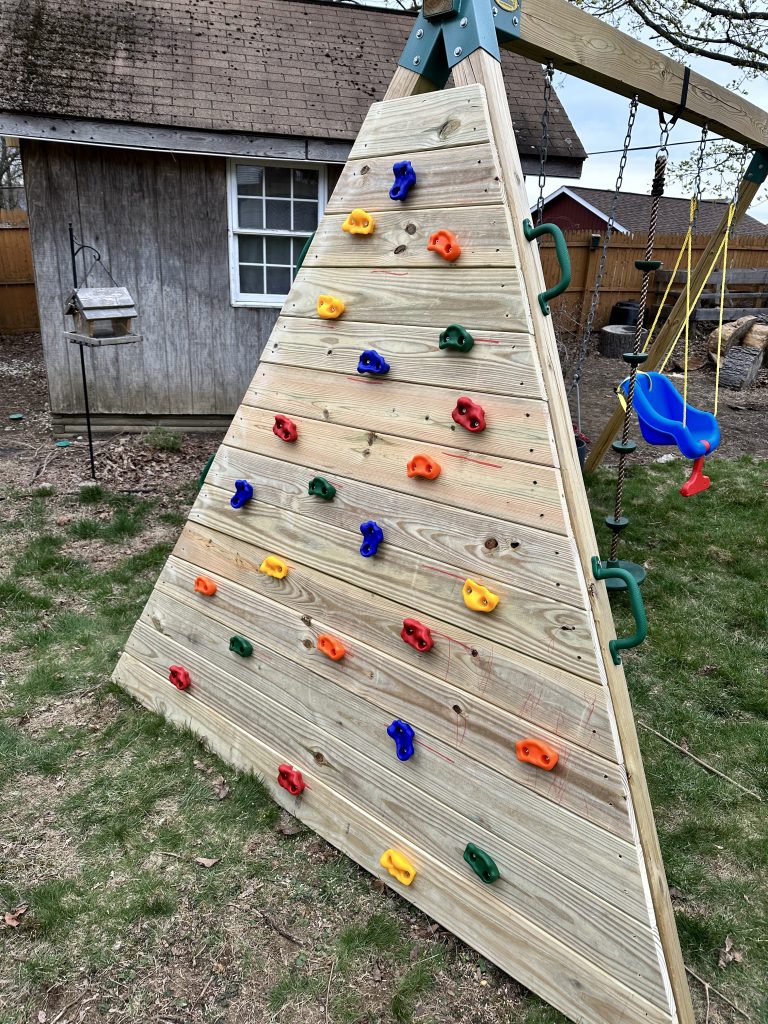
I put more holds on Charlie’s climbing wall so he has more options. He is getting the hang of it!
Trout lilies are blooming!
We had quite a range of temperatures this week. The weather station measured a high of 96.4 °F and a low of 32.0 °F for the week. It rained a half inch on Saturday night.
Sleep has been a struggle in the Grimmett house this week. Charlie is having trouble falling asleep and is waking up coughing due to mucus dripping down his throat. Poor little guy.
On Friday I built Charlie a climbing wall on one side of his swing set. He took to it immediately and surprised us with how well he climbs. I made the holds a little far apart for his feet, so we help him with his foot placement right now, but he does most of the pulling himself up with his arms. I ordered more holds and will install them this week. I also need to sand the cut sides and cut off & cap the bolts on the other side. Once I do, I’ll get a proper post up about it.
Charlie had a great weekend. Lots of time outside. Here it is in photos.
We got to see Chris Johnson and Megan Walter in Poughkeepsie this weekend. I somehow managed to not take any photos, but it was nice to catch up with Chris, meet Meg, introduce Charlie as a toddler (Chris met Charlie a year ago), walk around outside a bit, and have dinner at Millhouse Brewing.
Planning some time here in Peekskill together soon.
Finishing the attic probably isn’t going to happen. We had an architect come over and help us navigate what is and isn’t possible to pass code requirements. So much hassle! Sprinklers on the third floor above grade all the way to the exit, 3ft wide stairs with 3×3 landings and a certain amount of headspace that would require dormers, so much insulation that we’d have to extend the rafters out, much larger windows, etc. Long story short, the space we’d add is not worth the amount of work we’d have to do not just on the attic but on the house in general and the associated cost. Kind of a bummer.
I guess we’ll table that one and instead look at replacing the fence and expanding the deck again soon.
We’ve been looking into solar, but not having a great experience with solar sales people. We want to buy your product. Stop making it so difficult, folks!
The high this week on the weather station was 77.7 °F. The low was 26.9 °F.
Humidity high and low: 98% and 14%
Spring is in full swing. Lots of flowers and trees blooming and budding out, double the amount of birds compared to two weeks ago, and lots of things sprouting in the garden (peas, kale, spinach, radishes).
We’ve had lunch and dinner on the deck multiple times. Lovely.
Amanda has to go into the city twice a week for work now, so we are all adjusting to new morning and evening routines. The baristas at the coffee shop by the train recognize Charlie now and tell all the other customers about how much he likes trains.
Charlie hit a new milestone this week: He started anthropomorphizing some of his stuffed animals. He moves their arms to make them do things like push buttons, he tucks them in to bed like we do with him, and tries to feed them. It is adorable.
Out in the garden, radishes and spinach seeds have sprouted. 🌱
Inside, tomatillos and tomatoes are doing great, and red lipstick peppers just sprouted.
Did you know most peppers and tomatoes are perennials? They can’t survive the winter in the north, but they’ll live for many years in the tropics.
We’ve been quizzing Charlie regularly while we read to him. He picks things up quickly and remembers them pretty well!
He is trying more words. We think he is on the cusp of making use of phrases, and this is roughly a developmentally appropriate time for that.
We had a playdate on Saturday with one of his classmates at daycare. It was fun to watch him collaboratively play with someone from daycare. They get along so well!
We went back to swim lessons this week and he did pretty well, though he did get distracted easily. Sometimes he’d rather watch the other kids than do the exercises.
Charlie enjoyed going to a diner and using a booster seat instead of a highchair. They also have cool things like crayons and sugar packets to play with. We found it easier to wrangle him in a booth than at a regular table, so diners might be our new preferred genre of restaurants when going out with Charlie, at least until outdoor seating opens up at other places again.
He loves to request to wear pieces of clothing like his gardening apron, a certain jacket, or one of his hats, which sometimes leads to him wearing a winter hat to the coffee shop when it is 60F/15.5C outside.
I have a working script to translate my weather station data to an APRS data packet. Now all I need to do is figure out how to transmit it. I’ve been looking for a CWOP server that accepts http connections, but coming up blank. I’ll probably end up POSTing the converted data to a PHP script on another server and then forwarding that to a CWOP server that accepts TCP connections.
My friends at Praxis (where I used to work) asked me to join them for one of their Monday night workshops for folks in the program. I had originally planned to talk about learning out loud, showing your work, and blogging, but I changed the topic at the last minute to something a bit more en vogue right now: Discussing strategies for using AI tools.
I’m glad I decided to do the session on AI. I was surprised at how few of the participants had even tried out ChatGPT, let alone use it or Copilot regularly. These tools have been transformative in my own work recently, and the space is moving fast. I see using these tools as early investment in your own compound career growth curve.
Some of my key points:
AI lowers the opportunity cost of trying out new ideas. (h/t Simon Willison)
AI can help you learn the fundamentals of any subject faster.
Don’t have AI do the finished product for you. Use it like an assistant to help you make your own work better.
It is easier to edit than it is to create.
In any kind of work, one of the core skills is communication, and working with AI tools like ChatGPT is no different. You need to learn how to communicate effectively (read: getting the results you want).
You still need to learn the fundamentals of your subject (which ChatGPT and others can help you do!) in order to use it effectively. At the end of the day, the end result is still your work, so you need to understand it and be able to account for it. Hiding behind “well, ChatGPT said…” is no excuse.
You still have to decide what is worth building/working on/investing in. AI can do things, but you have to know what to ask it to help you do.
GPT-4 is leagues better than GPT-3.
I also spent some time before the session going back through the Praxis bootcamp curriculum and brainstorming ways to use AI tools for each month in the bootcamp, and for each of the main roles Praxis helps participants land jobs at startups in.
Bootcamp modules
Foundations of each role and the job landscape
Use it to learn the basics of each role quickly, then with the time you saved dive deep on two that interest you. Ask for lots of examples, details, specifics.
Ask it to ask you questions to test your understanding.
Writing + Personal Branding
Writing an essay? Ask it to help you find your weakest arguments and help you find substantiating evidence. Use it like a really great thesaurus. Ask it to play Devil’s Advocate and then use those results to improve your counterarguments.
Writing an email? Have it help edit for tone and clarity.
Have it help you set up scaffolding and outlines.
Portfolio project + Learning a tech stack
Use it to help you come up with a customized learning plan. Think Diamond Age.
Use it to help you rapidly prototype a bunch of different projects, then pick the best to double down on.
Placement Roles
Sales
Ask it to help you learn how to negotiate. Negotiate with it! ChatGPT can roleplay.
Record sales calls, transcribe them with Whisper, then ask it how and where you can improve. Hone your pitches!
ChatGPT is a really good scraper. Copy the HTML contents of a page and ask it to pull out everyone’s names and put them in a list, then add their email addresses using their first initial and last name at the company domain (or whatever you find for the company on Hunter.io).
Customer Success
ChatGPT is great for quick help and debugging.
Rewrite emails in a helpful customer voice. Say, “Rewrite this email with the following tone: Helpful, positive, collaborative, empowering, clear, concise, and avoiding trigger words.”
Marketing
Use it to create and improve copy + imagery + videos + schedules. Set up workflows.
Need photography? Instead of taking a chance on hiring a model and photographer, try https://photoai.com as a proof of concept beforehand.
Operations
Set up automations!
Afterward, I followed up on a couple questions:
Parker Gilbert asked about AI tools to help get out of an art rut.
Use some of these tools to remix things and take them in different directions. Try 10, 20, 50 different directions, pick the best 3, and dive deep. See how far they take you.
Spring is here! Nice to hear the frogs again in the wet areas of the woods. No wildflowers appearing just yet, but Charlie and I are keeping our eyes peeled on our walks.
I like the woods in early Spring. Warm enough to not need a coat, no bugs yet, and you can see a long distance since the leaves haven’t come in yet.
We started seeds, both indoor and outdoor this week.
Indoor: Magic Bullet tomatoes, tomatillos, jalapenos, red lipstick peppers, and rosemary. The tomatillos have already sprouted!
Outdoor: French Breakfast radishes, lacinato kale, spinach, cilantro, and Sugar Magnolia snap peas.
Charlie is in a bird phase. He loves seeing birds outside. Whenever he does, he excitedly points to them and shouts, even if they are far off. He does the same thing with airplanes – “air pane!”
Since he has taken an interest, we made a birdhouse together out of a gourd and also hung a small birdfeeder on a window so he can see the birds.
Strep update: I went back to work on Tuesday and my throat finally stopped being sore on Friday. This is the first time in many years that I’ve taken antibiotics and they’ve messed up my stomach and made my urine smell funny. Not cool, but better than having strep.
Unfortunately Amanda picked it up a second time over the weekend, so we are still kind of in survival/recovery mode.
Sometimes you need to know when to say, “no blog post tonight, maybe tomorrow.”
I figured out how many boards I need for the rock wall project: 8 of the 5/4 x 6in x 8ft pressure treated boards. I measured the side, divided it in half to make a right triangle, then dusted off my trigonometry to figure out the top angle and then made a Sheets formula for figuring out the length each of the boards will be.
=SQRT((A2/SIN(1.01913))^2-(A2^2))
Other projects:
I need to measure the second level shutters, which seem like they might be a bit shorter than the ones on the first level.
Looking for some patio furniture at a good price and a large corner swing arm umbrella.
Amanda and I both got strep throat this week, Amanda early in the week and me at the end of the week. I’m writing this Sunday night in bed with a fever. I was supposed to be on jury duty tomorrow, but I’ll have to call and ask for a deferral tomorrow.
The nor’easter that came through on Tuesday dumped plenty of snow, but did not give very interesting weather station readings.
The snow melted off completely by Thursday, when it got up to 60F. Charlie and I went on a nice walk in the woods, then swung in the backyard for a bit. we noticed that daffodils are blooming!
Charlie remembers so much. We seems to know most of the common fruit and vegetables now. We were quizzing him and he was able to point them out correctly multiple times from a grid of photos. We also got out some from the fridge and he got them right, too. He can’t quite say the words yet, but he is working on it.
Lately Charlie has been picking things out when we go to the grocery store. The look of pure joy on his face when we say okay and help him get whatever he picked is worth it. Thankfully it has been normal stuff like cheese and muffins.
I did most of our taxes this week (just need to double check and submit) and we planned a family trip to California for a wedding. It will be Charlie’s first plane ride! ✈️ To quote him, “Wwoooooowww!”
I added spark lines to my weather station blocks. Check them out at https://cagrimmett.com/weather. Next up: Mobile styling.
That’s all. I’m going to get some sleep and hope these antibiotics work quickly. Here’s hoping for a week or two without anyone in the house being sick 🤞
This week was kind of a blur. I had to go back through photos and text messages to piece it together.
Charlie was home sick from daycare on Monday, which made us feel behind at work all week.
Tuesday-Thursday had more urgent issues at work than usual. Days that involve regex and database rollbacks are not fun.
Amanda was sick Wednesday night and Thursday
Charlie has had some tough nights sleeping Wednesday and Thursday.
Charlie threw up more than normal this week. We think that he might be overeating, which is new. Hard to tell because only he knows when he is full.
Saturday brought some fun playtime with Charlie and a long nap where I got to hold him. I know those days will end soon, so soaking it up while I can.
Sunday we went on a nice walk in the woods and then had brunch at a friend’s house for his birthday. I made butternut squash latkes because he has Crohn’s disease and can’t eat regular latkes. Charlie had a great time being the center of attention. In the afternoon we cleaned the house.
Charlie is learning lots of new words and made a two-word request this week!
This week I also spent quite a bit of time planning out some house projects. We want to renovate the attic and turn it into a third floor living space, so I was on the hunt for an architect who could guide us through the local regulations and help figure out key components like where to put the stairs.
I’m kind of interested in getting solar panels, so I’m getting some estimates this week for that. Also pricing out shutter replacements and buying materials to build a climbing wall on Charlie’s swingset.
I know that if I don’t take action on these things right away, months will go by without them happening.
We decided to up our seed starting game this year with grow lights, so I got some set up. Ready to start some in a couple weeks! In the meantime, this week we plan to direct sow some radishes, spinach, and peas.
In what little spare time I have, I’m trying to make some styling updates to my Wunderground PWS blocks plugin. Here is what I have so far:
Next: Adding some sparkline trends, trying to figure out whether the pressure is high or low for our area and adding an indicator, and dialing in the color palette a little more (colors change based on the data).
What a crazy end to the week with Silicon Valley Bank being taken over by the FDIC. This doesn’t affect us or the companies we work for directly, but it does impact some projects we work on with third parties. I expect this will loom large in the tech consciousness for quite some time.
Unfortunately there are so many bad takes about what happened. When Lehman Bros went bankrupt in 2008 and kicked off the financial crisis, I spent a lot of my free time the next 4 years reading about money and banking and then much of my work time from 2012-2014 focused on it, too. I’m no longer very interested in that space, so I’ll spare you my take. I’m very curious what the FDIC/Fed/Treasury will announce on Monday morning. Do they have a buyout lined up? Are they setting a crazy precedent and making depositors whole without a buyout? Leaving depositors hanging and causing more runs? I guess we’ll see.
As is common during periods of financial turmoil, it is amusing to watch Nassim Taleb calling people with bad takes imbeciles and ignoramuses on Twitter. Never change, NNT.