I got back out in the shop today for the first time in a while. I decided to split a piece of cherry I’d been saving and turn it.
With the first piece, I had intended to make another French rolling pin, but a few unfortunately placed cracks foiled that plan. Only the middle section was useful. So I turned a dry vase!
With both ends supported, I started by roughing the piece out to make it round, then I turned it to the basic shape I wanted. Then I cut a 2×1.5in holding piece on the big end and took it off of the two centers and cut off the excess. I held the piece in the carpenter’s vice and drilled a 4in hole in the top to put stems and sticks in. Then I mounted the vase in the Nova chuck with only one end supported and sanded it with 150, 220, 400, and 800 grit, then finished it with a beeswax/jojoba oil polish. After cutting it off of the chuck, I sanded the bottom flat.
I can make a couple more of these out of the log I split as long as it doesn’t crack any further!
Every week I’m concerned that I’ll have nothing to write about, and every week I produce at least 1000 words for these updates.
Big week for Charlie. His first tooth is coming in and he started saying “Da da” in relation to me. He still doesn’t ever want to be put down, but he is interacting with us so much more than he did a few months ago. It is so fun watching him learn and grow.
Charlie also seems to enjoy cooked carrot sticks and little cherrio-shaped puffs made from sweet potato and carrot. Small things that he can feed himself help with this dexterity.
Amanda and I have talked in the abstract in the past about maybe homeschooling our kids and that she thinks I’d make a good teacher. Now that we have Charlie, that possibility is a lot more tangible than it was before, and it is starting to seem like a good idea. What if I were to start a school for Charlie and his friends? Can we make it work financially? I’d have to quit my job. Could I turn the curriculum I develop into a product? Would anyone else want me to teach their kids? I’m starting to collect books on early childhood education and learning. Send me your non-obvious recommendations.
Mint, peonies, poppies, hostas, tiger lillies, blueberries, and forsythias are all showing signs of life. We started some seeds this week (check out what we started on the physical garden page of my digital garden) and pruned some trees and bushes around the yard. It is nice to be able to work outside again, and it is great having a little buddy tagging along.
Great week for book purchases, some used and some new:
Winesburg, Ohio by Sherwood Anderson, a great old Modern Library copy with a nice dust jacket
Escher on Escher, Exploring the Infinite, a collection of some of Escher’s lectures, articles, and letters about his work
The Best of Edward Abbey, a collection of what Abbey considered his best work.
River of Mountains by Peter Laurie, a book about the author’s canoe journey down the Hudson River, a journey I’d also like to make with my son when he is older.
Can’t and Won’t, a collection of very short stories by Lydia Davis
Conscious by Annaka Harris, a primer on the mind
Four Thousand Weeks by Oliver Burkeman, on how to think about the time we each have on this earth
The World-ending Fire: The Essential Wendell Berry – I haven’t ready much Berry, and someone on Twitter told me this is the place to start with his non-fiction. I found a good hardcover copy on eBay.
It dawned on me tonight why I read so much fiction these days. I have to be very analytical at work and rarely get to engage my imagination. Fiction engages my imagination. In high school and college, I read almost exclusively non-fiction. There was plenty else going on to engage my imagination. Once I started working full time, I started reading more fiction, and the ratio has shifted more toward fiction each year since. I’m not into gaming, and while I’ll watch movies or shows, they don’t really engross me like reading does. So reading stories is my imaginative outlet. But since I’m on paternity leave right now and doing less analytical stuff, I’m feeling the pull to read more non-fiction again. Not sure what I’m going to pick up first. Maybe Julia Galef’s Scout Mindset, Annaka Harris’s Conscious, or Oliver Burkeman’s Four Thousand Weeks.
I finished another Wodehouse book (The Inimitable Jeeves) and am now reading Sherwood Anderson’s Winesburg, Ohio, published in 1919. The book is a series of vignettes of small town Ohio live and the people who live it. This single paragraph paints such a picture of the character, place, and time.
The story of Wing Biddlebaum is a story of hands. Their restless activity, like unto the beating of the wings of an imprisoned bird, had given him his name. Some obscure poet of the town had thought of it. The hands alarmed their owner. He wanted to keep them hidden away and looked with amazement at the quiet inexpressive hands of other men who worked beside him in the fields, or passed, driving sleepy teams on country roads.
Winesburg, Ohio, page 9 – Sherwood Anderson
Mitchell Earl told me that he stopped tracking the books he finishes, instead only tracking the books he starts. It is useful to reflect on a personal progression of ideas and learning while remaining flexible enough to put books down when they no longer serve you. I like this. I start many more books than I finish, but I haven’t catalogued them. It would be useful to, though! I think I’ll start.
Are you posting regular updates? Link your blog below in the comments. Bonus points if you have an RSS feed I can subscribe to. If you’ve been wanting to start a blog, now is a great time. Email me and I’ll help you get started.
I’m getting an unreasonable amount of ads on Instagram for various hair loss reversal products. I have no intention of ever purchasing them. Hair loss and hair color change are a normal part of aging, and I think it is important to age gracefully and accept it. Trying to artificially cover it up is an uphill battle. I’m still working on the acceptance part personally–it isn’t easy to find new hairstyles that work with your head and face, and it is disconcerting to have ads and people in real life regularly point out that your hair is rapidly thinning, as if I don’t already know. But such is life, and one must accept it.
fxhash is doing their public launch on April 1, and part of that launch includes a contract update that will make all beta projects no longer mintable, essentially burning all unminted tokens. Since my two generative art projects on fxhash weren’t minted out yet, I decided to make them free and see if people would mint more of them. They did! Both projects minted out. Here are the final mints for each:
A couple things I learned from these projects and some self-criticism: I don’t think I added enough variation and I weighted some of the variations I did add way too low. This made the average output less exciting than it should have been. Each piece should have been interesting and collectable on its own, not just some of the outputs. I think I was excited to mint a token and rushed these. I should have spent a couple weeks iterating them. I’ll take this into account with my next project!
I created two pieces just for the collectors of those two projects and gifted them each an edition:
I went with orange because Pattern plus plus had a rare orange variation that didn’t show up in any of the mints, but I think it would be fun to make orange a reserved color in my future art and make all “thank you” or special pieces orange.
I made some WordPress Block Art, inspired by the Museum of Block Art! You can see the live rendering on my Block Art page, but here are some screenshots:
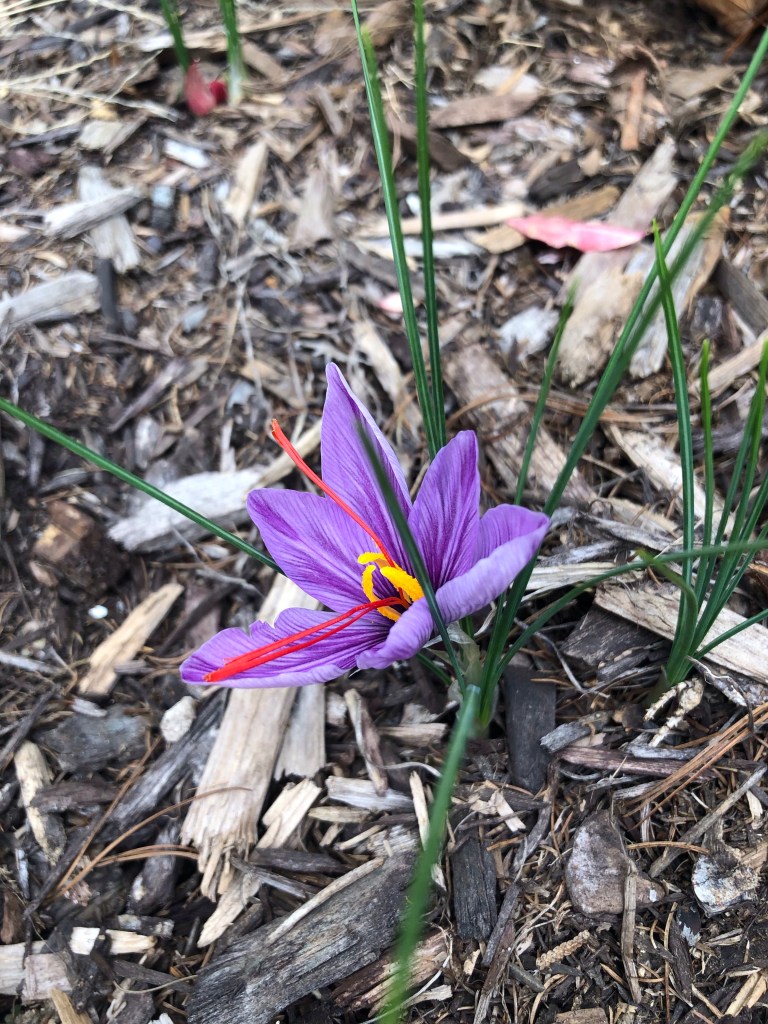
More signs of spring: Crocuses are blooming, early signs are showing of the very beginnings of peonies, and when it was 60F one night I could hear the frogs in the woods at dusk.
It is time to start seeds for tomatoes, peppers, and tomatillos. We plan to start ours this weekend. Better get out Clyde’s Garden Planner. Speaking of starting seeds, I think I’m going to use the coffee cherries from my coffee plants to start new ones. There aren’t enough to roast, so perhaps I’ll grow some more plants and give them to friends.
I reconnected with some old friends this week. I had three different calls with friends on three different days and came out of each feeling lighter. If anyone else wants to catch up, email me and let’s video chat over lunch!
This has been a tough week for Charlie. According to Wonder Weeks he should be going through a leap where he has a better understanding of relationships and has a lot of separation anxiety when we are not holding him. During particularly tough days, I’m reminding myself of something Amanda said recently: “He can be tiring but weâre all still figuring each other out. What matters is the way he lays his sleepy head on your shoulder or looks up at you with his gummy smile.”
We had some nice walks this week. He is able to sit up on his own in the stroller without the car seat now, so he can face forward and see the world. He loves it.
The Indie Microblogging book is live! I backed the Kickstarter in 2017 and was part of the micro.blog community for a couple years. I stopped posting to my microblog when I consolidated everything under one URL, but now I’m thinking it is time to set one back up. I think I’ll use Jeremy Felt’s Shortnotes plugin to power it. Before I do, I’m going to see if there is a filter to change the name. I already call my digital garden Chuck’s Notes, so I’d want to call this something different.
Speaking of shortform content, Instagram is getting worse and worse. I’m getting tons of ads and sponsored content, and the targeting is completely off for me. I’m getting ads for women’s clothing, sporting goods, meme accounts, and crappy TV shows that I’ll never watch. Twitter was pretty bad until I started using Tweetbot, a third party Twitter app, which allowed me to go back to the chronological timeline without ads or “recommended” content.
And speaking of things getting worse, I’ve been inundated with spam calls for student loan scams lately. I don’t even have student loans! I’m thinking about finding an app to send all numbers not in my contacts to voicemail.
John McPhee has published 29 books, regularly writes for the New Yorker, and won a Pulitzer Prize, yet he rarely writes more than 500 words a day. (h/t Cal Newport and Eric Davis)
âPeople say to me, âOh, youâre so prolificââ¦God, it doesnât feel like itânothing like it. But, you know, you put an ounce in a bucket each day, you get a quart.â
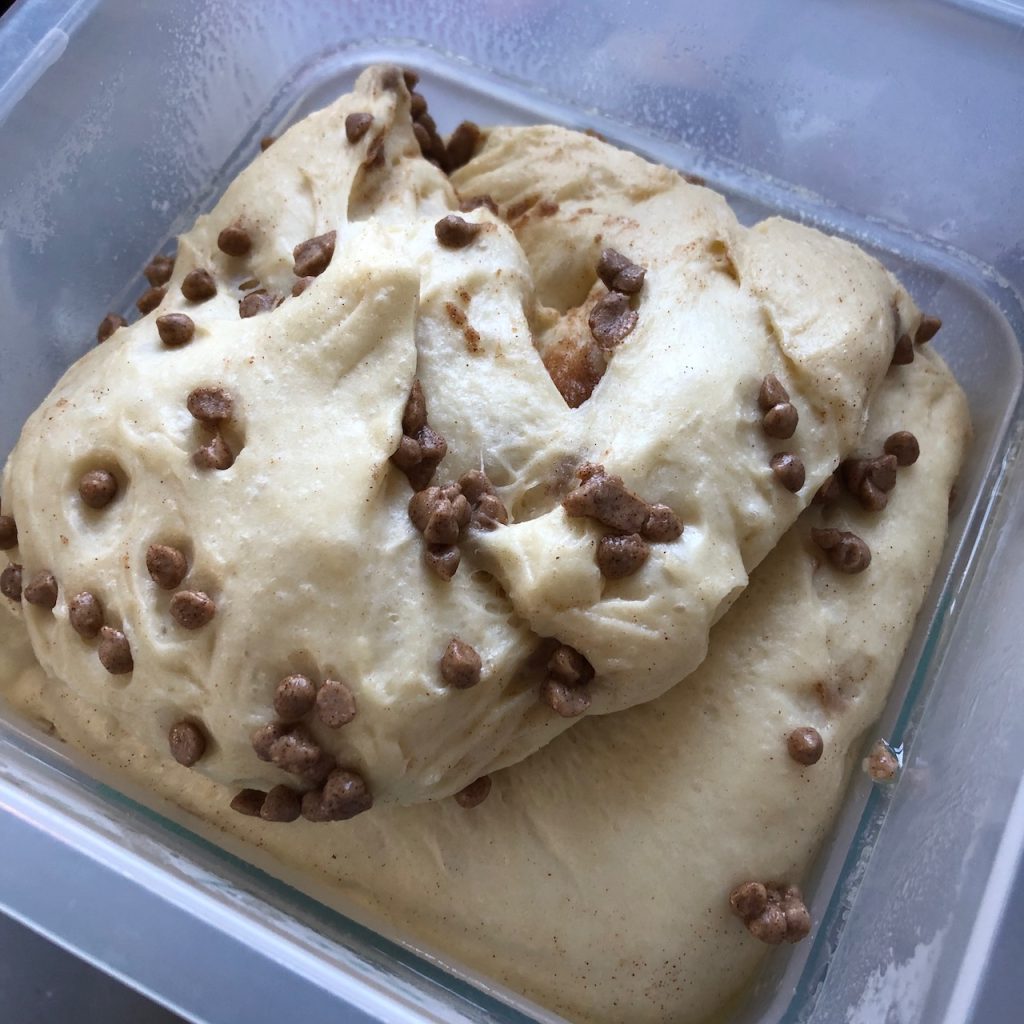
This cinnamon bread recipe is pretty simple to make and is tasty. I’m going to experiment with adding a little sugar to the dough and trying out some different filling variations to dial it in. I didn’t use an egg wash to bind the filling because we had eaten the last of our eggs an hour before for breakfast, but just water worked okay and the loaf didn’t have any gapping problems.
My cousin Matt got me a bottle of Weller Special Reserve for Christmas, which I’m enjoying. Since it is made at the same distillery as Pappy van Winkle, rumor has it that Weller Special Reserve is bottled from the barrels that didn’t quite make the cut for Pappy 12 year, but with a price point $50 lower.
We’ve been drinking Calvados since 2014, when Jeffrey at Rochambeau persuaded me to buy a bottle, but like all types of French alcohol, I’ve been confused by the various AOC classifications for Calvados. Imbibe recently published an explainerArchived Link, and I was pleased to find that we have a bottle of Pays d’Auge in the cabinet.
J. Kenji Lopez-Alt’s Wok book is out! As with all things Kenji, it is highly recommended. I’ve cooked more meals from his recipes than any other author. I’ve already leafed though this book and have half a dozen things I want to try out.
Speaking of J. Kenji, my friend Jon asked me what sodium nitrite does in the corned beef brine, and a Serious Eats article from Kenji answered the question for me:
So how do nitrites work to preserve meat? First off, they are flavorful. They give hams and corned beef their characteristic tang. It also inhibits the growth of the few types of bacteria that are tolerant of salty environments. Finally, it helps preserve color.
We all know that meat turns from red to brown as the main muscle pigment myoglobin oxidizes and turns into metmyoglobin, a reaction catalyzed by free iron atoms in the meat, right? (I mean, who doesn’t?). Well, when nitrites react with meat, they form nitric oxide (that’s nitrogen with but a single oxygen molecule), which in turn bonds with the iron, thus preventing the reaction that transforms myoglobin into metmyoglobin, allowing beef (or ham) to retain its deep pink color, even when fully cooked.
Interestingly enough, this is the exact same reaction that occurs with barbecued meats to form the pink smoke ring around their edges. But that’s neither here nor there.
The same article also suggests dry curing corned beef instead of brining it. I’m already brining mine, but I might dry cure it next year!
I wrote a master study tutorial for one of Vera Molnar’s works using p5.js this week. I intend to do more of these because it helps me learn p5 and it helps other people who are getting started, too. Other artists I want to explore: Sol LeWitt, Herbert Franke, Frieder Nake, Michael Noll, Georg Nees, Josef Albers, Manfred Mohr.
Minified javascript is a pet peeve of mine. It is kind of like DRM for code: You can get around it, but it is annoying and takes lots of time to reverse the function name assignments. I’ve learned so much from reading other people’s code that I feel like I need to do other people a solid and not minify my own. Whenever you can, ship your unminified code to production. When build tools make that prohibitive, share the unminified version on GitHub.
When trying to learn how to create art, it is helpful to study and copy works of the masters. Painters call this exercise the master study. This exercise is also helpful in generative art!
It is important to remember that a master study is a learning exercise, not something to be passed off as your own art. Give credit where credit is due. This is Vera Molnar’s work.
This isn’t a pixel-perfect recreation, but rather a generative technique that will create a similar work.
This tutorial isn’t perfect. There are other (probably better) ways to structure this code. Use it as a learning tool.
Write the code yourself and play around with the parameters to get a sense of how it works.
This tutorial assumes you already know how to set up a p5 canvas and the basics of the setup and draw functions. If not, check out the p5js.org Get Started tutorial first.
This is a great piece to learn some of the basics of generative art with. It uses nested iteration, randomization, an 8×8 grid, and a nice color scheme.
I like to start with making sure I know how to make each of the basic elements in the sketch before trying to throw them all together. In this piece, one of the basic elements is in the name: Quadrilaterals, the shape with four edges and four vertices.
Taking a look at the Shapes section of the p5 reference, we see that they have a quad()primitive. What luck! Another way would be to draw four separate connecting lines, or drawing a square and skewing it in various ways.
So let’s draw a basic quadrilateral to get a sense of how they work.
Great! Now let’s add in some randomization. We’re going to use the noLoop() function so that we only get one quadrilateral each time we hit Play. If it looks like your sketch is glitching, you probably forgot the noLoop.
To add in some randomization, we are going to use the random() function. While doing this, keep in mind the order of arguments for the quad function: Clockwise from upper left. That will help us set the bounds for what we want random() to return. For example, for the first (upper left) vertex, we probably want a point somewhere between (0,0) and (50,50). So that would mean the first two arguments of the quad function need to be random(50), random(50), meaning: “pick a number between 0 and 50 for x1 and a number between 0 and 50 for y1.”
Now that we’ve added in the random() function for each vertex, each time you hit play you should see a different quadrilateral.
Great! Play around with this a bit to grok how it works. Next step: Draw a bunch of these in a grid.
push() starts a new drawing state, then pop() resets it. Critical here because we are using translate() to move the starting point for each shape. If we did this without push() and pop(), the translate would be additive, so it would not look like a grid. Comment out push() and pop() to see how it would look.
translate() moves the starting point for everything that comes after the translate() function. Here we use it to move each shape to its correct location within the grid by using the x and y variables provided by the for() loop multiplied by the size variable, and offset by the spacing.
If you are having trouble understanding it, play around with translate() on a fresh sketch to get a sense of how it works.
Different values for random inside the quad function than we used earlier
This is because we are offsetting in absolute numbers, not relative percentages. 20 pixels on a shape that is 300 pixels wide is a smaller relative amount than 20 pixels on a shape that is 40 pixels wide.
âï¸ Bonus challenge: figure out how to make the offsets relative!
Great! We are getting somewhere. Now let's do another loop so that we get multiple quadrilaterals in each spot on the grid.
Drawing multiple quadrilaterals at each spot in the grid
Now we need to go back and look at Vera's original piece and make a choice: Do we draw all of the quadrilaterals in each spot before moving on to the next, or do we draw all of the bottom layer, then all of the second layer, etc? The answer to this determines where we put the loop: Inside the grid loop where the quad() function is, or outside the grid loop to draw multiple grids.
Looking at how the lines on Vera's original piece overlap, I think we should do the latter: Drawing multiple grids. This doesn't matter so much when the lines are all black, but it will make a big difference when they are in color.
How many? Let's start with 12 and see how it looks.
Looking pretty good! Go ahead and play around with some of the variables and the inputs to the random() functions to see how it affects the output.
Adding color
Okay, getting close! Now we need to add some color.
For a single grid that would be easy: Just set up an array of colors and pass that array to random() inside the stroke() function right before the quad() inside the loop. It isn't that simple when we are drawing multiple grids with a loop because that will lead to different colors within a pile of quadrilaterals. That might look cool, but it isn't what Vera's piece looks like.
So what do we do? There are multiple ways to solve this problem, but my preferred way to making an array of color options and using a loop to create an array of color assignments the same size as the grid.
I sampled Vera's original piece and created an array of the HSB version of colors she used with 0.9 opacity (trying to mimic the pen color bleed-through overlap).
Almost there! Here is one of our versions compared with Vera's:
Looks like we are getting very close. I think the final steps here are to:
Add more quadrilaterals to each stack
Adjust the stroke weight
Play with the stroke color opacity
Dial in the variability of the quadrilateral vertices
I'll let you take it across the finish line. You've got this! ðª
I’m beginning my thirty-third year. You can read some reflections on my thirty-second year and the directions I’d like my thirty-third year to take.
Regular reminder for myself: Remember the days when you wished for what you have now. It helps reframe your current feelings and helps you take a longer view.
I met up for coffee this week with an acquaintance I first met 10 years ago when I first moved to New York. I usually ran into him once or twice a year and chatted for a moment, but that was the extent of it. We always knew we had some overlapping interests, but now it seems like our interests are even more similar than we thought. Ten years later a real friendship is forming and we are planning on working on a project together. I’m glad we loosely stayed in touch. There is a time and season for all things.
Whenever I feel myself getting frustrated with my son being cranky, I sit down and read one of his books to him. He loves it and it never fails to soften my hardened heart.
I edited the RSS feed for my digital garden to show pages instead of posts, so you can now subscribe to new content from my digital garden. I also added a JSON feed if you are into that sort of thing.
I made my first Gutenberg blocks this week! I used George Stephanis’s Your First Block gist as a guide instead of some of the more complex starters out there since it is stripped down and helped me get the hang of how it works. The two blocks I made output a post’s published date and last modified date with an optional editable label in the sidebar. I know the Gutenberg plugin already has a Post Date block with more options, but this simple use case was a good way for me to wrap my head around how to create blocks, query the WordPress database using JavaScript rather than PHP, and manipulate/output data with blocks. Hopefully more blocks to come!
Good news: The blocks work in regular pages and posts. Bad news: They don’t work in FSE. They way I’m pulling the date attributes doesn’t seem to work with FSE templates, returning NaN undefined NaN, and I haven’t figured it out yet. As soon as I figure that out, I plan to use these blocks in my digital garden so that it is easy to tell if a particular note is being tended to or not.
I enjoyed this profile of Wendell Berry in the New Yorker, though I’m vexed by the given title. I suppose it is another example of a clickbait headline, as the piece is clearly a profile and not an advice column from Berry.
One idea from the Chuck Klosterman episode of Conversations with Tyler that I’m thinking a lot about this week is now that there is less scarcity in access to music (music is readily available to stream now vs needing to go buy maybe 1-2 cds every two weeks), we build less of an identity around the music we listen to now than we did in the past. If someone can see who we are by glancing at our social feeds, there is less of a need to signal that identity via our music choices, which frees us up to have a wider variety of musical interests on average now.
Wired Magazine had some wise words this week: “politicians aren’t meant to be idolized, even in their finest hours.” It does look like Zelensky is doing a pretty good job in the face of overwhelming adversity, including multiple assassination attempts. I think he even deserves praise for leading his people in this tough time. But he should not be idolized and turned into a meme. Doing so will make it harder to hold him and his government accountable once this war is over. In Zelensky’s own words:
“I do not want my picture in your offices. The president is not an icon, an idol or a portrait. Hang your kids’ photos instead, and look at them each time you are making a decision.”
Zelensky’s inauguration speech, 2019
I cooked some “outside of our norm” meals this week:
Fried tostones from green plantains (double fried them – unsmashed first, then smashed), topped with mojo-marinated pulled pork that I cooked in the Instant Pot, avocado, and curtido.
I used some of the mojo pork to make Cubano sandwiches later in the week.
The King Cake recipe is suitable for almost any cool-weather holiday dessert if you change the icing and decoration. I may make one for Christmas or Easter!
Yellow split pea soup, flavored with dill and fennel seeds. I make a lot of lentil soup, but this is the first time I’ve made split pea soup because I had a housemate in college that would simmer split pea soup for three days straight and the smell completely turned me off of the stuff for years.
Speaking of cooking, I have no fewer than four different repositories of saved online recipes that I’d like to make better use of. If it is silo’d in one app (like Paprika) that I might not have on a particular advice, I won’t use it. So I’m thinking through ways to organize this in my digital garden. Ideas welcome (comments, email, etc)!
Etsy recently hit sellers with a 30% fee increase on sales, not including the processing fees, listing fees, platform store fee, and marketing fees (opt-in) they charge. They are taking quite a cut from indie sellers!
They do provide a nice service and a built-in community. But indie sellers that have their own social following or email list can do better by moving to their own website.
Moving to your own website may be a hassle, but is probably best for the long-term growth of your business. Right now you are at the mercy of Etsy’s fees and they have almost full control of your customers. Moving to your own domain and building out an email list puts you back in the driver’s seat:
You can build a direct relationship with your customers
You can choose a store software like WooCommerce that has a lower fees
And if you want to use a different store in the future, you can do so without disrupting sales – Users will keep going to the same domain and you can change how it works under the hood.
You can pick a layout that is more customized to your brand
You can offer more options like subscriptions, gift cards, custom option ordering, booking consultation sessions, etc
I strongly recommend WooCommerce because it is open source, I work at the company that makes it, and I have lots of experience with it, but even if you move to Squarespace or Shopify with your own domain I’d be happy.
With WooCommerce you’d need to pay for a domain, hosting, and credit card processing fees (2.9% + $0.30 USD per transaction). No sales, listing, or platform fees. WordPress and WooCommerce are free to download and use! There are some paid extensions you can buy to add functionality to your store, but those aren’t necessary to get your store set up and start making sales.
If you want to go with WooCommerce, here is a checklist to get you started:
Purchase a domain.
I use hover.com, but feel fee to use whatever registrar you like!
Purchase WordPress hosting and hook up your domain to it.
Costs vary here, but I recommend using a managed host like Pressable, WPEngine, or Flywheel. Managed hosting is more expensive than shared hosting, but they take care of software upgrades, handle security, and generally have faster hosting. Budget shared hosting like GoDaddy or Bluehost can be alright, but will be more work for you long-term.
Install WooCommerce and go through the setup process. WooCommerce Pay is a quick and easy option for a payment processor and is powered by Stripe on the backend.
Sign up for a free MailPoet account and start collecting email addresses for your customers. Set up email automations if that is your thing.
Rumor has it that you can download your customer email addresses with a bit of tech-based elbow grease. Perhaps once you have the email addresses, you can send them a one-time email about moving to your own site with a coupon code if they want to re-order, and an option to sign up for future updates.
If you get stuck and need help, drop me an email. I don’t do freelance work anymore, but I’d be happy to give you guidance. I want more people to own their domains and keep the web independent!
I turn 32 today, and since I’m blogging more, I’d like to kick off a tradition of writing birthday posts, a la ma.tt.
This past year was incredibly challenging, both at home and at work. With the stress of the pregnancy, a difficult period at work, and the uncertainty of the changing pandemic situation, the past year really ground me under its heel.
Thankfully, most of that is now behind me–Charlie is doing well and a joy to be around, my position at work has changed for the better, and I’m actively dealing with the stress and anxiety that cropped up over the past year. The pandemic is still here, but we are taking precautions and mostly getting on with our lives.
Right now I’m on paternity leave, which I’m thankful for. It has given me time to be with Charlie and space to slow down, reset, and recharge. I’m mostly feeling like myself again, though with a new facet of being a father. I’m getting new ideas, have more energy, and am getting the hang of caring for a baby. Things are trending up.
One thing in particular to call out: This time last year we were scared, anxious, and all we wanted was to meet and snuggle this baby. Now he is snoozing on my chest while I write this post and it is an incredible feeling.
I don’t know what the next year has in store, but here are the vectors I’d like to guide my place in it:
Spend as much quality time as I can with Amanda and Charlie. Help Charlie learn, grow, and explore the world.
Read less news and social media; read fewer contemporary books and more old books.
Make more art.
Spend more time outside, tending to the garden, going for walks in the woods, and paddling on the Hudson. Get out in all weather, not just “nice” days.
Make more in the workshop.
Make some improvements around the house and yard.
Continue blogging regularly.
Take part more in the local community in Peekskill
Small seasons update: The beginnings of crocuses started popping up in the front flowerbeds, trees are starting to bud out, and taps are in the sugar maple trees.
Thanks to a reminder on Instagram from my friend Erin Carlson, I sowed poppy seeds during nap time this week. Hungarian Blue Breadseed and Icelandic Grey poppies. I’m hoping to get enough seeds from the Hungarian Blue to bake with this year.
Variable late winter/early spring weather this week. 60F one day, then snow and ice the next. We didn’t get as much snow as predicted, but we did get ice, so I went out and filled up the bird feeders. As I learned from Richard Prum this week, even though birds do fine even in negative temperatures if they have enough food, they can die in a single night without access to food (like after an ice storm).
I had my first couple day stretch as a solo dad while Amanda traveled for work this week. It was tiring but Charlie and I did alright. There was nothing that I haven’t done dozens of times solo over the past six months—the only difference is that there were no breaks for a couple days. I’m learning to rest in the in-between moments and blog during naps. 90% of these posts are written during naps, the other 10% after bedtime.
I went out for a 15 minute errand and popped a tire on a pothole this week. What a pain. I didn’t bring milk for Charlie because I thought we’d only be gone 15 minutes. He cried the whole time. Thankfully it was a sunny day, I had a tarp and furniture blanket in the car to kneel on, and the tire change only took me 30 mins, and I already had an appointment at the dealership the same day for an inspection, so I had a new tire put on, too. I’ll never leave the house again without a bottle, not even for “quick errands.”
I’ve added more content to my digital garden. Next I need to figure out how to use pages as the source for the RSS feed and create some meta blocks for published date and last updated date.
I’ve been following along over at IndieWeb with the personal libraries project. Links:
That gives me three ideas for my own Reading page:
Revive the RSS and JSON feeds
Connect the post type to the Open Library API to pull in info and link out
Add a “to read” list to get my wishlist out of Amazon and reduce my Amazon purchasing
I started brining corned beef for St. Patrick’s Day. I have two briskets in the soup and one will get turned into pastrami. I’m not Irish and not really into St. Patrick’s Day, but I will take any excuse to eat corned beef.
My heart goes out to Ukrainians. I can’t imagine my life getting completely disrupted by war. The NICU babies getting moved to a bomb shelter really got me. When Charlie was in the NICU things were already scary and difficult enough. I’m very thankful (and often take for granted) that we live in a place with political stability and my family is safe. I’m holding Charlie a bit closer this week. Putin must be dethroned and defenestrated.
I found this 360° view of how we got to the current war in Ukraine from Grid to be very informative. I’m appreciating context a lot more these days. Nothing is as straightforward as it seems and context matters for getting a better understanding. Beyond the obvious attacks and aggression, two things worry me about this war: The rampant online misinformation and the cyber attacks that preceded the invasion, both of which seems to be Russia-sponsored.
Speaking of context, one thing to keep in mind before demonizing Russian soldiers en masse is that Russia has mandatory conscription, punishable by jail time for non-compliance. There is a high likelihood that the young Russian men on the ground in Ukraine didn’t enlist voluntarily and don’t want to be there. They have mothers, partners, and children weeping for them, just like the defenders of Ukraine have. War is such a tragedy.
It is difficult to get a sense of how popular the war is in Russia without a free press there (no one doing that unbiased reporting and data collection, and misinformation being spread there by official sources to garner support.)
I am very glad that Trump isn’t the one making decisions in the White House about what to do right now. I’m not a huge Biden fan, but he is more stable and clear-headed than Trump, who I regard as a loose cannon. Plus, Trump’s ties to and support of Putin are worrying to say the least.
The Russian cyberattacks bring up something that has been on my mind recently: How does one personally prepare for a massive internet outage? Cyberattacks could bring outages, as could coronal mass ejections. I’m not a “prepper”, but I do think it is worth trying to mitigate the downsides of the three biggest ways the Internet affects my day-to-day life:
My income (I build websites!)
I can do physical jobs for a bit, I’m pretty handy
Access to money (Can’t swipe a credit card if the pipes are down)
Mitigate by storing some physical money somewhere
Access to information
Mitigate by investing in more offline reference resources, mostly books. I’ve already made a start here, but there is more I can do.
Who else is thinking about this? 🤔
I’m reading and appreciating Matt Yglesias and Andrew Sullivan a lot more than I used to. I don’t always agree with them, but I find them to be clear thinkers who are willing to take intellectual risks and update their priors based on new evidence.
Speaking of: After kicking the idea around in my head for over a year, I planted a digital garden. You can check it out at https://notes.cagrimmett.com. It is very much in its early stages and I have a lot to add, both in terms of functionality and content.
The coffee cherries on my coffee plant are starting to ripen! This is the first time in the 10 years that I’ve had this plant that it has produced cherries. I’m very excited!
The local bakery, Signal Fire Bread, has baguettes each week now, so I picked some up this week and made jambon buerre sandwiches for lunch (ham, butter, and homemade pickles, though I also added cheese and mustard because I’m an American, after all.) I think this might turn into a regular Friday occurrence.
I’m starting to sway back and forth to the rhythms of paternity leave. I’m getting more used to working around naps and Charlie started rolling back to front consistently this week, slept completely through the night once, and developed a new habit of blowing raspberries. He is eating more real foods now, including yogurt, banana, sweet potato, carrot, and apple sauce.
My 41 day Wordle streak ended with Wordle 244, then it took me 6 tries with #245, the first time it has taken me 6. I’m going downhill.
Twitter recently added a feature that prompts you to read an article before sharing. Good on Twitter for adding it.
I got it when I was about to share a comment about the Neuralink animal testing article and not wanting to give a computer access to my brain. But when I read the article I realized that I hadn’t considered the possibilities it opens up for people with disabilities. Animal trials still suck, but I’m not as anti-computer/brain interfaces as I was before reading the article.
The WordPress.org photo directory I posted about last week is now a proper Make team! I joined a call with some of the folks on Friday to discuss the path forward with the photo directory and am excited about being a part of it. It is also cool to see first-hand how the governance and decision-making process works.
I enjoy sketching patterns with p5.js. I saw this one on a door in The Witcher and had to sketch it.
What I’m Reading
Two posts on creating watercolor-esque graphics with code
Last week I posted about using Feedbin’s email address for newsletters. Chris Hardie’s approach here is convenient for things that should have a public feed but do not, and I’ll keep this in my back pocket for future projects. Chris also had the great idea of using an email address at a domain he controls and aliasing it to the address for a service like Feedly or Feedbin. I’m not sure why I hadn’t thought of that, but I’m now switching my newsletter subscriptions over to an address I control and aliasing it to Feedbin.
Kevin Kelley’s list of Contemporary Heresies. Lots here that would be on my list, too. I should jot down my own soon.
I really like the Big Here quiz Kevin Kelly posted about, too. I don’t know all of the answers for where I live in Peekskill, but I intend to find out and publish the answers in my digital garden.
I’m catching up on podcasts I’ve missed from the past few months. In the Conversations with Tyler 2021 Retrospective, producer Jeff Holmes challenged long-time listeners to put together a guide to understanding the podcast for new listeners. CWT is one of my favorite podcasts and one of only three podcasts that I’ve attended a live taping of. I want more people to listen to it, so here is my guide.
This is the conversation Tyler wants to have, not the conversation you want him to have. Tyler used to say this at the beginning of early episodes, but has dropped it from recent ones. View episodes as a curious person exploring their own interests rather than someone trying to give a well-rounded introduction to their guests.
Tyler wants to learn as much as he can as quickly as he can. Time is scarce. Tyler does a lot of prep work for each episode, including consuming most, if not all, of a guest’s published work, so he tends to jump right in without wasting time explaining the context.
One of Tyler’s goals with the podcast is to teach people to ask better questions. He models this in each episode and chooses his questions carefully.
A major theme in Tyler’s questions is: How well do our current models explain the world and where do they fall short? He applies this at all levels from big picture macro trends to micro interactions of songbirds.
Reading Marginal Revolution is helpful for gaining context about Tyler’s interests and how he approaches topics. Reading MR will help you understand CWT and vice versa. Not necessary, but certainly helpful.
What’s up with Overrated vs Underrated segment? I see this as Cowen both wanting to understand the world better and to learn what makes each guest who they are (see 7). Whenever something is not correctly rated, there is a mystery to uncover. And this segment is rapid fire and fun!
What about the [Guest name] Production Function segment? Context matters. In this segment Tyler asks questions to gain context about the guest to help us understand where they come from, what drives them, what paths they took that lead them to where they are now, and how they work.
Transcripts of each show are available at conversationswithtyler.com. Use them! Sometimes the questions are rapid fire and I don’t catch something a guest mentions, so I’ll either pause and rewind or pull up the transcript and take a note. That is one of the benefits of the podcast medium: Pausing and replaying is built-in and expected, and links are available in the notes section of most popular podcast players.
How I like to listen to the show: I listen while I’m doing auto-pilot tasks like laundry or dishes so that I can focus on the conversation. I often pause the episode and jot down a few phrases to research further, books to buy, music to listen to, and movies to watch after I’m done listening.
It is warm enough again to take Charlie on daily walks in the woods, which I’m excited about. I’m glad to be able to introduce him to nature early. We saw a couple of robins this week. Apparently not all robins migrate, but I haven’t seen others this winter, so I’m taking this sighting as a good sign. We also saw the first skunk cabbages popping up in the low wet areas of the woods. The eagles are out around here too, which typically happens late winter. These are all good signs of spring.
This reminds me of the Small Seasons guide, which I admire and have been brainstorming ways to visualize. I think I’m going to write my own descriptions for these seasons in the lower Hudson Valley and lay them out on a page with illustrative photographs. Maybe it morphs into a small print version, too.
Prior to the Gregorian calendar, farmers in China and Japan broke each year down into 24 sekki or “small seasons.” These seasons didn’t use dates to mark seasons, but instead, they divided up the year by natural phenomena.
Paternity leave is teaching me to slow down, discard schedules, and take things as they come. I usually have multiple irons in the fire and make lots of plans, so this is a big shift. It is going well so far, though. I’m loving all the time with Charlie and having the time to cook more. He loves being involved, so I put him in the carrier facing out and talk to him while we cook, do dishes, laundry, etc.
We are working on sleep training this week, which seems to be going well so far. It was difficult the first couple nights, but as we shift more of his calories to the daytime Charlie is sleeping longer at night.
My canelé baking plans got put on the backburner this week, but I did bake a big loaf of banana bread today with the overripe bananas that Charlie didn’t eat. I used this recipe from Serious Eats as a base, but used turbinado sugar and added nutmeg and clove to deepen the flavor.
Apparently moving the blog back to a dedicated page instead of the homepage made Feedburner start picking up my posts again. My WordPress install used to be in a subfolder (/blog), but is now in the root folder. I just happened to make /blog my posts page, as one does. So people who subscribed in college are getting my posts again after not getting them for many years. Hi, old friends! 👋
I’ve been submitting photos to the new CC0-licensed WordPress Photo Directory. I’ve had 40 accepted so far, many that I haven’t put online before. Related: I’ve long been wanting to contribute more to the WordPress community, so I joined the moderation team for the photo directory. I spend about 30-60 minutes a day moderating new submissions.
I can’t imagine that Spotify’s podcast acquisitions will go well after this Joe Rogan debacle. What shows worth acquiring (read: bringing in audience + revenue) would be willing to give up their independence to Spotify now? Gentle reminder that walled gardens are rarely the answer. Regardless of what you think about Rogan’s show, podcasting as a whole thrives when podcasts are independently hosted and have open RSS feeds.
Keep them coming. Let a thousand ____le games bloom!
I recently ran out of my favorite dot grid A5 notebook from Muji. I haven’t been able to find them for over a year now (they’ve been discontinued, but I had a stack) and have been looking for worthy replacements. Mark Frauenfelder over at Cool Tools apparently used similar ones (though A6 and with a clear cover instead of cardboard) and recommended ones from Yansanido as a replacement. I’m liking them so far!
Speaking of notebooks, Amanda got me a recipe journal from Moleskine many years ago and I seldom wrote in it, but now I know what I want to do with it: 1) Write down the recipes that I always have to look up and 2) Write down our favorites that have evolved over time and I make from memory. Examples: Pancake mix, cast iron waffles, red curry chicken soup, sweet potato curry, Japanese curry, meatballs, our template for bowls (grain + protein + veggies + sauce).
I fixed my reading page. I wrote a custom template in my previous theme to lay it out grouped by year and I couldn’t replicate it with the query loop block, so I added the PHP template to the twentytwentytwo theme. It took me a little while to figure out why nothing else in the template was loading, and it turned out that do_blocks was the answer. h/t to Carolina Nymark for writing a helpful post about using PHP templates in block themes.
I also took the time to add the publication year to each of the books on my reading page. One of my goals this year and going forward is to read more old books (I tend to read a lot of contemporary books), so having the publication year will help me keep track of my progress on that front. I plan to add an average publication year for the whole page and each year, which I hope will trend down over time.
I subscribed to a couple more paid newsletters this week: Al’s Cocktail Club (actually a renewal of a gift) and A Piece of Cake by Bill Clark. Al’s Cocktail Club also provides access to the online archive and a members area, which is cool. A Piece of Cake is a Substack that I’ve been following for a while, and I’ve made a bunch of his free recipes, and I decided to subscribe because there are more of his recipes I want to make behind the paywall. I like supporting indie content creators.
An aside on Substack: I don’t prefer it, but I understand why it is so popular. It is fairly easy to use on both the content creator and the subscriber front. It allows writers to make money, which I’m all for. I’m noticing that they are finally allowing writers to export their posts and subscribers, allowing custom domains, and RSS feeds for public posts. This is a big improvement over when they first launched.
I’d love to have a private feed URL for my Substack subscriptions, but I have a workaround. I pipe my newsletter subscriptions to Feedbin via their email address functionality and read them via RSS. NetNewsWire is my reader of choice.
Charlie turned six months this week! He is growing so quickly and gaining a lot of core strength and coordination. I bet he’ll be crawling in the next month.
Public education suffers from many things, chief amongst them is the complete lack of autonomy most students face for the majority of their childhood. The effects can be devastating and have long-term consequences. (Inspired by this Twitter thread.) More student autonomy is desperately needed. We each want to feel like we have more say over the directions of our lives.
We renewed our vegetable CSA (community supported agriculture) share for our 9th year. We are going with Roxbury Farm this year, similar to the last two years. The vegetables and variety are great, the pickup location is convenient, and they send out an informative newsletter that we enjoy each week. I love the challenge each week of making meals with the local seasonal assortment of vegetables we receive.
I went to a funeral this week for the first time in six years. A close friend’s father passed away unexpectedly. It was the first Jewish funeral I’ve attended. I found the Hebrew chants quite beautiful (though I didn’t understand the words). I was also moved by how the filling in of the grave is a physical communal act that brings a sense of finality to the ceremony. One isn’t just watching someone get buried, but actually doing the burying. I participated, then after the other attendees finished their shovelfuls, I helped my friend and a couple others finish filling in the rest of the grave. It was an honor to be handed a shovel and asked to help. The experience was on my mind all week and it will stick with me for a long time.
I’ve been making a lot of website updates. I switched to twentytwentytwo and went all-in on FSE. I’m slowly updating templates and template parts and dialing in mobile. Also taking the opportunity to add more pages to the site about various projects I’m working on. I’m making these updates primarily when Charlie sleeps, so changes will be gradual.
I got a Work Sharp Mk.2 and it beats every other knife sharpener I’ve used in terms of speed and the level of sharpness you can get in such a short period of time. My kitchen knives are razor sharp after just 4-5 mins per knife. I first heard about it on Cool Tools.
I got my smoker out for the first time in a year and a half. (Has it really been that long? Pandemic time is mind-bending.) I smoked some pork for tacos arabes. I decided to leave the smoker out so that it lowers the barrier to using it. High on the “in the next month or two” list: Pastrami (which I’ll make when I cure corned beef for St. Patrick’s Day), beef for birria tacos, Canadian bacon (needs to be cured beforehand).
Everyone is thinking about Wordle’s acquisition and indie games. I have an idea for a number game that I’d like to hack on soon: Pick a random two-digit number and figure out how to combine 1, 2, 3, 4, and 5 with any operators (+, -, /, *, sqrt(), ^n ) to create the number. Share your time and whether or not you used all 5 numbers to create it.
It is almost time to start seeds again! The leeks didn’t work well last year, so those are out. I want to grow some jalapeños this year (which I haven’t in a couple years) so that I can make some fermented hot sauce and smoke some to make my own chipotles.
Reading
I’ve been reading so much recent stuff that I forgot how great Project Gutenberg is for old books. I just downloaded a bunch of Wodehouse, Agatha Christie, and Dorothy Sayers to my Kindle.
Dinners go better when I plan them out a day in advance. Gone are the days when I don’t give dinner a thought until it is time to cook.
Speaking of “gone are the days”, I now need to write my to-do list for the next day at the end of each day, otherwise things get dropped. This is a best practice and I sometimes did it, but now it is a necessity. Sleep deprivation is a heck of a drug.
Speaking of sleeping, there is a baby taking a nap on me as I write this. What an incredible feeling!
I’m taking the second half of my paternity leave starting next week and will be the primary caretaker for Charlie during the day. We timed our parental leaves so that mine picks back up as Amanda goes back to work. I’m very much looking forward to spending the days with Charlie!
Life was pretty busy for most of January (travel, Amanda going back to work, me finishing up projects before I go on leave), I so I only did a third of the Genuary prompts. I doubt I’ll go back and finish the prompts later, as I have other generative projects I want to work on. I learned some new techniques in the third I did complete, though! Blog post forthcoming.
Those other generative projects I want to work on: Finishing the generative cocktails project I started and exploring asemic writing.
Speaking of reading, my friend (and purveyor of fine RSS feeds) Eric Davis found BookFeed.io, a neat little tool that creates an RSS feed to follow new releases from your favorite authors. Liked and subscribed.
Notion is cool, but it is pricy and a walled garden. Now that Notion finally has an API that returns nice JSON, I think that it might be time to make a tool that converts Notion blocks to WordPress Gutenberg blocks, which have parity with Notion’s standard blocks (not sure how to handle Notion’s database blocks yet)
Thinking WXR file rather than a wp-cli command, which makes it more accessible to WP site owners. Not everyone has access to wp-cli, but everyone has access to the native importer. And the native importer is a lot easier to use than wp-cli for non-developers.
The /search endpoint will be useful for getting a list of pages https://developers.notion.com/reference/post-search
The /get-block-children will be useful for getting the top-level blocks for each page. https://developers.notion.com/reference/get-block-children
This project looks like a good starting point for the Gutenberg markup conversion, though I’d need to add things like Tweets, Maps, etc. https://github.com/bmorrisondev/notion-to-html/blob/master/main.js
Cover images -> Featured images
Accessibility tool: Color contrast checker with suggestions
Tyler Hobbs’s discussion of RGB vs HSB color spaces in Working with Color in Generative Art gave me an idea: Since you can easily increment either the hue, saturation, or brightness in HSB, contrast checkers can give suggestions of how much one would need to change a color in order to have higher contrast.
Since most colors on the web are written in hex format, first I’d need to convert into HSB, run a test to see if the brightness needs to be increased or decreased, then increase or decrease it in a while loop until the contrast ratio meets accessibility standards and convert that resulting color back to hex and display it for the user. No reason that incrementing approach couldn’t work with suggesting font weight increases, too.
Website updates
I’m getting that old itch to update my theme again. I’ve had a sidebar nav for a while, but I’d like to expand my post width to show art and write more tutorials, so I think I’ll put the nav back up at the top. I might swap out my homepage for a landing page and move the blog to its own page again, too. Likely going to use the Blockbase themeArchived Link + FSE, which I just had a great experience using at work.
I’ve been enjoying Wordle. Here are my stats. I didn’t get it the first day I played because I didn’t understand the rules and tried to play with the letters in the example ð¤¦ââï¸
That is it for this week, and Charlie is waking up from his nap! ð
Since my son was born ~two months ago, my reading has shifted away from physical books into audiobooks and ebooks. I’m spending 90% of my time with one or both hands occupied, which is a bad strategy for reading physical books. It is much easier to hold and turn pages on the Kindle than a physical book. I’m also reading less. The time I have to do so is generally late at night, when I’m holding him to get him to sleep, and I’m generally too tired to read. Despite that, here is what I’m reading lately:
Books
Wool by Hugh Howey (ebook)
Mexico by James A. Michener (physical)
Old Man’s War series by John Scalzi. I’m 5/6 books in!
The Query Loop block introduced in WordPress 5.8 is one of the most underrated new features of WordPress Core. It opens up a lot of new possibilities with the Block Editor.
Obsidian for iOS is great so far, but still lacks first-class share sheet support. What I’d love is basically the same share sheet functionality that Apple Notes has (append a URL to a new note or existing note), with the added functionality of being able to append both selected text and the source URL in Markdown format.
I never remember the name of Mullein, Latin name Verbascum thapsus (left/first photo), so I thought I’d blog it in an attempt to remember.
Fun facts about the Mullein: It does not flower until the second year, and an individual flower is only open for a single day.
The second I saw for the first time and had to look it up when I got home: Ghost Pipe or Monotropa unifloraArchived Link. They are completely white, pop up from under the leaves in small bunches, and get their nutrients from tree roots via fungi. While they look like fungi themselves, they are regular flowering plants that are non-photosynthetic.
Some spoons, scoops, and spatulas I’ve carved in the past two years:
My Process
Roughing: I tend to cut out most of my blanks on the bandsaw, though sometimes I axe out my blanks. Occasionally I’ll use a drawknife on my shavehorse.
Shaping: I shape with both a Foredom rotary tool and a standard Mora 106 sloyd knife. I remove a lot of material quickly with the Foredom, then refine with the sloyd.
Unlike the folks who are dogmatic about only carving greenwood, I carve both greenwood and dry wood, depending on what I have around. Some are firewood, some are offcuts from other projects, and some are foraged from downed trees in the woods nearby. I prefer cherry, but have also carved oak, walnut, beech, and mahogany.
Some folks get hung up on only using hand tools for spoon carving, but I don’t. Carving is all about removing as much material as you can as quickly as you can early so that you can spend the rest of the time where it really matters: refining the shape. A bandsaw, rotary tool, and beltsander really help with that. Some folks only carve spoons and do it in a particular way, and that is fulfilling for them. I mostly carve utensils to use at my own table or give out as gifts. Carving spoons is just one kind of woodworking I do amongst many others.
Resources I’ve learned from
Emmet van Driesche – His Instagram is a wealth of information, as is his website. He is a wonderful, helpful guy. He is currently writing a book on spoon carving!
Cræft by Alexander Langlands – I focused a lot in the last year on improving my craftsmanship and I’m enjoying this survey of traditional crafts. As a sidenote, Amanda and I are loving Victorian Farm and Edwardian Farm, two shows that Alexander Langlands takes part in.
I’m reading these three with my friend TK Coleman to up our thinking, reasoning, and decision-making abilities. A question that has been on my mind a lot in the past six months is, “How can I make sure I’m not fooling myself?”/”how do I become less wrong in my thinking?”. I’ve read other things on this topic recently, and these are a continuation:
Data Detective by Tim Harford
You are Now Less Dumb: How to Conquer Mob Mentality, How to Buy Happiness, and All the Other Ways to Outsmart Yourself by David McRaney
This Will Make You Smarter (New Scientific Concepts to Improve Your Thinking) by John Brockman
A friend gave me some nice cherry logs that I sealed the ends of and let dry for the past year. I haven’t done much of my own milling, but I decided to get one of the logs out and see how much I could make out of it.
What I ended up getting out of one log:
Kitchen mallet
3 French rolling pins
1 traditional rolling pin
2 cooking spoons
1 eating spoon
1 eating fork
1 coffee scoop
First I split it in half and then split one of the halves in half again, leaving me with a half and two quarters to work with. Look at that gorgeous red!
I milled the half down into a square blank on the bandsaw, carefully removing the pith, which always splits when it dries. I also cut off most of the sap wood (the wood around the outer edges). Sap wood is younger, more wet, and more susceptible to splitting and tearing that the heart wood, which is older. The sap wood is growing and it is where the tree’s nutrients are carried to its limbs. The heartwood is no longer growing.
Mallet/Ice crusher
Turning: First, make it round. Second, plan out the cuts. I tend to mark them with a pencil. This wood was still a bit green, so it cut easily and made large shavings. I roughed it out to its final shape, then had it let it dry for a few hours before I could smooth it out and sand it.
Once it dried, I sanded it with 80, 150, and 220 grit sandpaper. Then I cut the grooves in the handle with a skew chisel and sanded the whole thing with 400 grit sandpaper before cutting it off the lathe. I cut it off by gouging the ends down to the size of a dime or so, cutting it close with a hand saw, then sanding down the ends to match the 400 grit. After that I take it inside and finish it with a coat of mineral oil + beeswax that I heat up over a flame on the stove so it soaks in and buff the wax with a cloth.
Finished! I paired this with a Lewis Ice bag when I gave it to my friend.
Rolling Pins
All of the rolling pins started out just like the mallet, but the blanks were a little smaller. I didn’t take many photos of that process, but in essence it is the same as the mallet:
Plan it out
Rough it out
Finishing cuts
Sanding
Finishing
Each rolling pin is roughly 14 inches long. The French-style can be used for all 14 inches. The traditional one can be used on the 9 inch center portion.
The three French-style rolling pins have a taper all the way across. To achieve this, I used a pair of spring-type calipers to measure the thickness at points equidistant from each end. I used the same technique on the traditional fixed-end rolling pin to cut the handles. I couldn’t resist putting the decorative bands on there to help with holding it.
Spoons and utensils
I was able to get a few spoon blanks out of this wood, too:
2 cooking spoons
1 eating spoon
1 eating fork
1 coffee scoop
I haven’t quite finished these yet. Hoping to do so this weekend. Note: Some of the things pictured are not from the log. I had three spoons already cut from a different piece of cherry I had. The butter knife, too.
Lessons Learned
I need to plan out my blank cuts a little better. I cut things a little too big on the first pass, but the second cuts didn’t leave me much room to do anything with, so I wasted wood. I could have gotten at least one more rolling pin out of this, maybe two.
The surface of the wood needs to dry a bit before turning to avoid tear out.
I didn’t take branches and knots into account when planning out the initial cuts on the bandsaw. Thankfully it didn’t cause issues this time, but definitely could have. I need to plan better next time.
I should remove the bark with a draw knife before splitting and cutting to make the sawing cleaner.
Getting a split flat with the draw knife would have helped for the initial bandsaw cuts.
I used to want every new device and cool gadget. I watched keynotes, preordered things, scouted Kickstarter for the latest and greatest. Now my iPhone is 3 generations behind and I have no intention of upgrading until it dies. I’ve lost count of how many generation behind the iPad I’m writing this on is.
I used to beta test tons of software, including major macOS releases. Now I wait until the official public release been out for at least a few months before I’ll even consider upgrading. Reliability is important to my workflow.
I used to pirate software, music, and movies. Now I’m not even sure where to look for such things.
I used to spend lots of my spare time on social media and online in general. Now I spend as much time offline as I can.
I used to be dogmatic about DRM free content and open source software. I still prefer it, but I’m much more pragmatic now. I want things quickly and I want them to work reliably. For example, DRM free audiobooks require lots of extra effort to source and then load into a compatible audio player on mobile. Audible has a 25x better selection and works every time.
Why have I shifted in this direction?
I think technology has reached a level of sophistication where it can do everything I expect quickly. Speed improvements don’t matter as much to me anymore when everything is fast.
Cloud storage is ubiquitous, so I don’t run into space constraints on devices anymore.
I value reliability over cutting edge features. My work requires fast turnaround and disruptions due to unreliable tools are very frustrating. I want things to work whenever I need them. I no longer have patience for doing work in order to make the tools work so that I can do the original work I came to the tool for.
I’ve reached a level of income and workload where I’m willing to trade money for time. When I was younger, the opposite was true: I had more time than money.
I feel like I’m in a different stage of life now than I was a decade ago. I value spending time interacting meaningfully with the world immediately around me rather than the online world. It isn’t that I didn’t want to interact with the world around me when I was younger, but it is definitely more of a priority now than it was then.
Re: pirating – It used to be difficult or very expensive to get the software I use, movies I want to see, or music I want to listen to online. Pirating it was easier. Now it is so simple and relatively inexpensive to get what I want that it is easier than pirating.
Like a lot of folks, I’ve been baking sourdough bread this year, and I wanted a bread lame to score the top.
While making a few other projects, namely spoons, I split two small pieces of cherry with a natural curve that I thought would be perfect for a bread lame, so I got to work shaping them and looking for hardware.
I did the rough shaping on the shavehorse with a drawknife, then did the final shaping with a Foredom flex shaft carving tool, sanded up to 400 grit, and coated them with mineral oil and beeswax.
The razor blade is held in place by 8-32 x 1/2 in knurled brassknobs that pinch the blade in a small groove cut down into the wood.