Archives

Blog index

Blog

  • Learning to Draw, Day 1

    This month I’m learning to draw. This is a skill I’ve never had. I once thought that there are analytical people and artistic people, but I’m no longer willing to accept that. Just like swimming or writing is a particular skill that can be taught and learned, drawing and calculus are both skills that can be taught and learned. I already know calculus (all the way through real analysis), so it is time to learn to draw.

    My guide this month is Drawing on the Right Side of the Brain. I’m going to post my progress here.

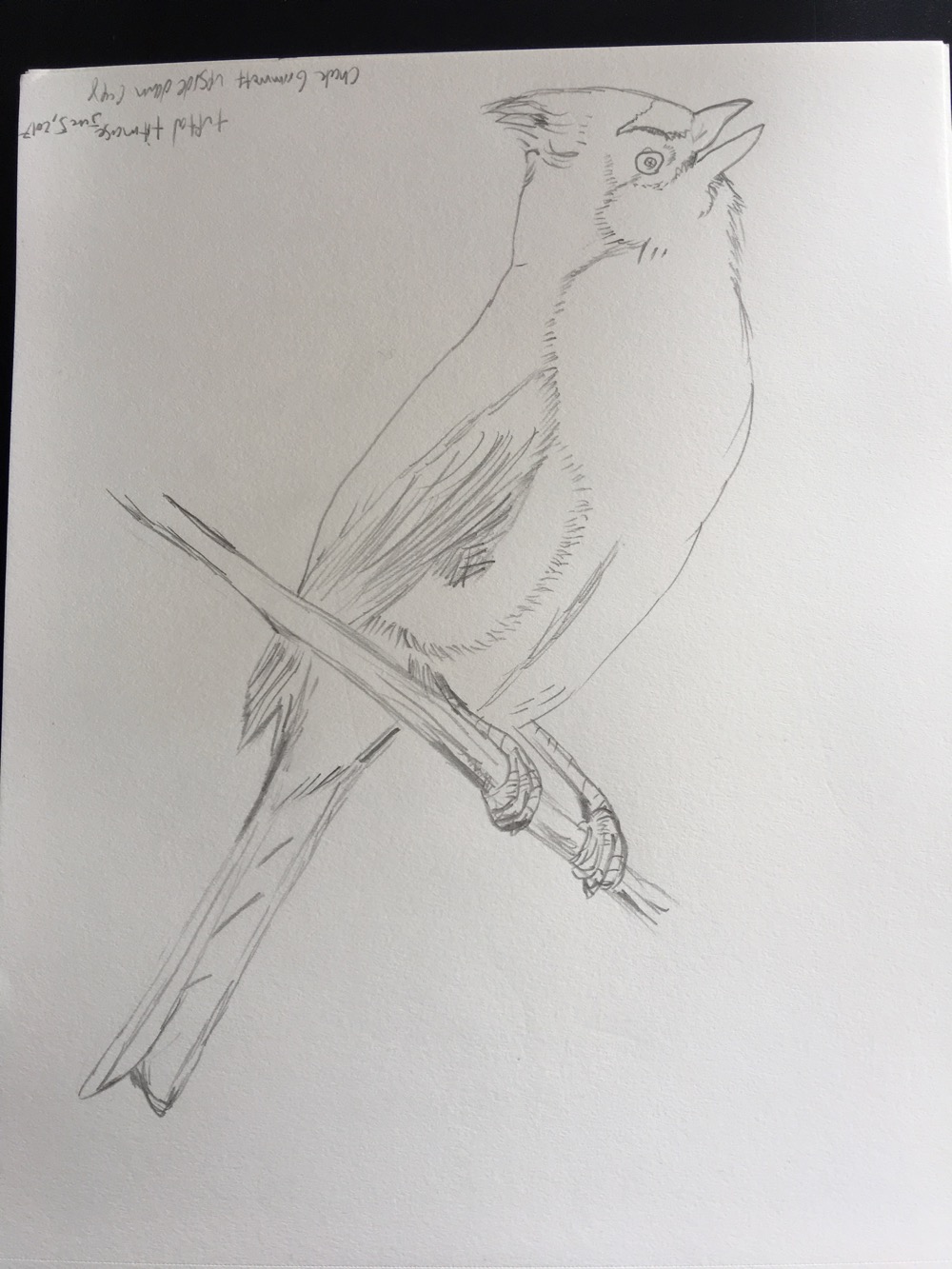
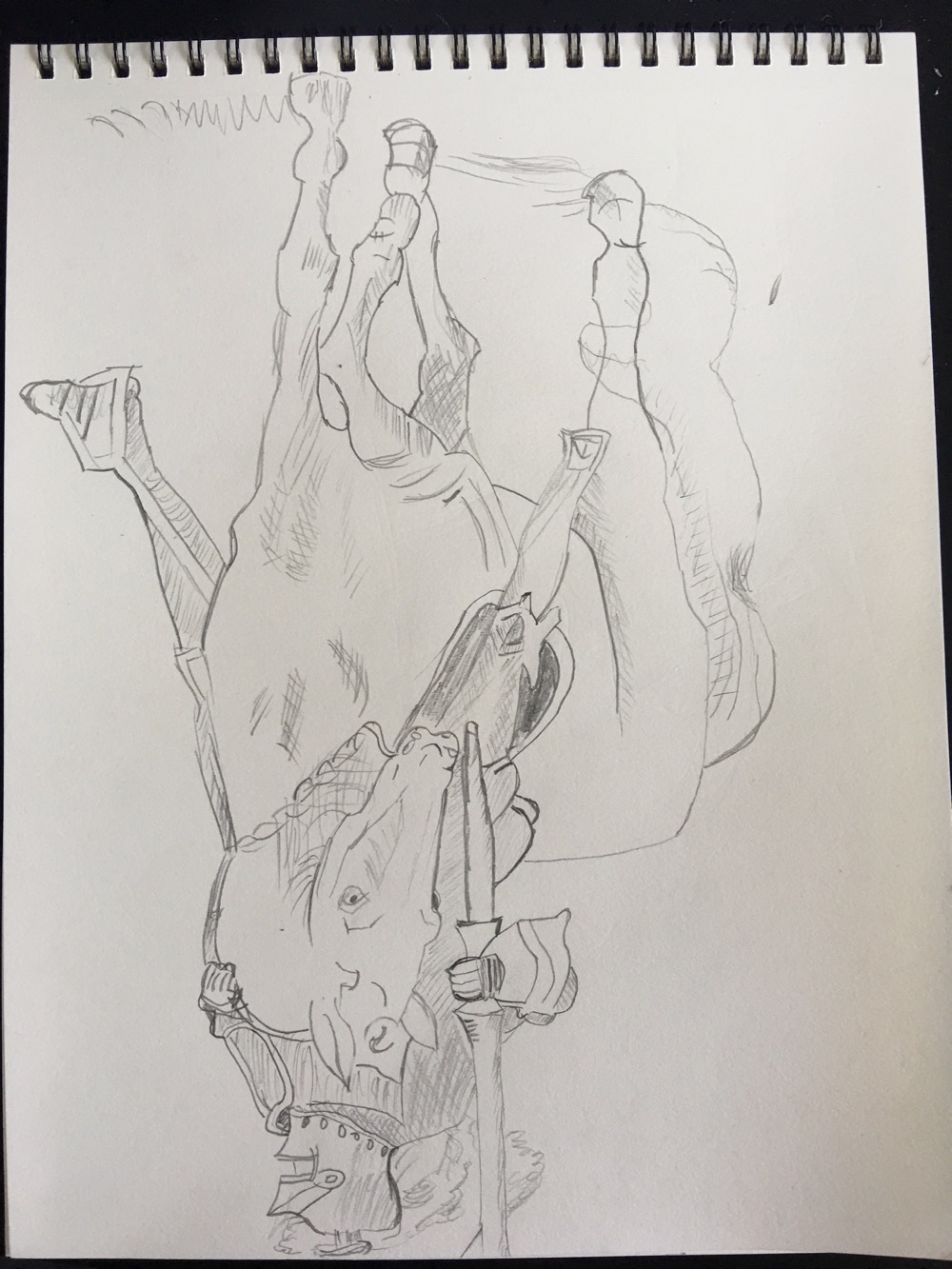
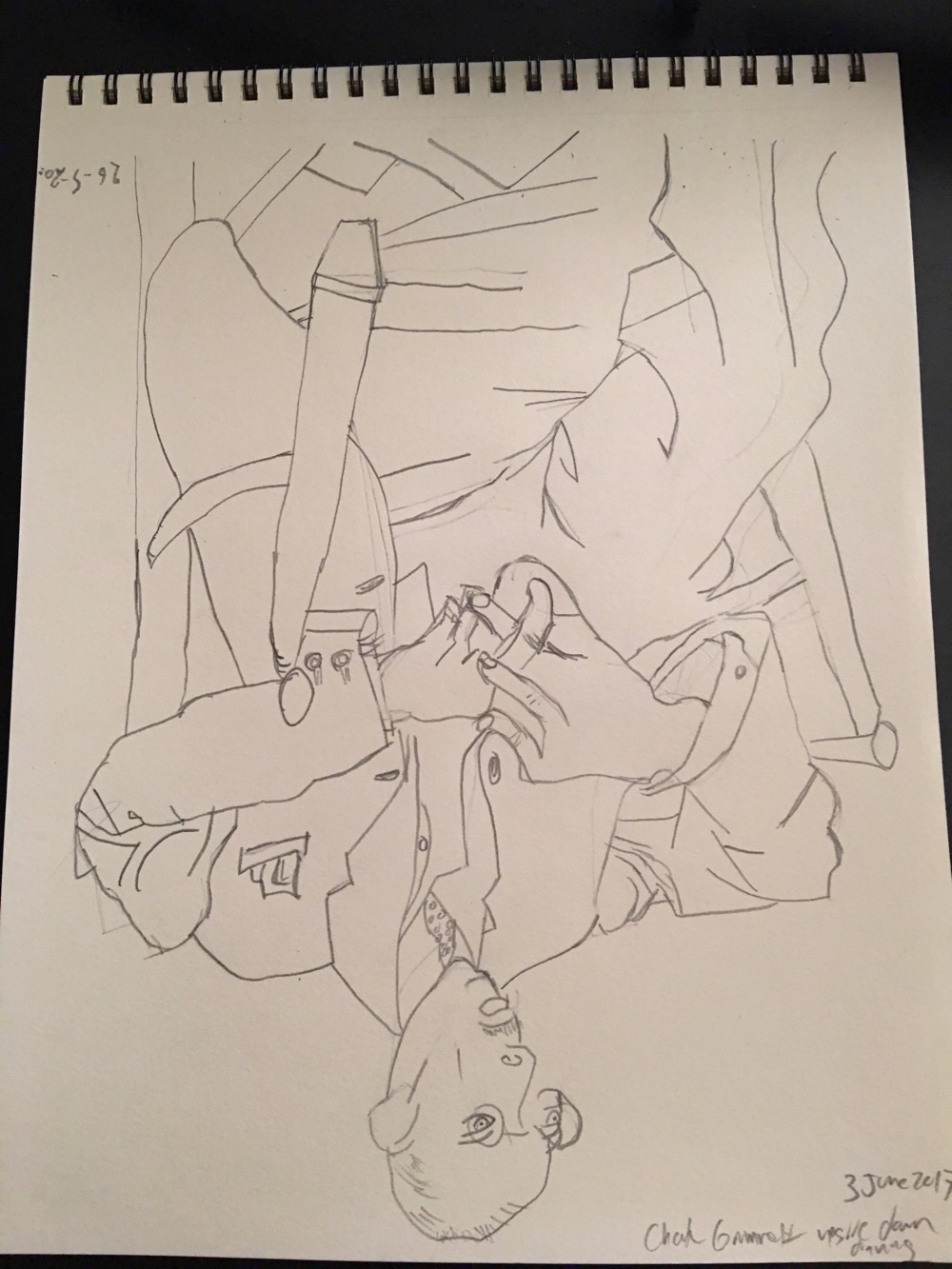
    Today was my pre-instruction drawings to establish my starting point and have something to gauge my progress against.

    I had to do three drawings:

    1. A self portrait drawn while looking in the mirror
    2. Someone else (or a photo of them) from memory alone, nothing on-hand to reference
    3. My hand

    Here they are:

    My self-portrait. I framed it up correctly from my perspective. Impossible to get a photo of the same perspective.

    1 (1).jpg

    Amanda, with the photo I had in mind:

    My hand:

    2.jpg

    I want to eventually draw illustrations for blog posts and pause to draw plants while I hike.

    I have a long way to go, but I can’t get worse than I already am. The introduction to Drawing on the Right Side of the Brain emphasizes that learning to draw is actually more about learning different ways of seeing than it is about learning how to hold a pencil. I’m hoping to learn those different modes of seeing over the next 29 days!

  • Forget Daily “Work/Life Balance”

    Forget about daily work/life balance. Juggling too many things at once leads to stress and poor performance. Trying to balance everything by offsetting stuff with other stuff just leads to too much stuff. Set your priorities for each day (or each week or part of each day) and focus intensely on those few things.

    Working 9-5 and ignoring work outside of those hours is suboptimal. Ignoring your personal life from 9-5 is suboptimal, too. Our energy, focus, and priorities don’t match up with traditionally scheduled hours.

    Sometimes, like this past week, I have an intense push to get some curriculum changes out at Praxis. I spent less time with Amanda, cooked less, and read less than I’d like to. Trying to balance all of those things would have led to performing poorly at all of them. Instead, I got the curriculum work wrapped up this week by working a lot more than 8 hours a day and I’m unplugging for most of the weekend to spend time with Amanda.

    Other weeks, I have fewer deliverables, so I spend more time reading in the morning to learn more and gain inspiration before I start working. Some weeks I focus on writing more or working on personal projects. This month I’m taking time every day to meditate and learn to draw.

    The point is to deliberately pick a few things you want to do, own the tradeoffs, and intensely focus on those items.

    I’m fortunate enough to have a very understanding spouse who tends to work in a similar way. Not having guilt about focusing on work at 11pm on a Wednesday is helpful. On days where one or both of us need to focus on work, we make the most out of the time we do get together: early mornings, late evenings, and time between calls. We focus on that time, even if it is short, and make it count.

    Don’t try to balance everything every day. Do a few things each day, but do them well.

  • A Prediction for the 2020 Election


    I think that the 2020 presidential election will finally be when we’ll see colors other than red, white, and blue showing up as main branding colors in a mainstream candidate. 

    The 2016 election and people’s response to Trump paved the way for “outsiders” and given people permission to color outside the lines. 

    I’d love for that to lead to a fracturing of the two party system into dozens of smaller parties, but I don’t think that is going to happen anytime soon. We’ll have to settle for more exciting campaign branding. Baby steps. 

  • How to Avoid Pastoralism

    I’m rereading Breaking Smart Season 1 right now and I got to thinking about Rao’s concept of pastoralism vs prometheanism and how to avoid it. 

    Whenever you find yourself pining for a specific technological solution, especially one that was dreamt up more than 15 years ago, ask yourself whether or not you want the actual specified solution or to solve the problem which the thing you pine for was supposed to solve. 

    If it is the later, you should work on a new solution that takes into account the changed social and economic situation in the time that has elapsed and what is now technically possible that wasn’t before.

    Don’t keep working toward a technically difficult, but outdated, solution just for nostalgia’s sake. Question your motives and work toward solving the problem again. 

  • Focused vs Unfocused Reading

    1. The gap between focused and unfocused reading is huge, especially when compounded over time. 
    2. Reducing distractions can lead to huge improvements in the number of pages read and understood. Maybe even more than traditional speed reading methods. 
    3. On my flight to Chicago this weekend, I read half of James Hogan’s Inherit the Stars. On the flight back to NYC, I reread 60% of Breaking Smart Season 1. Each leg was a little over 2 hours. I got through much more of each of these books than I have in equivalent amounts of time at home. It was like I had tunnel vision on the flight because I couldn’t get up and had no distractions available. 
    4. I need to do a better job at implementing airplane-like focus at home so that I can cover more ground in less time. I’m going though the 10 Days to Faster Reading book right now, but its methods aren’t that appealing to me. Working on my focus might be a better route. 

  • At dinner with Amanda’s French-Canadian Grandmother: “I don’t drink Bud Light. It tastes like rat saliva. Give me a nice IPA.”


  • Flying out of LGA’s Marine Terminal (A) is always an unexpected pleasure. It has a classic Art Deco look to the outside, has some cool murals inside, and the lines are always short. The coffee options are slim, but I’ll take the tradeoff for a laid-back experience. 

  • Cronuts (Finally)


    After watching the Cronut craze and wanting to try one for the last few years, I finally decided to go get some. I work from home and set my own hours, so why not? I preordered them two weeks ago, worked late night on a project, and took the morning to go pick some up and take them to my wife’s office. 


    The verdict: They were delicious. The May flavor is Raspberry Earl Grey. 

    I’ve had a few knockoffs, but I’m glad I tried the original. Dominque Ansel Bakery has incredible standards and hits the mark every time. The dough was crispy on the outside, soft and flakey on the inside, and the filling was creamy and rich. 

    I’m glad I picked some up via preorder and avoided the lines. I got to check this off the NYC list. I probably won’t do it again because they weren’t good enough to justify the effort a second time, but damn they were good the first time. 

  • New Music Friday: Indie Edition


    Dr. Quandry. Guy out of Boston I’ve been following since 2008. Experimental instrumental stuff. Great working music.

    I recommend listening to his new album, Wayfarers II.

    He also has an album of sitar stuff that I find strangely interesting: Quanny Sitar

  • My answer to “What are the best things to do on weekends as a student at Hillsdale College?” on Quora


    Over at Quora: What are the best things to do on weekends as a student at Hillsdale College?

    My answer:

    Take a break from studying and spend the weekends increasing your hiring potential after you graduate by doing one of the following things:

    • Work at either an on-campus job, one in town, or a remote online job and build up marketable skills for your resume. I was a photographer for the External Affairs office and a tech for the campus’s IT Services while I was at Hillsdale. Both of these things taught me a lot about problem solving, working with other people, and about building a portfolio of transferrable skills. They also put money in my pocket.
    • Freelance work. Learn something like design, web development, copy editing, etc. Build yourself a website and take on a few clients to make some extra money and to build up your portfolio. I taught myself how to build and customize WordPress sites at Hillsdale when I wasn’t studying.
    • Blog. The more you write, the better you will get at it. One of the most rewarding things I did for myself during my Hillsdale years was blogging every single day of my sophomore year. This taught me a lot about discipline, deadlines, producing on a schedule, and distilling my ideas. My writing improved dramatically over that year. Blogging on your own domain name will also help build your personal brand and set your apart from your peers upon graduation.
    • Projects. Tons and tons of projects. This is something I wish I had done more of during my undergrad years. Take everything you want to learn and turn it into a month-long project.
      • Want to learn photography? Get a camera (or borrow one) and take photos of different subjects each week for a month.
      • Want to improve your photography skills? Take only black and white photos for a month. Or focus on lighting for a month.
      • Build a 1-page webapp that has simple functionality to learn a popular javascript framework.
      • Prefer something more academic because you want to go to grad school? Write a series of profiles on famous people from history or current-day. Choose a subject and profile 10 lesser-known but important figures in the space.

    The point I’m trying to make with this post is that if you intend to stand out after graduation, you need to do something that the rest of your peers aren’t willing to do. Yes, I know the academics are difficult (I was in the Honors program and I graduated early), but so is getting a job after graduation. Set yourself up for success by doing something other than studying all weekend every weekend.


  • ,

    Freeter looks like a good app for gathering various project tools in one place. I’ve spent some time setting up my own automations with TextExpander, AppleScript, Automator, and Keyboard Maestro, but I’m going to try making dashboards for a few of my projects in Freeter to bring everything under one roof.

  • Two questions to ask when you are stuck on a project


    1. What is this project about?
      This is sometimes a tough question, but figuring it out makes all the difference. If you figured it out at the beginning of the project, simply reminding yourself what the goal of the project is and what the core parts of the project are can be enough to get you back on track. If you haven’t answered that question before and are doing it for the first time, start broad, then keep refining it and narrowing it down. Don’t throw in the towel just because it is tough. When you come out on the other side, your project will be much clearer. Don’t do anything in your project that doesn’t lead directly to the main theme of the project.
    2. What’s missing?
      Once you’ve figured out what the project is all about, ask yourself what is missing. What does your still need in order to reach its stated purpose? Write those things down and start working down the list.

    This is paraphrased from Steven Pressfield’s Do The Work.

  • January-June 2017 Self-Improvement Projects

    Every month I do a PDP – a personal development project. These PDPs are either theme or project-based and I must do something specific every single day to further that project or theme.

    Here’s what I’ve done so far this year:

    • January: Circadian rhythm fasting. Fast for 13-16 hours starting after dinner each day. Try to have dinner as close to sundown as possible.
    • February: Continue fasting and complete a Whole 30 – eating only real fruits, veggies, and meats for 30 days straight. No sugar, dairy, grains, additives, or desserts.
    • March: Read for at least an hour every day
    • April: Writing a valuable blog post every single day, either on cooklikechuck.com, cagrimmett.com, Medium, or the Praxis blog.
    • May: (Still in progress) I began May by deciding to launch LeonardRead.org, but then I pivoted because I decided that it would be better to build the website later this year when FEE has completed their digitization of LER’s journals. I didn’t know that was a work in progress until talking to someone there. So then my self-improvement this month became a series of mishmash items:
      • This Microblog project
      • Staying off of Facebook, Twitter, Instagram, and Reddit. I’ve been posting to Facebook and Twitter via Buffer, but I’ve successfully kept myself logged out of the services so I don’t fall down the rabbit hole of mindlessly surfing. I removed those apps from my phone and I keep WasteNoTime installed in my browser to keep me in check. It has been great so far. I’ve spent more time reading real books instead of surfing.
      • Going through 10 Days to Faster Reading. Currently two days in.
    • June: (planned) I’m planning on developing drawing skills in June. My textbook will be Drawing on the Right Side of the Brain. I have all of the tools I need, and I plan to draw every day in June. I’ll keep a log of my progress and post it here.
  • Ted Kooser on Writer’s Block


    ,

    Writing Routines, a great new sites that gives behind-the-scenes look at the daily habits of writers and authors, has an interview with Ted Kooser, a former US Poet Laureate. I love his answer to a question on writer’s block:

    William Stafford, one of our great poets, said that the best thing to do about writer’s block is to lower your standards, and it’s the best advice to give someone who’s stalled.


  • The new Bonobo album is perfect for a rainy, contemplative day like today.


  • Amanda and I sampled my barrel-aged Vieux Carre after dinner tonight. This is going to be a fantastic drink after another month in the barrel. It is already smooth and delicious.

  • How to clean up text pasted from Google Docs with Atom and Regular Expressions


    ,

    Have you ever pasted text from Google Docs onto your blog (WordPress or otherwise) and had to fix wacky formatting? Here is how to quickly strip out all those extra HTML tags using regular expressions with Atom.io, a free text editor.

    Links:


  • PBS used a photo today that I took back in college:


    I’m a huge fan of putting my work out in the free domain and I still get excited when I see people and publications use my work, whether it is a photo, tutorial, or code snippet. 

  • Documenting the Process of Data Visualizations


    ,

    The DataSketch.es project has awesome process documentation for how Nadieh and Shirley go about making their incredible visualizations each month. This is a treasure trove of valuable insights for how they approach projects, how the projects evolve, and how they overcome issues they run in to.

  • Ideas for WordPress Projects


    ,

    A la James Altucher’s Ten Ideas a Day

    1. Implementing microformats into a theme
    2. Make a Timeline Builder plugin
    3. Make a book review custom post type and template
    4. Export WordPress posts and import them into Day One
    5. Tutorials explaining typical WordPress structure
    6. Persistent to-do list posts
    7. Plugin or custom post type for documenting learning
    8. Reduce database calls with hardcoding things that won’t change in your own child theme
    9. Create defaults and new widgets for WPBakery’s Visual Composer
    10. Interact with WordPress via the REST API. Visualize posts with D3?

  • After 10 years of knowing about Pixelmator for the last 10 years, I finally dumped Adobe Photoshop and made the switch last month. The hardest part has been relearning how to do certain tasks, but the tutorials and documentation are great. I don’t see myself going back any time soon.


  • The Mystic Whaler is out on the Hudson in Yonkers today.

  • Learning and Perception 


    Deconstructing and seeing things in different ways is often the first step toward understanding something new. 

    • Learning to view things as an artist does is critical to learning how to draw. 
    • Breaking down a website’s layout into basic HTML elements gives you a clearer idea about how your browser interprets and translates them into what is on the screen. 
    • Looking at marketing as a process funnel helps you understand what the role of marketing is and how to do it. 
    • Isolating and testing aperture, shutter speed, and ISO, and seeing how they affect the light, depth, and quality of the final photo helps you look at a scene and figure out the best settings to capture it the way you see it in your mind’s eye. 

    When learning, before jumping in and getting overwhelmed by particulars, break down the whole into parts and focus on each one individually. Breaking it down and learning each piece will get you to see the whole in a new way. 

  • JavaScript Learning Project Ideas


    ,

    A la James Altucher’s Ten Ideas a Day

    1. Daily quote feature with quotes from the Leonard Read Almanac. 
    2. Build a searchable page to go along with the almanac. Realtime search by date and topic. 
    3. Musicfor.work – take people’s Spotify inputs, sanitize, save, and display. Basic first, categories later. 
    4. Cocktail visualizations 
    5. Page that shows window width, window height, resolution, etc. 
    6. Header title typewriter 
    7. More Sol LeWitt art
    8. Interactive scrolling articles a la Pudding.cool
    9. Pre-made chart template with an online data editor
    10. Common features of JS explained and real examples of use
    11. D3.js snippet and/or boilerplate collection 
    12. What seeds to plant based on time of year and location
    13. National park photo map pulling in from Instagram
    14. Book filtering for my blog’s book notes
    15. Evernote lite: Collections of editable notes if logged in, viewable but not editable if not logged in. 
  • Two Ways to Handle Client Requests


    There are two ways to handle client requests:

    1. Build the request exactly to the client’s specs and deliver it on time.
    2. Take a step back and figure out what the client’s end-goal is, regardless of what their stated specs say. Then architect a solution that you think best fits their goal and pitch that to the client. Then build it.

    In my experience, clients often tell you how they’d solve the problem instead of telling you what the problem is first. The issue is that since your clients are hiring you, they rarely know the entire realm of options when it comes to solving the problem. If you are the one doing the work, you probably have a better big-picture view.

    I once worked on a project that we built exactly to client specs because the client was insistent that we start immediately. It looked great from the surface, but a number of backend systems were tedious to use, didn’t connect, and missed some clear feature opportunities because the client wasn’t a system architect and hadn’t thought them through. We were technically in the clear because we followed instructions to a T and delivered on time, but the client was still frustrated and we ultimately had to fix the issues to keep the client. We should have pushed back and architected it in the first place. It would have saved time, money, and frustration for both parties.

    If you build it to the original client specs, you miss an opportunity to be the expert that helps solve problems and sets your clients up for long-term growth and success with the things you build. Handling requests like a consultant makes for better solutions that are more flexible and scalable in the long-term.

    I think the second route is best. That is the way I approach all client requests, no matter what size, or who the client is.

    Developers who think for their clients and write the code keep their clients coming back. Developers who just write code are a dime a dozen.