Archives

Blog index

Blog

  • January-June 2017 Self-Improvement Projects

    Every month I do a PDP – a personal development project. These PDPs are either theme or project-based and I must do something specific every single day to further that project or theme.

    Here’s what I’ve done so far this year:

    • January: Circadian rhythm fasting. Fast for 13-16 hours starting after dinner each day. Try to have dinner as close to sundown as possible.
    • February: Continue fasting and complete a Whole 30 – eating only real fruits, veggies, and meats for 30 days straight. No sugar, dairy, grains, additives, or desserts.
    • March: Read for at least an hour every day
    • April: Writing a valuable blog post every single day, either on cooklikechuck.com, cagrimmett.com, Medium, or the Praxis blog.
    • May: (Still in progress) I began May by deciding to launch LeonardRead.org, but then I pivoted because I decided that it would be better to build the website later this year when FEE has completed their digitization of LER’s journals. I didn’t know that was a work in progress until talking to someone there. So then my self-improvement this month became a series of mishmash items:
      • This Microblog project
      • Staying off of Facebook, Twitter, Instagram, and Reddit. I’ve been posting to Facebook and Twitter via Buffer, but I’ve successfully kept myself logged out of the services so I don’t fall down the rabbit hole of mindlessly surfing. I removed those apps from my phone and I keep WasteNoTime installed in my browser to keep me in check. It has been great so far. I’ve spent more time reading real books instead of surfing.
      • Going through 10 Days to Faster Reading. Currently two days in.
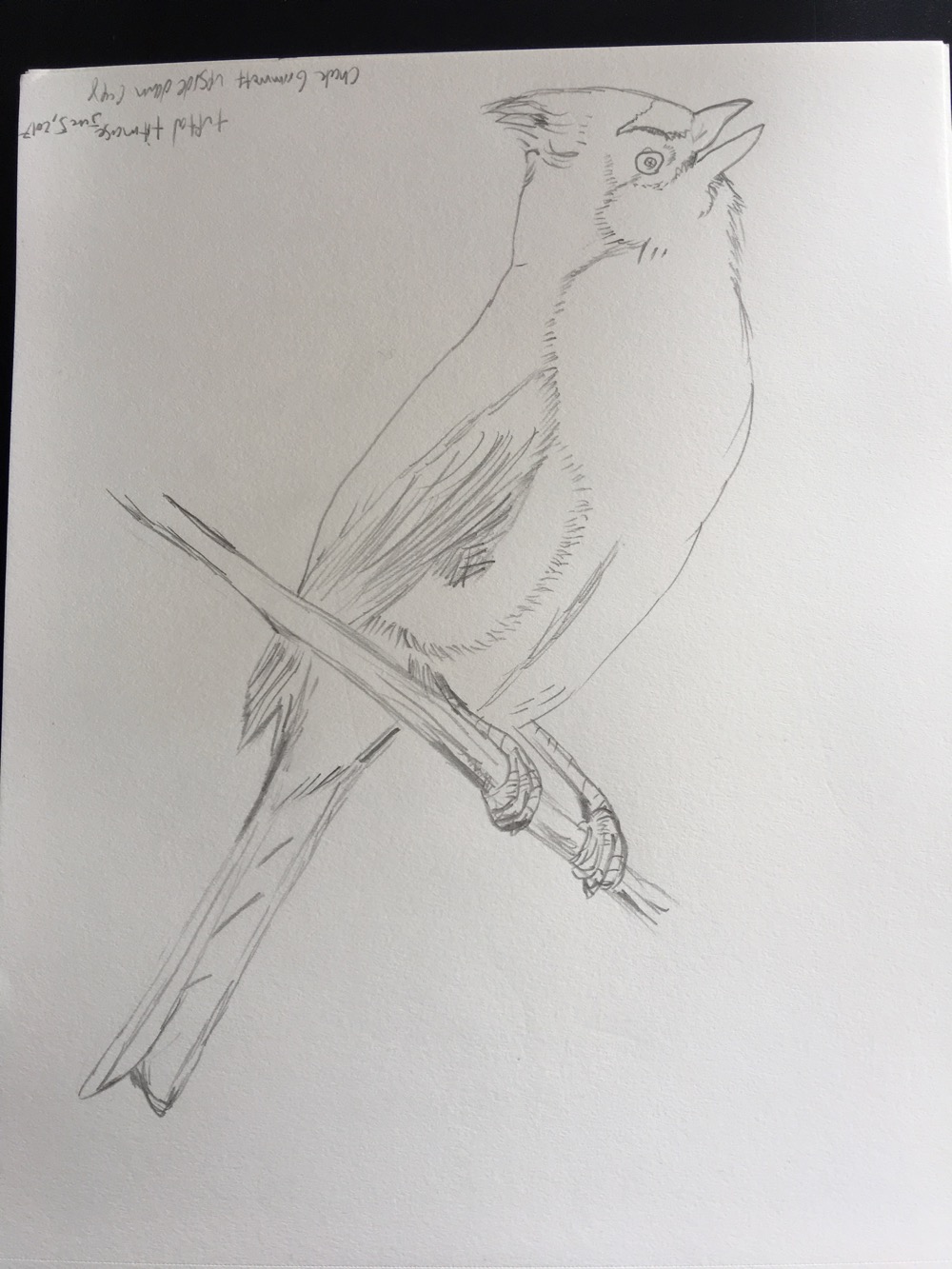
    • June: (planned) I’m planning on developing drawing skills in June. My textbook will be Drawing on the Right Side of the Brain. I have all of the tools I need, and I plan to draw every day in June. I’ll keep a log of my progress and post it here.
  • Ted Kooser on Writer’s Block


    ,

    Writing Routines, a great new sites that gives behind-the-scenes look at the daily habits of writers and authors, has an interview with Ted Kooser, a former US Poet Laureate. I love his answer to a question on writer’s block:

    William Stafford, one of our great poets, said that the best thing to do about writer’s block is to lower your standards, and it’s the best advice to give someone who’s stalled.


  • The new Bonobo album is perfect for a rainy, contemplative day like today.


  • Amanda and I sampled my barrel-aged Vieux Carre after dinner tonight. This is going to be a fantastic drink after another month in the barrel. It is already smooth and delicious.

  • How to clean up text pasted from Google Docs with Atom and Regular Expressions


    ,

    Have you ever pasted text from Google Docs onto your blog (WordPress or otherwise) and had to fix wacky formatting? Here is how to quickly strip out all those extra HTML tags using regular expressions with Atom.io, a free text editor.

    Links:


  • PBS used a photo today that I took back in college:


    I’m a huge fan of putting my work out in the free domain and I still get excited when I see people and publications use my work, whether it is a photo, tutorial, or code snippet. 

  • Documenting the Process of Data Visualizations


    ,

    The DataSketch.es project has awesome process documentation for how Nadieh and Shirley go about making their incredible visualizations each month. This is a treasure trove of valuable insights for how they approach projects, how the projects evolve, and how they overcome issues they run in to.

  • Ideas for WordPress Projects


    ,

    A la James Altucher’s Ten Ideas a Day

    1. Implementing microformats into a theme
    2. Make a Timeline Builder plugin
    3. Make a book review custom post type and template
    4. Export WordPress posts and import them into Day One
    5. Tutorials explaining typical WordPress structure
    6. Persistent to-do list posts
    7. Plugin or custom post type for documenting learning
    8. Reduce database calls with hardcoding things that won’t change in your own child theme
    9. Create defaults and new widgets for WPBakery’s Visual Composer
    10. Interact with WordPress via the REST API. Visualize posts with D3?

  • After 10 years of knowing about Pixelmator for the last 10 years, I finally dumped Adobe Photoshop and made the switch last month. The hardest part has been relearning how to do certain tasks, but the tutorials and documentation are great. I don’t see myself going back any time soon.


  • The Mystic Whaler is out on the Hudson in Yonkers today.

  • Learning and Perception 


    Deconstructing and seeing things in different ways is often the first step toward understanding something new. 

    • Learning to view things as an artist does is critical to learning how to draw. 
    • Breaking down a website’s layout into basic HTML elements gives you a clearer idea about how your browser interprets and translates them into what is on the screen. 
    • Looking at marketing as a process funnel helps you understand what the role of marketing is and how to do it. 
    • Isolating and testing aperture, shutter speed, and ISO, and seeing how they affect the light, depth, and quality of the final photo helps you look at a scene and figure out the best settings to capture it the way you see it in your mind’s eye. 

    When learning, before jumping in and getting overwhelmed by particulars, break down the whole into parts and focus on each one individually. Breaking it down and learning each piece will get you to see the whole in a new way. 

  • JavaScript Learning Project Ideas


    ,

    A la James Altucher’s Ten Ideas a Day

    1. Daily quote feature with quotes from the Leonard Read Almanac. 
    2. Build a searchable page to go along with the almanac. Realtime search by date and topic. 
    3. Musicfor.work – take people’s Spotify inputs, sanitize, save, and display. Basic first, categories later. 
    4. Cocktail visualizations 
    5. Page that shows window width, window height, resolution, etc. 
    6. Header title typewriter 
    7. More Sol LeWitt art
    8. Interactive scrolling articles a la Pudding.cool
    9. Pre-made chart template with an online data editor
    10. Common features of JS explained and real examples of use
    11. D3.js snippet and/or boilerplate collection 
    12. What seeds to plant based on time of year and location
    13. National park photo map pulling in from Instagram
    14. Book filtering for my blog’s book notes
    15. Evernote lite: Collections of editable notes if logged in, viewable but not editable if not logged in. 
  • Two Ways to Handle Client Requests


    There are two ways to handle client requests:

    1. Build the request exactly to the client’s specs and deliver it on time.
    2. Take a step back and figure out what the client’s end-goal is, regardless of what their stated specs say. Then architect a solution that you think best fits their goal and pitch that to the client. Then build it.

    In my experience, clients often tell you how they’d solve the problem instead of telling you what the problem is first. The issue is that since your clients are hiring you, they rarely know the entire realm of options when it comes to solving the problem. If you are the one doing the work, you probably have a better big-picture view.

    I once worked on a project that we built exactly to client specs because the client was insistent that we start immediately. It looked great from the surface, but a number of backend systems were tedious to use, didn’t connect, and missed some clear feature opportunities because the client wasn’t a system architect and hadn’t thought them through. We were technically in the clear because we followed instructions to a T and delivered on time, but the client was still frustrated and we ultimately had to fix the issues to keep the client. We should have pushed back and architected it in the first place. It would have saved time, money, and frustration for both parties.

    If you build it to the original client specs, you miss an opportunity to be the expert that helps solve problems and sets your clients up for long-term growth and success with the things you build. Handling requests like a consultant makes for better solutions that are more flexible and scalable in the long-term.

    I think the second route is best. That is the way I approach all client requests, no matter what size, or who the client is.

    Developers who think for their clients and write the code keep their clients coming back. Developers who just write code are a dime a dozen.


  • Good test for determining whether or not I’m actually hungry: Would I eat a carrot right now? If not, I’m probably just craving something sweet and I should drink some water instead.

  • I’ve been feeling stuck with some creative issues at work and decided to try a new tactic today: 

    • I spent 30 minutes digging into what specifically I was stuck on instead of just the general “I’m Stuck.” 
    • I picked one of the items on that list and turned it into a question. 
    • I wrote that question down and repeated it in my head a few times. Then I grabbed my notebook and a pen and went for a walk. 
    • I thought about the question while I walked and stopped along the way to write down what I was thinking. The ideas started flowing and I got a whole notebook page down about that particular question. 

    I go for a walk every day, but I usually listen to a podcast instead of using it to focus on a particular question. Defining the question beforehand and leaving my headphones at home allowed me to focus without my mind turning to whatever the podcast was about. 

  • Energy Management

    Notes from The Productivity Show | Why Time Management Doesn’t Work & Why You Should Focus on Energy Instead (TPS142)

    The best time management system is worthless if you don’t have the energy to work on it. Energy has four components:

    1. Physical
    2. Emotional
    3. Mental
    4. Spiritual

    You need dedicated recovery time in each of these areas. 

    General notes:

    • Life is not a marathon, it is a series of sprints. 
    • You probably won’t see results from individual exercise sessions, especially when you first start. But it compounds over time. 

    Tips for increasing energy: 

    • Get enough sleep
    • Eat clean
    • Take strategic breaks. (Watching TV or listening to podcasts is not actually a mental break)
    • Establish rituals
    • Know your why. Understand your purpose. 
    • Give to others. 
  • What to Do When You Mess Up


    ,
    1. Own up to it and take responsibility for it.
    2. Fix it immediately.
    3. Put a system in place to make sure it doesn’t happen again. Could be a checklist, could be checks by multiple coworkers before something goes out, etc. Whatever works best for you and your team.
    4. Remember that feeling bad about it helps keep it from happening again, but don’t dwell on the mistake for multiple days. Make the necessary changes and keep working.
    I once messed up a routine server update without doing a backup first. It froze in the middle the and an entire school district lost access to their email. My boss graciously took the angry phone calls and I stayed up all night learning how to rebuild the mail server from various online documentation. I finally got it back up and running with messages restored.
     
    The only thing that my boss said when he came in the next morning was, “Now you know why I stress the importance of backing up before every update, no matter how small. I trust you’ll never make a mistake like that again.”
    He was right. I’m now a fanatic about backing up. My failure got me to institute a process that I’ll rely on for the rest of my life.
  • Simple Microblog WordPress Theme


    When I learned about the Micro.blog project by Manton Reece, I decided that I wanted to host my own microblog, so I made a minimalist microblogging WordPress theme for that purpose.

    I put it out on Github for others to use: https://github.com/cagrimmett/simplemicroblog-wp

    Screenshot

    Particulars

    • It is fully responsive.
    • Header image is the gravatar pulled in from the administrator’s email address. To change the header image, change the administrator’s email address and/or change your main image at Gravatar.
    • There is an option in the post editor to suppress the title for posts on the homepage and single pages
    • There is no main menu at the top. If you want a menu to get to sub pages, create a menu, then add a custom menu widget to the sidebar widget area.
    • The footer widget area is enabled. You can add any widget you like to the footer.
    • Comments are turned off globally
    • This theme makes it easy to verify your website with Micro.blog. In the WordPress admin, go to Settings > Micro.blog Verification and put in your Micro.blog username.
    • Fontawesome is included via maxcdn because I like using icons.

    Credits

  • A Reminder to Meditate

    Reminder for myself: Meditation is good. Every time I do it I feel better afterward. Doing it continually leads to longer periods of contentment and focus. I tend to not want to meditate when I’m having a tough time because it is easier to complain and shut down than it is to clear my mind and deal with the problems at hand. But I must turn to meditation, especially when things are tough. It helps every time.

  • When Stopping Makes Sense (and when you need to get back to work)

    I’m all about committing and being relentless about pushing through tough situations no matter what comes up. Stopping because something is hard, you are tired, you don’t feel well, or it isn’t fun is unacceptable. Collect yourself and get back to work. 

    That said, there is one situation in which stopping makes sense: When you realize what you are doing doesn’t match your goal. 

    I had a conversation with Amanda yesterday about her daily project this month. (We each do daily projects each month.) We dug into why it wasn’t going so well and it turns out that the daily actions she decided to take weren’t having the outcome she expected. It wasn’t coming anywhere near fulfilling her overall goal of building her personal brand. 

    In situations like this, sticking with it just to check off that box or say you kept your commitment doesn’t make sense. In fact, it hurts because you are wasting valuable time. 

    When you run into a situation like this, pivot. Find something that better matches your goal (or problem you are trying to solve) and pivot immediately. Amanda came up with a new project that she is starting tomorrow. 

    Take a step back, clear your head, analyze the situation, and pick the best path forward. Don’t keep doing something that isn’t useful just because you don’t want to look like a quitter. 

    Be honest with yourself, though: Is your original plan really not advancing your goal, or is it just harder than you expected? If you are feeling some resistance, you might just need to push harder. 


  • Want to learn to program? Actually building things is the best way to learn. Here is a great list of projects that you can complete in popular languages: https://github.com/tuvttran/project-based-learning

  • The struggle of reading non-fiction is cutting through the filler quickly and determining what is unique and useful out of hundreds of pages. So many books are much longer than they need to be. 


  • The biggest advantage of a microblog: Lowering the posting barrier. I can post whatever I feel like instead of trying to make it “worthy.” I can get my ideas out with less anxiety. As I get into this mindset, I bet it will make putting stuff out elsewhere easier, too.

  • The Most Important Thing About Creative Work


    One of the things I’ve had to learn about transitioning into a more creative and visionary role with my new job is to change the way I think about when and where work gets done.

    The most important thing about creative work is that it gets completed by your deadline. Everything else is secondary.

    I’ve always worked remotely, but in my past two jobs, my remote work required me to be at my desk to handle incoming requests. Even going out to lunch was stressful because I didn’t want to have to take a Skype call from a client at the local sandwich place. When 5 years of working means 5 years of being at your desk from 9am to 5pm, this is a difficult mentality to break.

    I started out the day being unable to focus. By lunchtime I was getting worried and feeling bad about not getting enough done. Then after lunch I asked myself a question: “Do I need to be at my desk to get this planning done?”

    No. There was nothing keeping me at my desk but my own mind. So, I turned off my laptop, grabbed my notebook, pen, phone, headphones, sunglasses, and keys, then walked out the door.

    I’ve gotten more outlining done and more clarity about what I need to do for the next few weeks in the past hour and a half at a dirty picnic table in the park down the street from my apartment than I have in the last two days at my desk.

    Giving myself permission to step away from my desk over the past two months has been wonderful. My fears of missing something were unfounded. I’m able to take a phone calls with minimal distractions and I’m still able to answer questions on Slack from my coworkers. The biggest step I took in that direction was setting the expectation of not being constantly online, but checking in every few hours instead. I’m still reachable if something is urgent, otherwise I get up to speed and weigh in every few hours.

    Time

    Realizing that work doesn’t have to be done solely during the traditional 9-5 schedule has been crucial for me, too. This statement actually has two parts:

    1. Working outside of traditional hours is okay.
    2. Not working during traditional business hours is okay, too.

    Before this job, I understood #1, but I never gave myself permission to not work during business hours.

    The most important thing is that a task gets done by its deadline, not that it gets done between 9-5.

    If getting up early, working for an hour or two, then making breakfast and reading or walking for an hour allows you to stay focused for the rest of the day, do it.

    If going home at 4pm and doing those invoices after dinner will reduce your stress levels, do it.

    If staying offline for a few hours reduces distractions and allows you to get important work done, do it.

    If researching new tech platforms is easier with a cocktail after 10pm, pour a drink and do it after 10pm.

    If taking off Friday to spend the day with visiting friends and completing your tasks on Sunday after they leave works best for you this week, great!

    Do what you need to do in order to get your work done in the best way possible. Everything else is secondary.

    What assumptions are you making about how your work must be done? Question them. Try breaking those assumptions and see what happens. The downside might be smaller than you think. The upside is a better life.

  • Integrating Care into the Customer Experience


    I was at an Intelligentsia coffee shop in Venice, CA, a few weeks ago. I ordered an espresso. As my order came up, I watched the barista. He pulled the shot, and as I was ready to take and enjoy it with the side of sparkling water they include, he paused before he gave it to me. He took the towel tucked into his apron and carefully wiped off the few tiny splashes of espresso that ended up on the rim of the cup and around the saucer.

    He could have easily given it to me as-is and I would have been happy. But he took that extra step. And I noticed.

    This is one of the reasons Intelligentsia is so successful: They’ve integrated care into every part of their customer experience.  That isn’t necessarily the kind of thing that gets people in the door for the first time, but it is what keeps them coming back again and again.