I was up and out before dawn on Labor Day. The temperature on my dash read 57F. Now that water temps are back in the fishable range around here and we’ve had enough rain to keep the streams flowing, I was eager to get out.
As I pulled up to a spot I know well, there was already a vehicle in the pull-off. A tricked-out Subaru with a rod tube on top and a Patagonia Fitz Roy trout sticker, no doubt they were fishing. You know the type: Sage Euronymphing rod, C&F box full of perdigons, double chest pack, neck gaiter, Fishpond net three times the size of the largest fish in this stream. No thanks. I haven’t even finished my coffee yet. I wanted solitude. I cruised on by.
I decided to drive about ten minutes further to scout a new spot. I’ve been brainstorming new locations for DNA testing this fall, and there is one that we probably can’t do during the upcoming group training day because getting to it requires longer hike than we have time for. I thought I’d go check it out myself this morning to see if I could catch anything.
Getting to the stream took a mile hike of rocky bushwacking from the nearest road. The bugs were rough, but the flora was nice. I saw Jack-in-the-Pulpit fruiting, White turtlehead, Blue Cohosh, White Baneberry (Doll’s eyes), Jewelweed, and lots of ferns.


I almost gave up and turned back when I reached the stream and saw how choked the banks were with brambles and vines. I had to fight my way to the water’s edge, but when I did, a few shadows darting for cover caught my eye. I took a temperature reading: 61F. Promising!
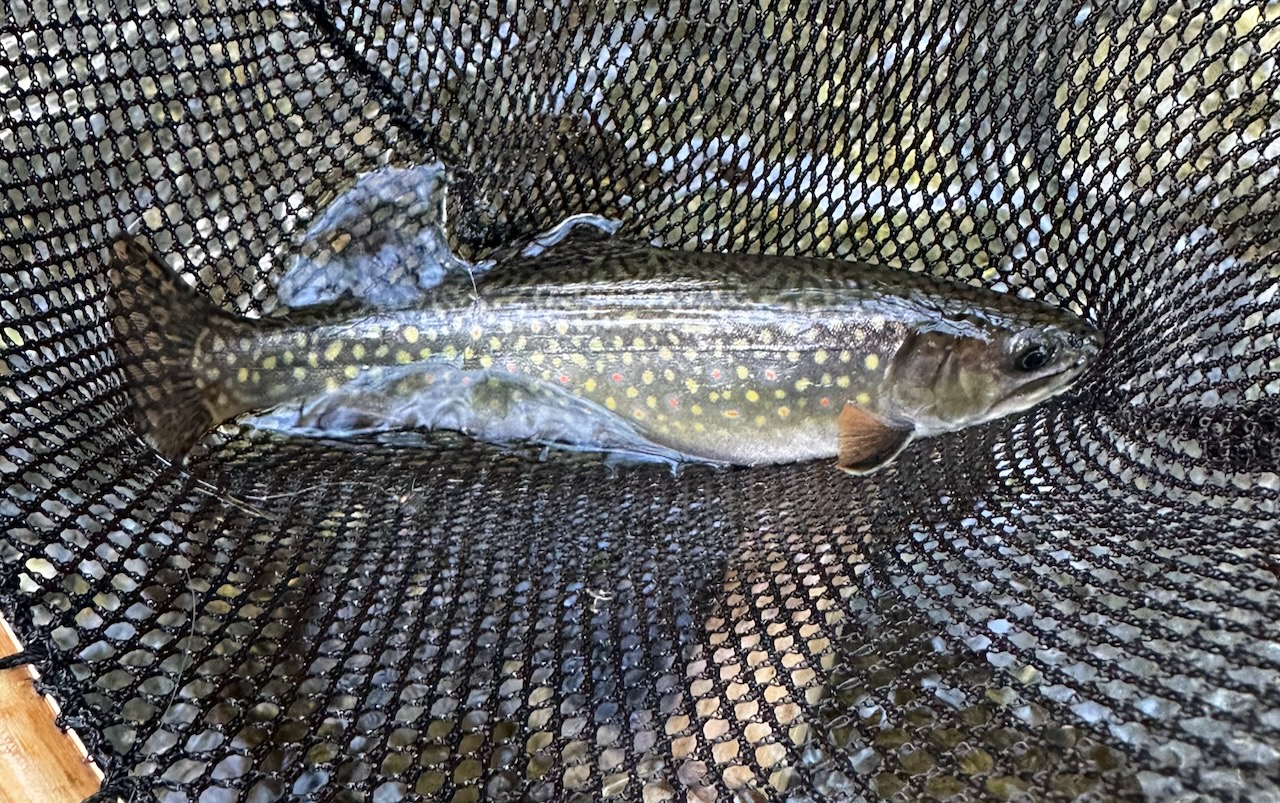
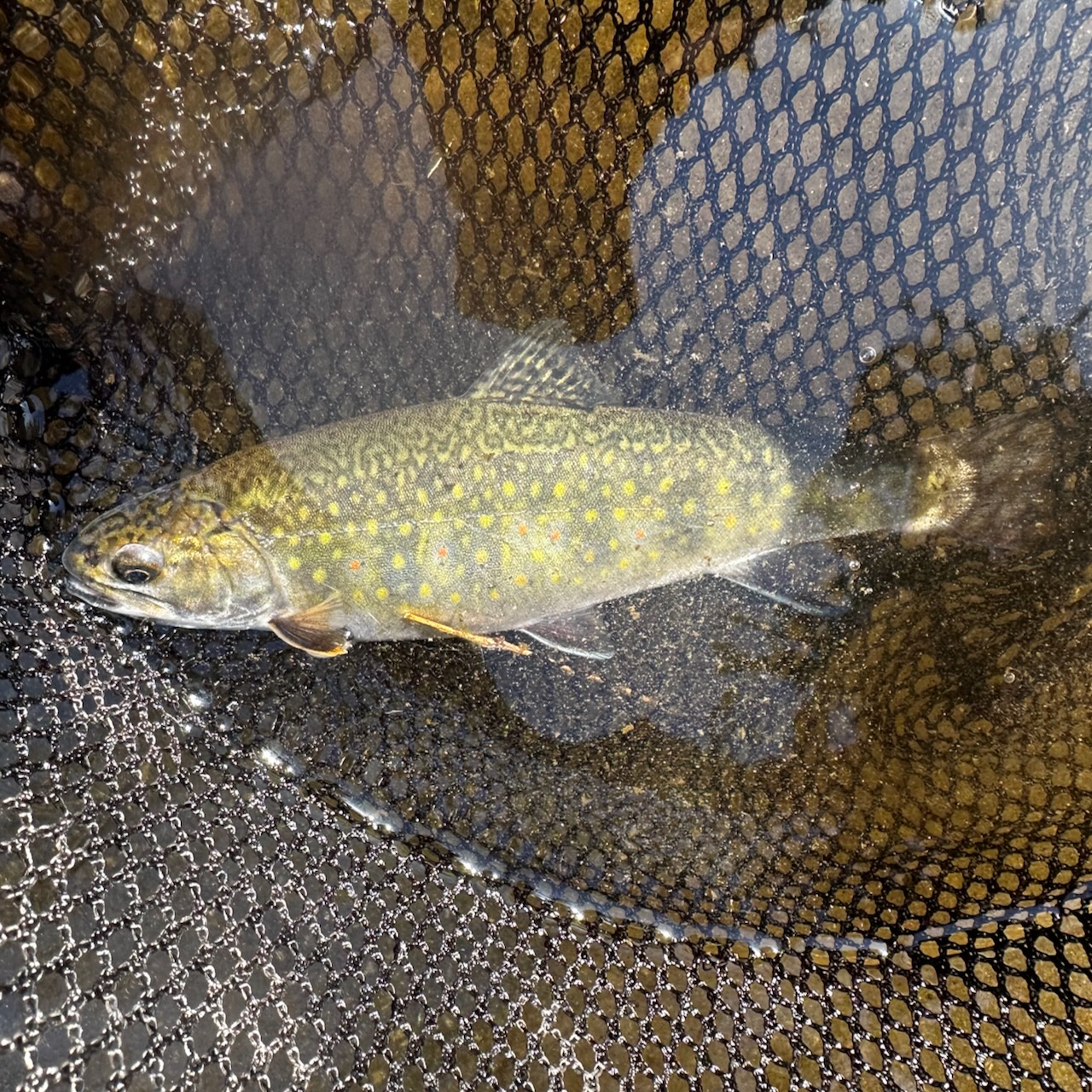
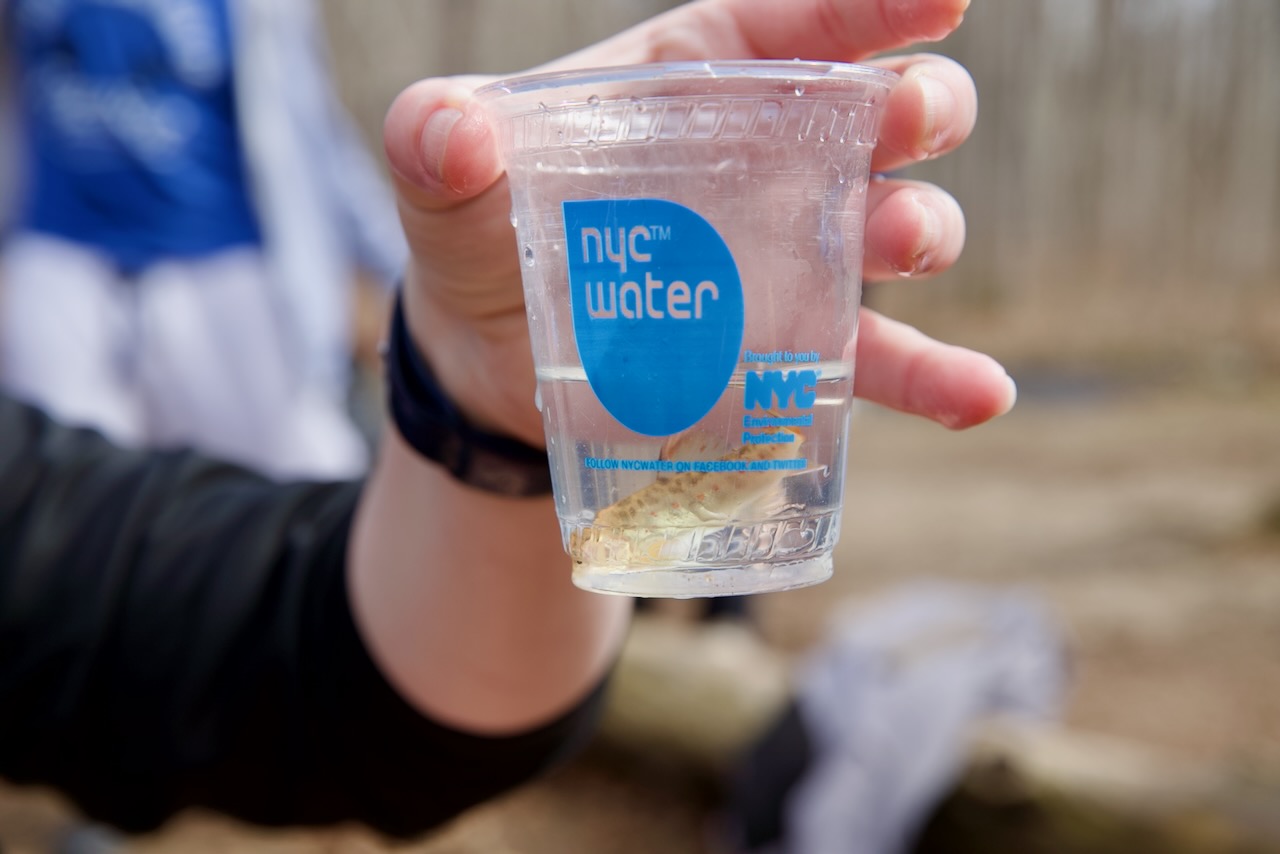
I slowly crept to another break in the brush and stood still behind the shadow of a tree and watched. Then, I saw it: A 6″ brook trout holding in a sunny spot. I could see the vermiculation, red spots, and orange belly clear as day against the sandy bottom. That revived my sweaty, mosquito-bitten spirits. Though the moment I stepped out from behind the tree and tried to get a photo, I spooked it.
My hopes renewed, I headed upstream once more. I wanted to land a brook trout here. I found another opening in the brush about 100 yards upstream with a nice plunge pool. Despite my best efforts, my casts got hung up in the branches above the pool and I had to have spooked any fish there when the branch I pulled my line from fell in to the pool.
A new approach was needed. With the tight canopy and bramble-choked banks, I wasn’t going to make any delicate casts here. The bow-and-arrow cast might work, but that doesn’t give me much distance. I turned around to survey the section behind me and saw beautiful brookie water: A deep run for a stream of this size, still in shade, with overhanging banks and some roots and treelimbs dangling into the water. What could I do?
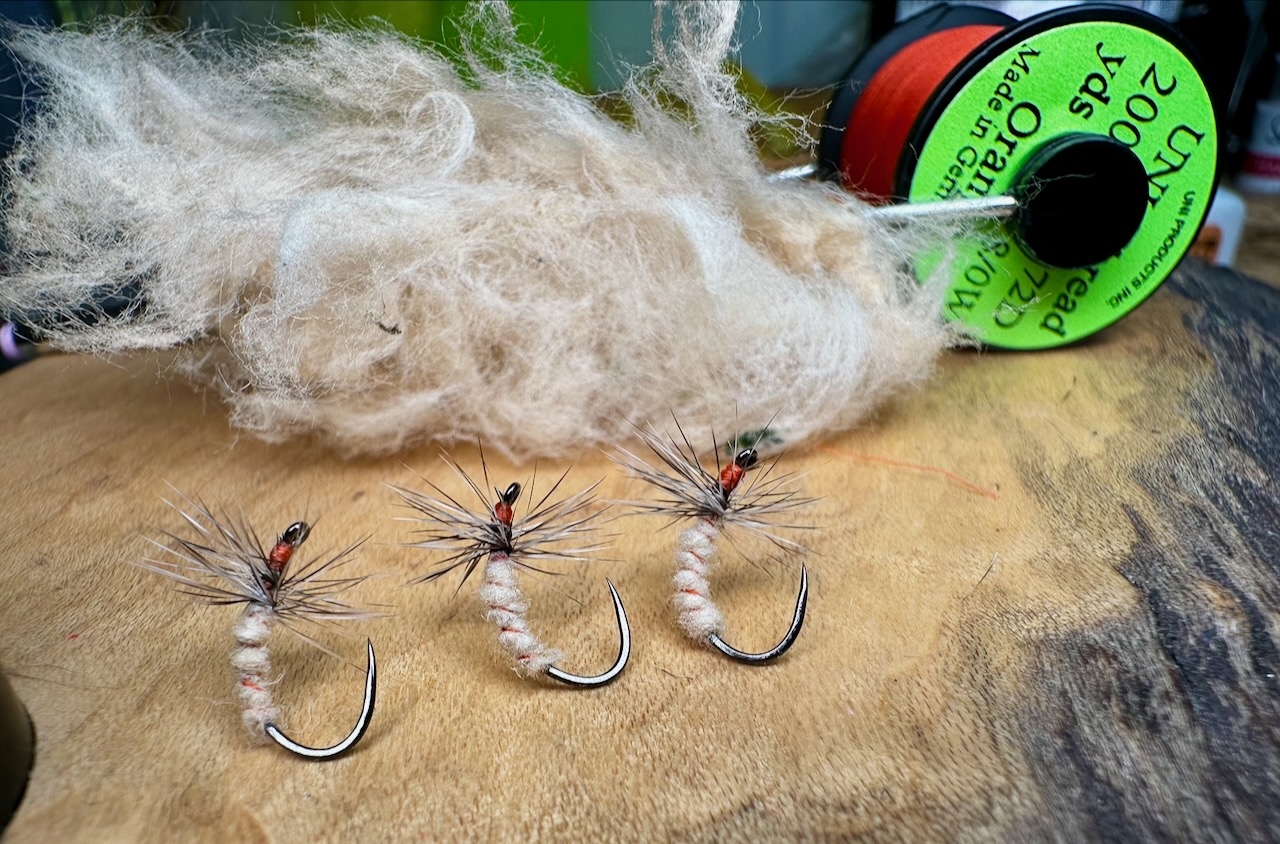
I noticed when trying to get my line out of the brush that there was enough current to slowly pull my line downstream. I decided to take advantage of that and toss my fly and leader downstream and feed line to match the slow speed of the current. With about 15′ of line out, I thought of Leonard Wright’s Fishing the Dry Fly as a Living Insect and gave the fly a twitch. The Sudden Inch.
Splash! Fish on. After a short fight, an 8″ brook trout came to my feet, then slipped the barbless hook as I tried to get a photo.
The next 30 minutes were a blur. Every drift brought a strike. The rest of the world faded away while I focused all my attention on that little clump of deer hair slowly floating away from me, waiting for that telltale splash and sudden tightening of the line to set the hook. By the end I had brought ten fish to hand, all 5-8″ brook trout.

As the sun moved overhead and the shadows on this spot disappeared, or perhaps all the splashing from those hooked fish finally spooked the others, the action on this spot slowed down and I wandered further. I found a nice pool at a bend where I could use the same technique and caught a few more fish.
I kept my phone in my pocket most of the time, but couldn’t resist a few photos.


I could do this all day, but it was time to head back to the car. I started bushwacking my way out again.
Further downstream toward the mouth where it empties into the reservoir, the stream is wider and slower. I skipped this section earlier because it looked more like panfish water than trout water to me. Though as I walked by on my way out, I saw some rocks and a deadfall, so I decided to see if anything was holding around them. The first cast brought a splashy take of my dry fly. 10″ brook trout that also slipped the hook at my feet while I tried to get a photo. I couldn’t just stand and look at these fish, could I?
This stream is absolutely full of brook trout. It felt like fishing in the Catskills. I caught more brook trout here in two hours than I have the rest of the season east of the Hudson. The cold, clear groundwater and shaded canopy keep the water cool enough for these little char to survive while the rest of the watershed heats up, and the mile of bushwacking leaves them relatively undisturbed, except for the heron and muskrat footprints I noticed.
There’s still another mile and a half of stream to explore. I’m eager to see what the upper reaches look like. Maybe I’ll try to find a different access point from the top and hike downstream next time.
After I got home, Charlie and I played with the dog in the backyard for a couple hours while Amanda got her nails done. Then we all went to King Kone for dinner and ice cream.

Labor Day isn’t the astronomical end of the summer, that’s a couple weeks away. But with Charlie going back to school tomorrow and the cool overnight temps, this weekend was the spiritual end of summer.
What a perfect way to end it: Catching brook trout on a dry fly, playing in the yard with Charlie, and a family ice cream outing.