Archives

Blog index

Blog

  • Learning to Draw, Day 17: Filling in the Details


    ,

    Today I filled in the details of yesterday’s drawing and fixed some of the scale issues. It isn’t perfect, but I’m going to call it complete today and move on to another drawing tomorrow.

  • Learning to Draw, Day 16: In Progress


    ,

    Today’s drawing is still in progress. I had a busy day today and spent the entire evening down in the city, so I only got about 30 minutes to start a drawing of a leaf on the cover of this book I’m reading. I’m going to work on filling in the details tomorrow.

  • Learning to Draw, Day 15: Broadway Bridge


    ,

    Today I did a quick sketch of the Broadway Bridge over the Harlem River on my iPad. 


    After I completed the drawing, I saw multiple places where I messed up the proportions and perspective. In particular, I made the bridge much too wide. I’ll pay particular attention to that tomorrow. 

  • Learning to Draw, Day 14: Drawing on the iPad


    ,

    Today I decided to take a break from the specific Drawing on the Right Side of the Brain exercises and try out drawing on my new 10.5″ iPad Pro with the Apple Pencil. I used the Linea app and did another pass at my Day 8 hand drawing.

    I don’t yet have fine control over the Apple Pencil. I’m still getting used to it. I love using my finger as the eraser and doing each part of the drawing as separate layers (outlines, details, and shading). I found shading much easier to control on the iPad than with a real pencil. I’m still going to do exercises in my real drawing pad, but I’ll probably shift a decent number to my iPad. One of my goals for learning to draw is being able to draw illustrations for my blog, which will all be done digitally.

    Here is how it turned out:


  • ,

    Trying out Things 3. I really like the hierarchy: Areas > Projects > Sub headings/groupings > To do items > Checklists. Exactly what I’ve wanted. Goes 1-2 levels deeper than most to-do apps.

  • Learning to Draw, Day 13: Live Profile Portrait of Amanda


    ,

    Today I drew a portrait of Amanda’s profile. She graciously sat at the table and worked while I drew and revised.

    This was difficult. I don’t feel like I nailed it. Should the eyes be further back? Did I get her nose right? How do I handle the shadows and subtle curves of the cheek and jaw? 

    Here is where I stopped after about an hour:

  • Learning to Draw, Day 12: Profile Portrait Warm-Up


    ,

    Burning the midnight oil. Today I read about expanding the sighting and spacing I’ve been working on the last few days to faces. Then I spent about an hour applying what I learned to a line drawing of a portrait by Sargent. 

    Here is the comparison:


    Tomorrow I draw a profile portrait of a real person. It will probably be Amanda. 

  • Focus on the Day-to-Day Work

    Currently reading: Ego is the Enemy by Ryan Holiday

    • Focus on the day-to-day details of your work, not the grand vision. 
    • Gain the discipline to make your daily commitments happen and the bigger goals will follow. 
    • Working harder and smarter than your competition beats having a bigger vision every time. 
    • Make tangible improvements each and every day. No zero days. 
    • Silicon Valley’s recent infatuation with “changing the world” is funny. That isn’t how Google, Facebook, YouTube, Dropbox, or Airbnb started. They fixed one small problem and iteratively scaled. 
    • Focus on doing your best work each day and don’t blind yourself with trying to turn into a good story. 
  • Learning to Draw, Day 11: Perspective


    ,

    Today I did exercises to learn how to draw perspectives. The first was about finding scales and angles, then the second was a drawing of a complex scene to put those to use. I chose our entryway, complete with a crooked doormat and a pile of our shoes. 


    I think the left side came out much better than the right. I spent more time on it. I rushed the right side because I spent more time and I wanted on the left and started to get impatient. 

    It turned out better than I could have done a week ago, but it took much more time, energy, and focus that I expected. 

  • Learning to Draw, Day 10: Negative Space


    ,

    Today I had to draw a chair, but not in the usual way. Instead of drawing the lines and shapes that make up the chair, I had to draw the negative space instead. I didn’t take a photo or use the plastic pane very much, but drew from looking at the chair and occasionally using the frame to check proportions. This exercise is supposed to help with noticing negative space, framing, picking a guide for scaling, and comparing angles. After I was finished, I erased out the tone from the area between the shapes I drew. In this case, that ended up being the chair. 


    I don’t think I nailed the proportions. The top is rough. The only area what I think is strong is the triangle area between the right leg and the seat. 

    This was a tough exercise. 

  • Learning to Draw, Day 9: Hand with Object

    I repeated yesterday’s exercise, but this time with a fountain pen in my hand, cap on. It took me about an hour. I still don’t quite get the shading, but it is becoming easier to zoom in on details and lines. 

  • Learning to Draw, Day 8: My First “Real” Drawing

    Today I did my first “real” drawing. Not a trace, not an upside down copy, but an actual drawing. I focused with one eye on my hand and drew the lines and curves the best I could. 


    I still don’t really know what to do with shadows, highlights, etc, but I’m pretty pleased with my first actual drawing. It is a lot better than I would have come up with 8 days ago, so shifting the way I see seems to be working. 

    Tomorrow I’m going to try the same exercise again, this time holding an object in my hand as well. 

  • The NYTimes Magazine’s set of graphic stories (read: comics) they published last week are fantastic. Check them out:  https://www.nytimes.com/interactive/2017/06/02/magazine/new-york-stories-introduction.html

  • Learning to Draw, Day 7: Tracing a Foreshortened Hand on a Plane

    Today I did an exercise to help see like an artist sees: Using a plastic viewfinder to create a flat plane, resting it on my hand, and then using a non-permanent marker to trace all of the edges. (Reminder: In drawing, an edge is where any two areas meet, not just an outline.)

    I did this four times with my hand in different foreshortened configurations. I noticed that I tended to close my right eye each time I did the exercise in order to help me focus on my hand in a 2-dimensional way. I’ll remember this for the future when I’m framing up a real drawing.

    Here are some photos I took along the way:

    I know that I was just tracing what I saw, but each time I removed the plastic frame, I was surprised at how well it turned out. It looks remarkably like my real hand.

    Tomorrow I’m taking this exercise a step further: Instead of tracing my hand on the plastic, I’m going to do my best at drawing it on actual paper.

  • Listening Notes: Invisibilia – Emotions Part One 

    Link to episode: https://overcast.fm/+D88LXtYzQ

    • Emotions don’t happen to us, they are responses to things that happen to us. 
    • In fact, we don’t respond directly to the things that happen to us, but rather we respond to our concept of what happens. We don’t directly respond to the outside world, we respond to our mind’s interpretation of the outside world. 
    • If someone who has been blind from birth gets a cornea transplant, they don’t automatically see what we see. They see blobs of light and dark for days, weeks, and sometimes years, until their mind forms a conceptual understanding of what it takes in. 
    • Everything around us (what we see) and inside us (what we feel) is a blob until we learn how to interpret it.
    • Our brain has four basic reactions: pleasant, unpleasant, aroused, calm. Our brain then reacts to our concepts of what happens to us and makes meanings based on past experience. Those are emotions. 
    • We can change our concepts of the outside world. 
    • The consequence of this is that we can also change our emotions. This means we have control and responsibility over our emotions. 
    • Emotions aren’t objective. Trauma isn’t the same as cells that have corrupted and turned cancerous. 
    • It can be a long a difficult task to change our concepts. But it can be done. We control our experience of reality. 
  • Using Walks, Drives, and Commutes For Work

    I used to think that walking, driving somewhere, and commuting were things that we fundamentally opposed to work. Complete downtime. Even using them to listen to podcasts isn’t working. It is a good use of the time, but it isn’t working.

    I now regularly go for walks throughout the workday and take time commuting between my house and coffee shops without stress because I’ve learned how I can best use those periods of time productively for work: I use them to think about a specific problem.

    We all think when we walk, drive, and take public transit, but the key is using that time to focus solely on one problem instead of just letting our minds wander. It is tricky, because unlike working at your desk or diningroom table, driving, walking, and commuting are full of opportunites for distraction.

    Here is what works for me:

    • I define the problem I’m trying to solve, give it parameters, and write it down in my notebook.
    • I go over the relevant research I’ve done previously. It usually takes me no more than 15 minutes.
    • I forego podcasts and most music. If I’m on the train, sometimes I put instrumental music on to block out the surroundings, but if I’m walking or driving I leave my headphones in my bag. If your mind wanders, notice it and pull it back to the topic at hand without judgment.
    • I have a notebook ready to take notes. If I’m driving, I usually wait until I get to my destination. If I’m walking or taking the train, I can take notes immediately. I used to take notes on my phone, but I find the allure of apps and notifications too distracting, so now I opt to leave my phone in my pocket.

    Here is an example from earlier today. I wanted to go work from a coffee shop for a while because I needed some coffee. Here is how I used my time driving there and back:

    • Defining the problem: I have three months of curriculum content to decide upon with TK in a meeting this afternoon and 6 topics to choose from. What best flows from what already exists and how can it be used?
    • Research: Going over the existing 6 topics to choose from and the curriculum elements we’ve already decided on.
    • Today I was driving, so I left podcasts off and just thought as I drove. When my mind wandered off, I noticed it and gently shifted my focus back to the curriculum, just like I’ve been learning to do with my daily meditation practice. (I use Headspace.)
    • When I got to the coffee shop, I wrote down the ideas I had and took a few minutes to refine them.
    • I worked on something else for a while, and then got ready to go home. I reviewed my earlier notes and asked myself, “Where are the holes in this plan? What would make this better?” That is what I focused on while driving home.
    • When I got home, I had 15 minutes to write down my notes and get ready to talk to TK about them.

    I do this all time time now, especially on my walks. It is amazing how much framing a specific question before leaving and focusing on that can turn something we usually squander into useful time.

  • Learning to Draw, Day 6: Pure Contour Exercise

    Today I read a section on childhood drawings and then did another exercise to help me shift my perception: Pure Contour Drawing. 

    I put my pencil on the paper pad, scrunched my hand together, turned so I couldn’t see the paper, and then tried my best to draw the creases I saw in my hand while a 5 minute timer was running. 

    It yielded a strange result, but the point was to intensely focus on edges (in drawing, that is where two items come together) to the exclusion on everything else. Over the 5 minutes, the world drifts away as you get lost in the complexity of your scrunched palm. 


    Tomorrow: A modified version of this with the viewfinder and my whole hand. 

  • Listening Notes: Venkatesh Rao on The Three Types of Decision Makers, Mental Models, and How to Process Information | The Knowledge Podcast

    Listening Notes for Venkatesh Rao on The Three Types of Decision Makers, Mental Models, and How to Process Information | The Knowledge Podcast

    Link to the podcast: https://www.farnamstreetblog.com/2016/02/venkatesh-rao-decision-making/

    Types of Decision Makers

    • Evidence-based
    • Moral (right vs wrong)
    • Tribal (emotional/affiliation decision-making)

    Staying grounded in reality by maintaining cracks in your mental models. (Note: I first need to codify my existing mental models)

    From Wikipedia: Red Queen effect is an evolutionary hypothesis which proposes that organisms must constantly adapt, evolve, and proliferate not merely to gain reproductive advantage, but also simply to survive while pitted against ever-evolving opposing organisms in an ever-changing environment. The phenomenon’s name is derived from a statement that the Red Queen made to Alice in Lewis Carroll’s Through the Looking-Glass in her explanation of the nature of Looking-Glass Land: “Now, here, you see, it takes all the running you can do, to keep in the same place.”

    Venkatesh Rao only takes notes when he is doing academic research (for references and quotes). He optimizes normal reading for serendipity. Note taking, he thinks, interferes with that.

    How do we structure organizations as we get more and more independent workers/free agents?

    There are two ways of looking at the Uber situation:

    1. Drivers not getting paid enough based on their being the necessary labor (drivers) (1920s labor style)
    2. Drivers training an AI data set for self-driving cars, so being paid as researchers helping the tech transition.

    Not picking a book that influenced you the most. Influence is difficult to measure. I read quite a bit and different books do different things for me at various points in my life. There are books that were important to me at a particular time that I wouldn’t even have finished the first chapter of at another time. There are books I reread every few years, but I think it has more to do with personal attachment and what I need, not necessarily what will work for someone else. This is what I like to tell people: Go read more. Read things that give you joy. Read things you are curious about.


  • That was a good keynote. Makes me excited about Apple’s future again. I’m preordering a 10.5″ iPad Pro. I’ve been waiting a full year for an update to the line and this looks incredible.

  • Learning to Draw, Day 5: Upside Down Tufted Titmouse

    Today was the last upside down copying exercise: Picking a line drawing on your own and copying it. I searched around for a few minutes on Google Images and found a drawing of a Tufted Titmouse from SuperColoring.com.

    Here is the upside down comparison:

    And the rightside up comparison:

    I felt my focus shift a few times, which was interesting. Whenever I stopped to take a drink of my coffee, it was gone. But shortly after, I was able to zoom back in on small details and get back to copying them. I forced myself to disregard the eye and beak, and just focused on them as shapes. I found the feet to be very difficult, though. I think I got caught up thinking about them as feed. I think they turned out worse than the rest of the drawing.

    This was easier than the last two days, partly because it is less complex, and partly because I’m enjoying it more.

    Tomorrow I’m reading a section on childhood drawing development and doing a “pure contour” drawing exercise.

  • Learning to Draw, Day 4: Upside Down Knight

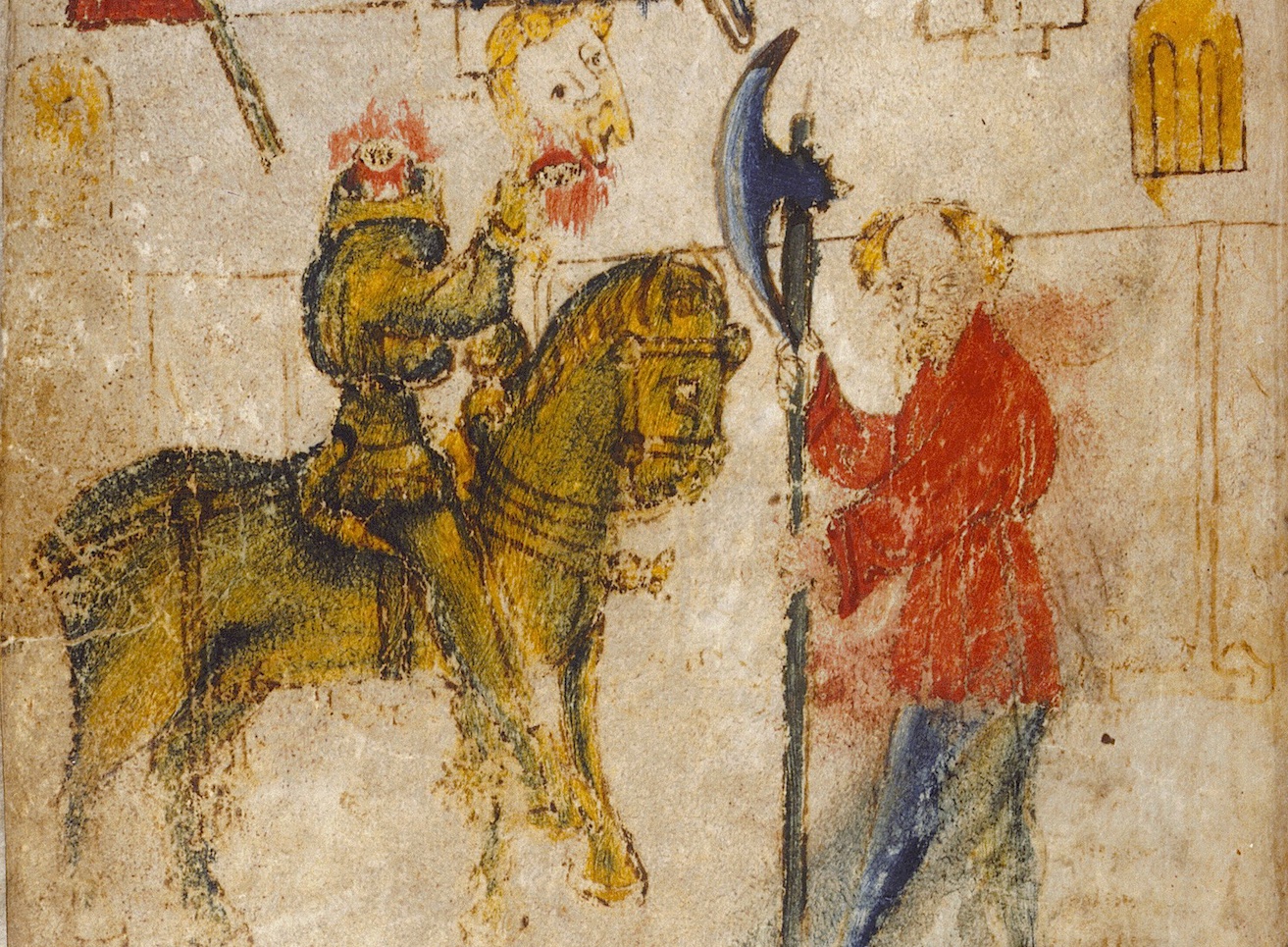
    Betty Edwards in Drawing on the Right Side of the Brain recommends copying 2-3 line drawings upside down to get a sense of how it feels to shift to a different way of seeing. Today I copied a line drawing of a knight on a horse by an unknown German artist.

    It was easier than yesterday’s drawing, though it took me just as long. I didn’t leave enough room for the helmet and the proportions are still off, but I think I did a decent job overall.

    Here is the upside down comparison:

    And the rightside up comparison:

  • Learning to Draw, Day 3: Copying Upside Down

    Yesterday I had about 30 pages of information about the brain and how it works and a short symmetrical vase (an optical illusion made out of two face profiles) drawing exercise to do. That took up the whole hour I set aside with only a few squiggly lines on a piece of paper to show, so I didn’t think it was worth a post.

    Today’s exercise was 99% drawing: Copying Picasso’s portrait of Igor Stravinsky upside down to force my brain to see lines and shapes instead of a face, hands, etc. To shift your brain into a different way of seeing. I had to fight myself a few times when I was working on the hands and face, but I ultimately slowed down and focused in on the individual lines and shapes that composed them.

    This exercise took me well over an hour and was very difficult. I almost gave up once when I spent 15 minutes drawing a detailed section, only to realize I had miscalculated and it was far away from where it needed to be. I’ve never had so much mental anguish over using an eraser.

    Here is the upside down comparison:

    And here is the rightside up comparison:

    I know the proportions and spacing are pretty off in places, but I was surprised at how it turned out. It was much better than I expected. I’m glad I didn’t give up. (I really was close. I swore, pulled my shirt up over my eyes, and shouted about how difficult it is. Not my best moment today.)


  • First radish of the season! (D’Avignon)

  • Learning to Draw, Day 1

    This month I’m learning to draw. This is a skill I’ve never had. I once thought that there are analytical people and artistic people, but I’m no longer willing to accept that. Just like swimming or writing is a particular skill that can be taught and learned, drawing and calculus are both skills that can be taught and learned. I already know calculus (all the way through real analysis), so it is time to learn to draw.

    My guide this month is Drawing on the Right Side of the Brain. I’m going to post my progress here.

    Today was my pre-instruction drawings to establish my starting point and have something to gauge my progress against.

    I had to do three drawings:

    1. A self portrait drawn while looking in the mirror
    2. Someone else (or a photo of them) from memory alone, nothing on-hand to reference
    3. My hand

    Here they are:

    My self-portrait. I framed it up correctly from my perspective. Impossible to get a photo of the same perspective.

    1 (1).jpg

    Amanda, with the photo I had in mind:

    My hand:

    2.jpg

    I want to eventually draw illustrations for blog posts and pause to draw plants while I hike.

    I have a long way to go, but I can’t get worse than I already am. The introduction to Drawing on the Right Side of the Brain emphasizes that learning to draw is actually more about learning different ways of seeing than it is about learning how to hold a pencil. I’m hoping to learn those different modes of seeing over the next 29 days!

  • Forget Daily “Work/Life Balance”

    Forget about daily work/life balance. Juggling too many things at once leads to stress and poor performance. Trying to balance everything by offsetting stuff with other stuff just leads to too much stuff. Set your priorities for each day (or each week or part of each day) and focus intensely on those few things.

    Working 9-5 and ignoring work outside of those hours is suboptimal. Ignoring your personal life from 9-5 is suboptimal, too. Our energy, focus, and priorities don’t match up with traditionally scheduled hours.

    Sometimes, like this past week, I have an intense push to get some curriculum changes out at Praxis. I spent less time with Amanda, cooked less, and read less than I’d like to. Trying to balance all of those things would have led to performing poorly at all of them. Instead, I got the curriculum work wrapped up this week by working a lot more than 8 hours a day and I’m unplugging for most of the weekend to spend time with Amanda.

    Other weeks, I have fewer deliverables, so I spend more time reading in the morning to learn more and gain inspiration before I start working. Some weeks I focus on writing more or working on personal projects. This month I’m taking time every day to meditate and learn to draw.

    The point is to deliberately pick a few things you want to do, own the tradeoffs, and intensely focus on those items.

    I’m fortunate enough to have a very understanding spouse who tends to work in a similar way. Not having guilt about focusing on work at 11pm on a Wednesday is helpful. On days where one or both of us need to focus on work, we make the most out of the time we do get together: early mornings, late evenings, and time between calls. We focus on that time, even if it is short, and make it count.

    Don’t try to balance everything every day. Do a few things each day, but do them well.