Back in September I had a five day work trip to Montréal, my first time visiting that city. I love reading about a place to prepare for trips and reading books set in that place while I’m there. Here’s what I read for the Montréal trip:
For general history, I read Paul-André Linteau’s The History of Montréal. It gave a good overview for someone mostly ignorant of Montréal’s history. Much of what I read in this book was repeated on a walking tour we did of Old Montréal. No mention of the 1980 and 1995 independence referendums, though.
I polled a few coworkers and we decided that short stories set in Montréal were a good thing to read and discuss over coffee. We chose Varieties of Exile by Mavis Gallant, who was born and raised in Montréal, but spent most of her adult life in Paris. Though fiction, it contains some elements of Gallant’s own life. The Canadian edition of this collection is titled Montréal Stories. Rattling Audio made an audio version of the Canadian edition that you can find on Overdrive.
One afternoon, a Montréal-based coworker took us to one of her favorite bookstores there, Drawn & Quarterly. There she recommended I pick up this book by the store’s founder, Chris Oliveros, about revolution in Quebec: Are You Willing to Die for the Cause?
An aside: We discovered that the Librairie Anarchiste L’Insoumise (whose website is on WordPress.com) was near our hotel, so Mark and I had to go. Amazing selection of books and pamphlets. Some history, some philosophy, some fiction, some poetry. I found a couple things to buy, but it was cash only, so I needed to go find some Canadian currency. The proprietor suggested we go have a coffee next door and get cash back, which costs less than the ATM fees. We didn’t have that kind of time, so I walked to the nearest ATM, which wouldn’t accept my American debit card. Mark, a Canadian, kindly offered to get some cash for me and did. After all of that, the proprietor said, “Do you want to hear something funny? … [sure]… These two are free.” I guess he wanted to make sure we were serious. I gave him some cash anyway as a donation to the cause.
10/10, exactly the experience I wanted from an anarchist bookstore.
The feedback was mostly diagnostic. It flagged weak structure in both pieces in the initial rounds of edits (blanket statements that needed examples, boring opening, things that didn’t land), then suggested some specific lines that needed changes in the final round (overused words, awkward phrases, typos, grammar).1
Another idea I’m exploring: With a large enough sample size of your writing, you can have AI analyze it and identify trends, strengths, weaknesses, and generate a skill to try to match your voice. I was able to pull 560K of my own words from the last six years to analyze. I’m not planning on having AI write things for me, but I would like to have it tailor its editor feedback to match my style.
I am using AI more directly in my digital garden. AI is posting there on my behalf, mostly saving links and suggestions after helping with research, all published via MCP without leaving Claude. I’ve also had AI review my categories, tags, and page hierarchy there and clean it all up for me.
Are you using AI to help improve your writing? What does that look like for you and how are you preserving your unique perspective, voice, art, and style? Let me know in the comments.
The AI review of this post flagged this as too abstract where it should be more specific, but I am ignoring that because I do not want to get into the weeds with details that do not matter. This draft went through three rounds of feedback with Claude.↩︎
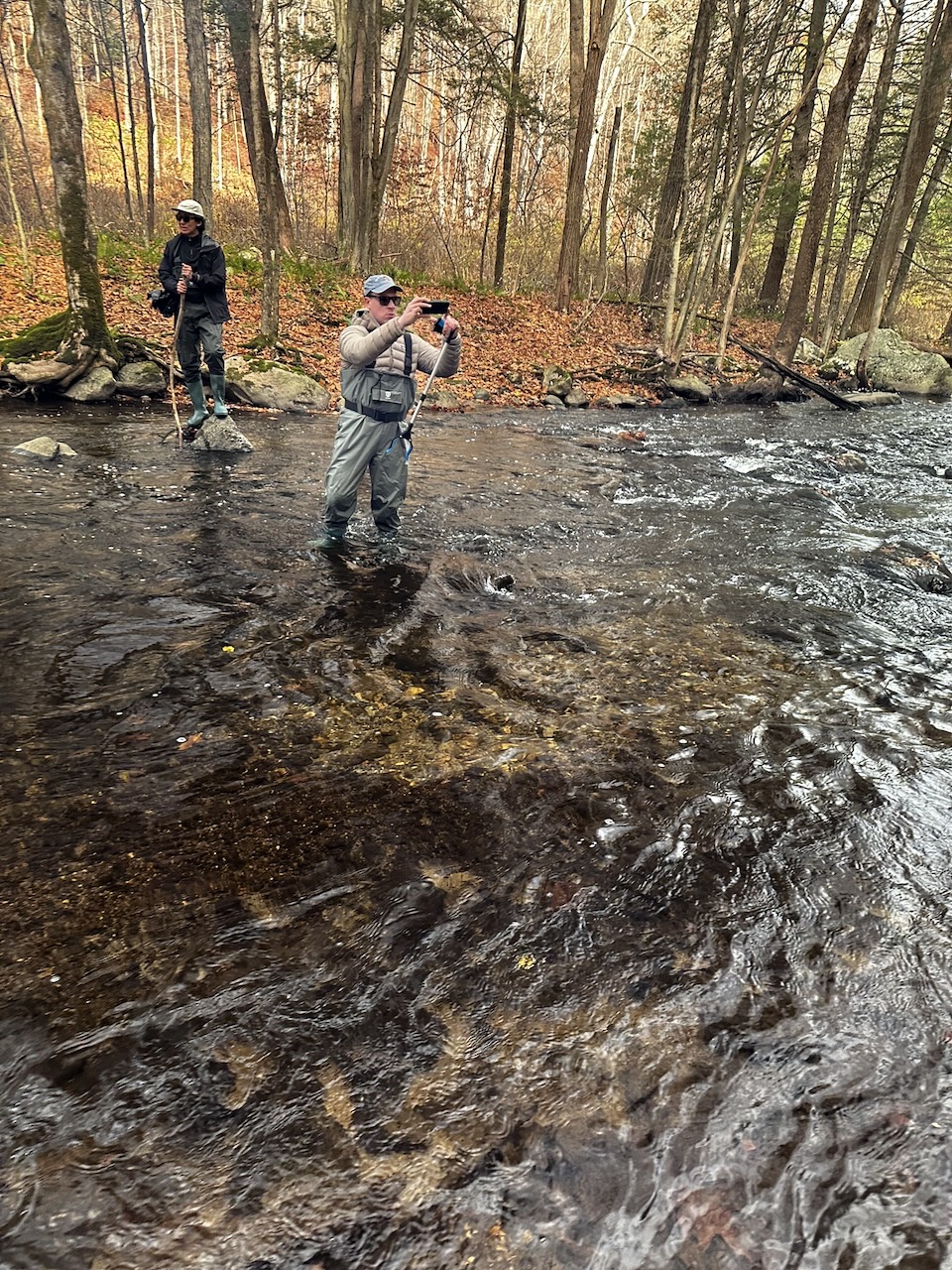
The Croton Watershed chapter of Trout Unlimited, of which I am a member, surveyed the full length of the Amawalk Outlet yesterday, looking for spawning trout redds. I was part of group 4 on the lower section and spotted some nice potential redds.
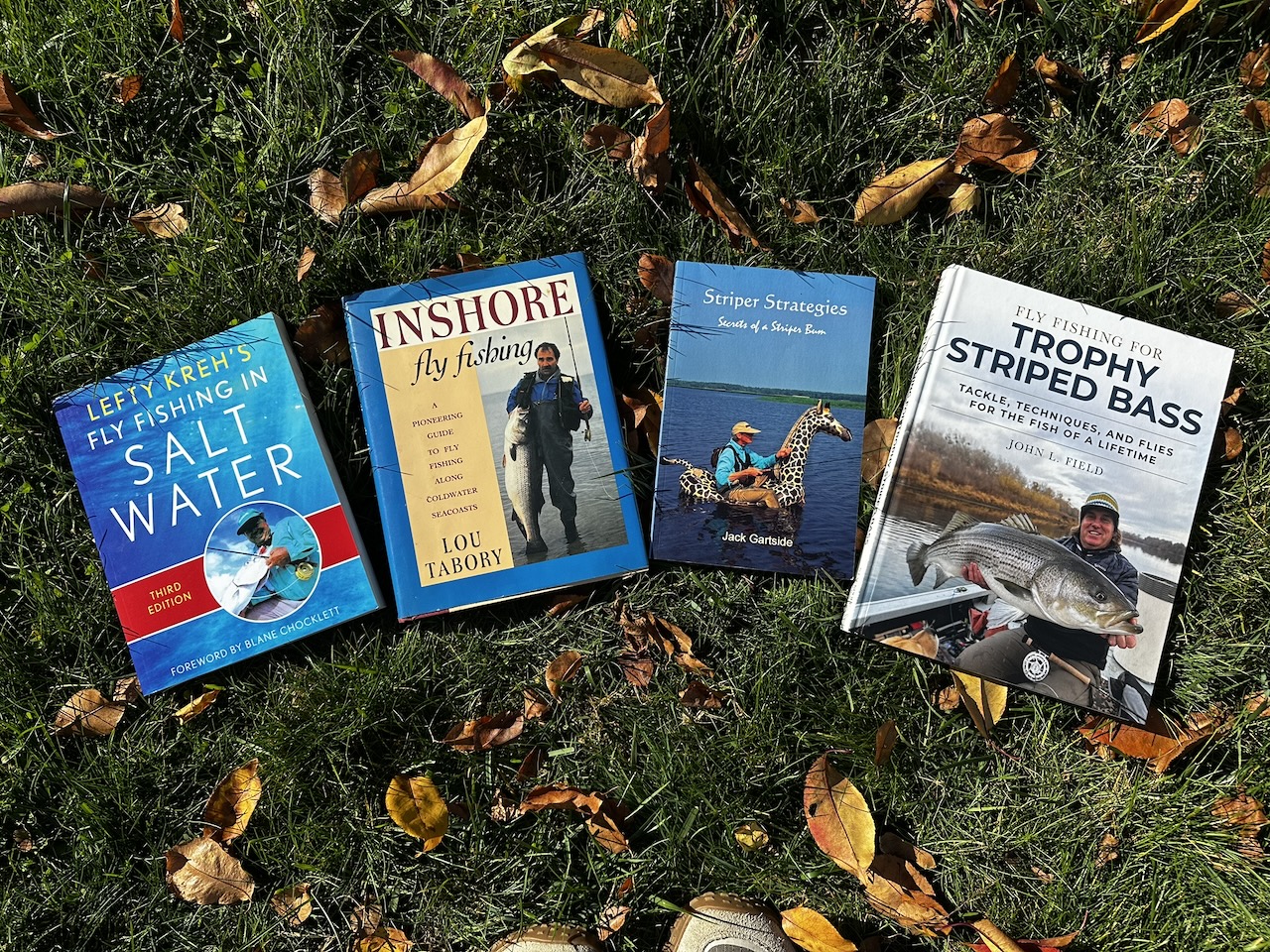
I read this one first. This has a lot of great info about the major migrations, modern fly patterns, and interviews with guides from most of the common fisheries.
If you already know where to go fish for striped bass and want to learn how to fish for them, this is the one book you should pick up. I read it at home, then revisited sections of it most evenings on Cape Cod before going out fishing again in the morning. Out of print, but there are both new and used copies available.
Though this isn’t only about striped bass, they are a big part of this book. I got this one used to learn the basics of coastal fly fishing: Reading rips, bars, beaches, flats, jetties, reefs, tidal estuaries, etc. For a stream fisherman, the ocean coast is a completely different challenge.
Bonus! I hadn’t fly fished in salt water before, and I wanted to see if the great Lefty Kreh had anything different to say than Lou Tabory. He does, and this book is a good general intro book for salt water fly fishing, of which striped bass is just a small part. In fact, I’d say Tabory is better for cold salt water and Kreh is better for warm salt water.
I got into these too late to put them to use on the Hudson’s spring striper run, but I did get to try out my newly acquired knowledge on Cape Cod in August.
I eagerly tied a bunch of patterns on big salt water hooks before our family trip: Deceivers, shrimp, crabs, Gartside gurglers, sand eels, and Clouser minnows.
While out on the beach, Charlie found an actual sand eel, and it looked pretty close to what I tied! My eyes need to be smaller next time, though.
I fished the heck out of a tidal creek and a couple jetties within walking distance from where we were staying. I didn’t want to take up too much family time with fishing, so I got up before dawn most days to fish for a couple hours and be back at the house by breakfast.
I saw some beautiful sunrises, shore birds, and even a starfish. One morning a seal swam nearby, keeping up with me as I walked down the shore.
Unfortunately, I didn’t land a striper. I did get one fantastic surface take, which I lost. Later that evening, I re-read Gartside, who mentions the importance of using a strip set, not a trout set. Of course, I had trout set, pulling the gurgler out of its mouth. Damn.
I only saw a couple striped bass while out fishing, and none of the other folks fishing nearby seemed to have much luck, either. Perhaps this striper head I saw on the beach foreshadowed my fishing fate:
I did, however, hook something completely unexpected: A longfin squid! I had multiple encounters with them over a couple days. First I hooked one on a crab pattern, then the next day a bunch of them kept coming up to the surface to grab my gurgler. Their tentacles would come out of the water like a tiny horror, then my fly would be pulled under. They even left small beak marks on the gurgler’s foam.
I understand that hooking a squid on a single hook barbless fly was a fluke. Most squid lures have a lot of tiny hooks and look wicked.
A few learnings I jotted in my notebook for next time:
All weighted flies need to be on jig hooks. Too many hangups on the bottom, especially the shrimp on the mussel beds.
Use green crabs in the marsh and by rocks, calico and sand crabs in open water.
Eyes should be fully covered in either epoxy or UV. They come off too easily.
I need thicker foam and wider lips on my gurglers.
Sand eels need much smaller eyes.
Baitfish swim slowly upcurrent, retrieve more slowly.
I look forward to trying on the Hudson next spring. I have different patterns to tie, as the baitfish are completely different than on Cape Cod.
I love books about or set in a place we are visiting. We’ve been to the Adirondacks a couple of times, and here’s three books and a bonus I recommend reading during your next trip:
This book gives a good overview of how the Adirondack Park came to be, some past and current threats to it, and the political battle over setting up the Adirondack Park Agency. We listened to the audiobook on our drive.
Selections of writing on a wide range of topics from the Adirondacks over the past 400 years. Lots of great stuff in here and well introduced by the editors, but it is better grazed over time than devoured all at once.
This one is a bonus. Fun stories from Fran Betters, legendary Adirondacks fisherman and fly tyer. His river and fly tying guides are excellent, too, but this one is for pleasure, not instruction. You’ll have to find a copy on Thrift Books or eBay. I stumbled upon a signed copy at my local used book store and couldn’t pass it up.
What other ADK books should I queue up for our next trip?
I got out Sunday morning to fish the upper part of a brook in Putnam County that is the closest thing to a Catskill hollow brook east of the Hudson River. This quiet little stream is tucked away in the woods a mile away from the nearest road.
A month and a half ago I fished the lower portion and was delighted to find brook trout. I’ve wanted to return and explore the upper portion of the brook since. Sunday was the day.
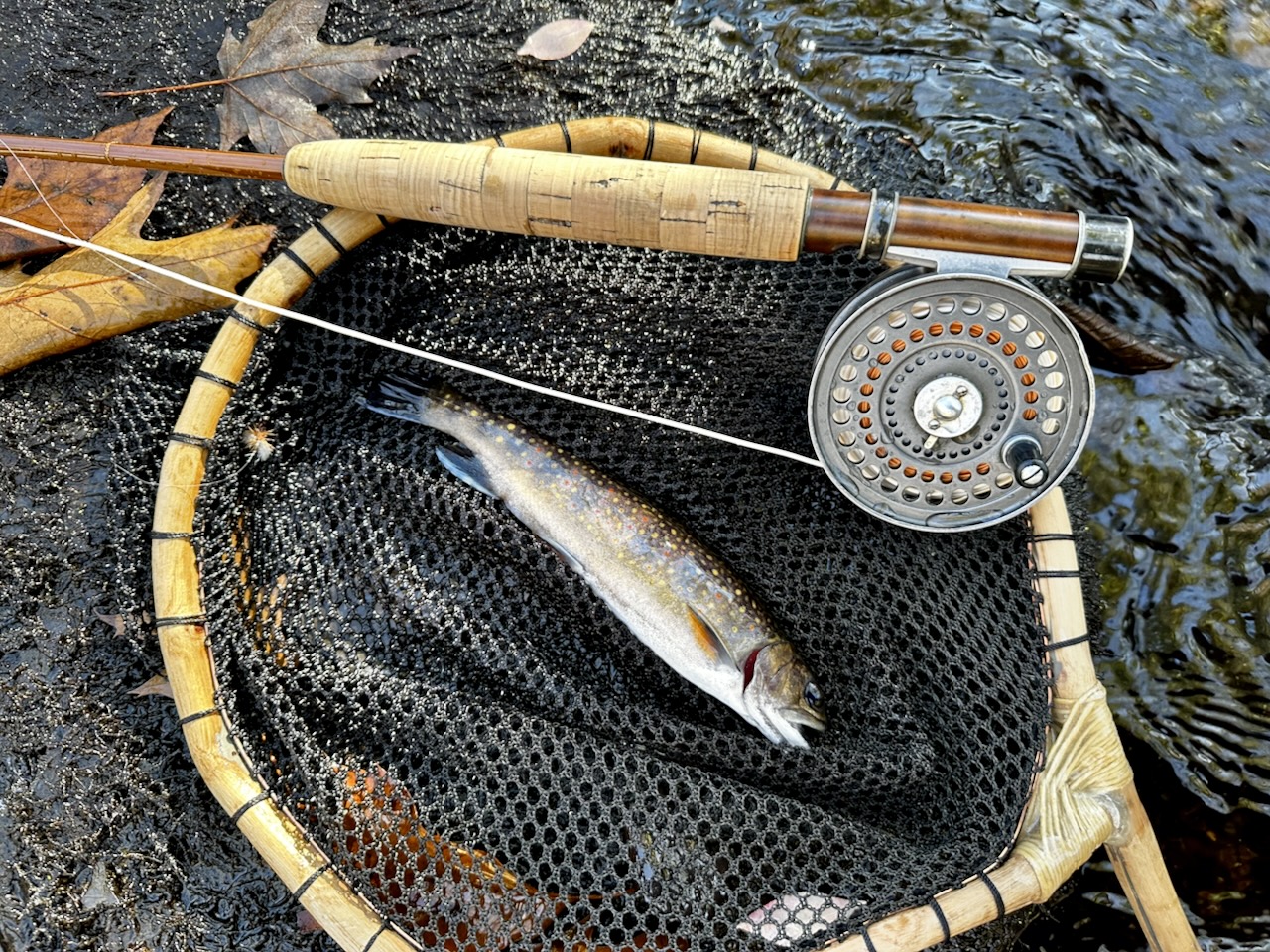
Another reason I wanted to get out was to fish a bamboo rod I recently purchased from a friend: A 7ft 2/1 4wt made by PA rodmaker Tom Nigro (Spring Creek Rods) with a Dickerson 7012 taper. I found an English-made Orvis CFO III for a reasonable price that looks quite handsome on the rod.
I scoured maps to find an accessible spot. On AllTrails I found a public trailhead a mile’s hike from the stream. That eats up fishing time, but having a beautiful babbling brook all to myself is one of the reasons I enjoy fly fishing so much anyway. So I drove to the trailhead, pulled on my waders, laced up my boots, zipped up my jacket, and started walking.
It was a beautiful autumn walk. I could see my breath in the 33°F air, but the forecast promised it would warm up to about 60°F by noon. A couple nights of frost dropped most of the leaves, and they crunched underfoot as I made my way down to the stream. I was glad the leaves were down, that meant they had already been pushed to the sides of the stream or sunk to the bottom. Pausing to pull a leaf off your fly after every other cast is no fun.
As I arrived at the water, I was happy to see the upper portion of this stream is less choked with brambles than the lower section. There is a lot more access and casting room. While the lower portion has lots of long pools and runs, up here is mostly pocket water and small plunge pools, with a couple of nice runs sprinkled in.
The 7ft 4wt performed beautifully with a WF4 line. I did a lot of close oval casting to keep my line under the canopy, and it gracefully turned over the leader and allowed the fly to land gently on the water. Splashes in this shallow, clear water just spook the cautious wild trout.
I brought 7 speckled brook trout to hand, ranging from 4-7in. A Royal Wulff and an X-Caddis were the two producers, size 16. An Ausable Wulff and a foam ant stirred no fish. Size 16 is my go-to for brook trout. Big enough that it won’t be swallowed completely, and small enough that the 4-5in fish won’t miss it. I get a lot more misses on size 14.
Next, I’m eager to get this rod out on a proper river so I can make longer casts with it.
We aren’t the biggest fans of acorn squash, but we have a bunch of them sitting on the counter from the last couple weeks of vegetable shares. I went searching for some ideas and landed on one that includes taco meat and beans. Great on both accounts: I can make tacos for Charlie and make a batch of beans to use throughout the week. It is the year of beans, after all.
I cooked a pound of ground beef with taco spices, a pound of black beans, and a box of Spanish rice. While it all cooked, I cut acorn squash in half and roasted it. I mixed about half of the ingredients together to make the filling, then scooped it into the squash, topped with cheese, and stuck it back in the oven. I served them in bowls and spooned some homemade tomatillo salsa from the last of this year’s tomatillos on top.
Here is what it looks like just out of the oven:
Served with tomatillo salsa:
It honestly would have been better as a bowl without the squash, but it was a good, filling way to use the acorn squash, so we’ll probably make them another night this week when we need an easy dinner.
I had enough time while these were baking to slice up some local pears and make a quick puff pastry galette for dessert:
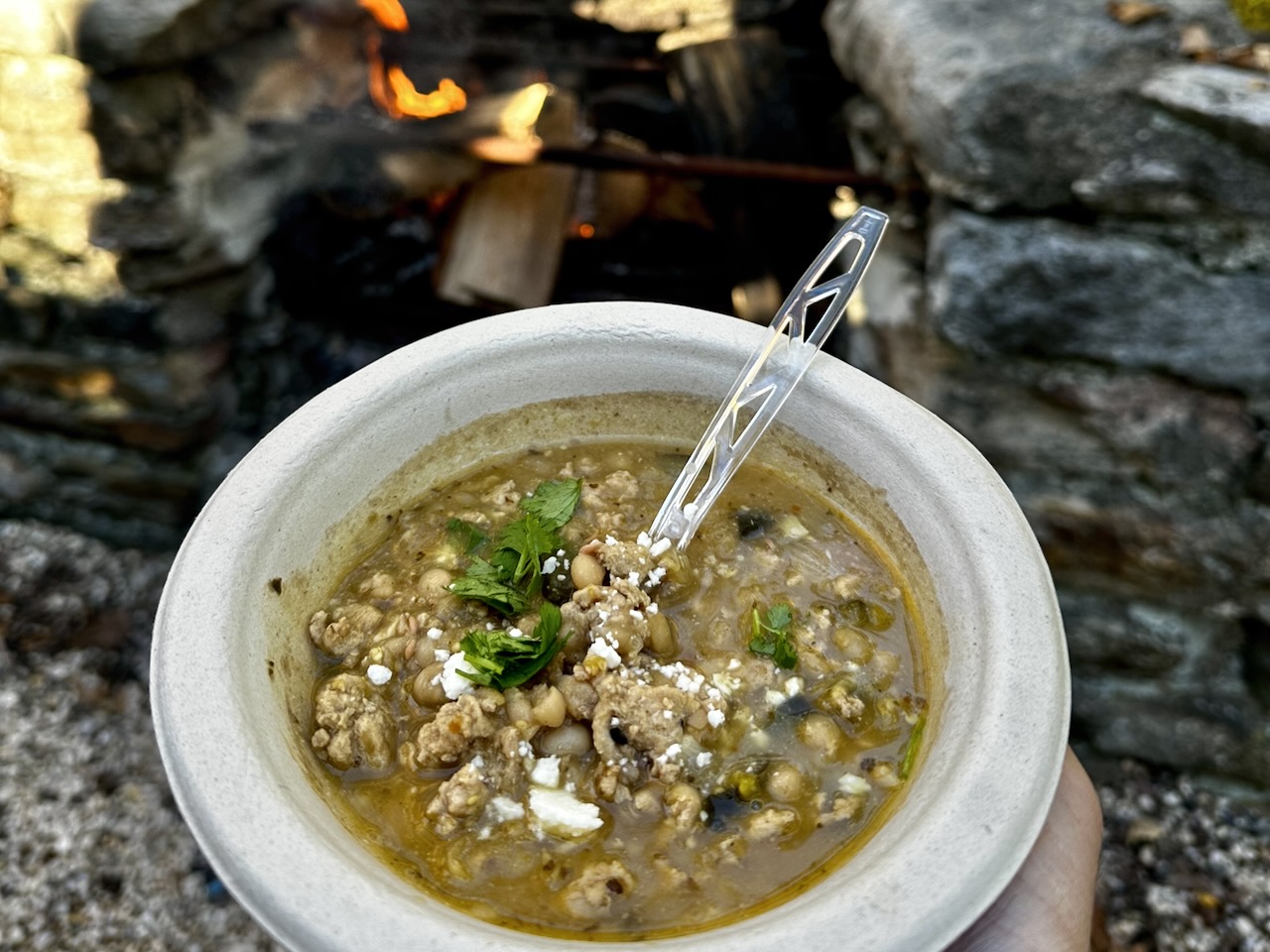
I stayed pretty true to the recipe this time, though I used ground chicken, a time saving shortcut I picked up from this NYT recipe a few years ago. Even though I used real chicken stock, I also amped up the flavor with Better Than Bouillon and some MSG. The tomatillos were from our garden, the last of this year’s crop.
It hit the spot on the chilly day and got lots of compliments. I’d definitely make it again.
Charlie is a pro at scooping out pumpkin guts.
Want a tip for easy pumpkin carving? Use a drywall jab saw.
Charlie’s pumpkin. He wanted to give it a mustache.
My ghost pumpkin.
I have a cup and a half of cooked alubia blancas in the fridge. What should I make with them?
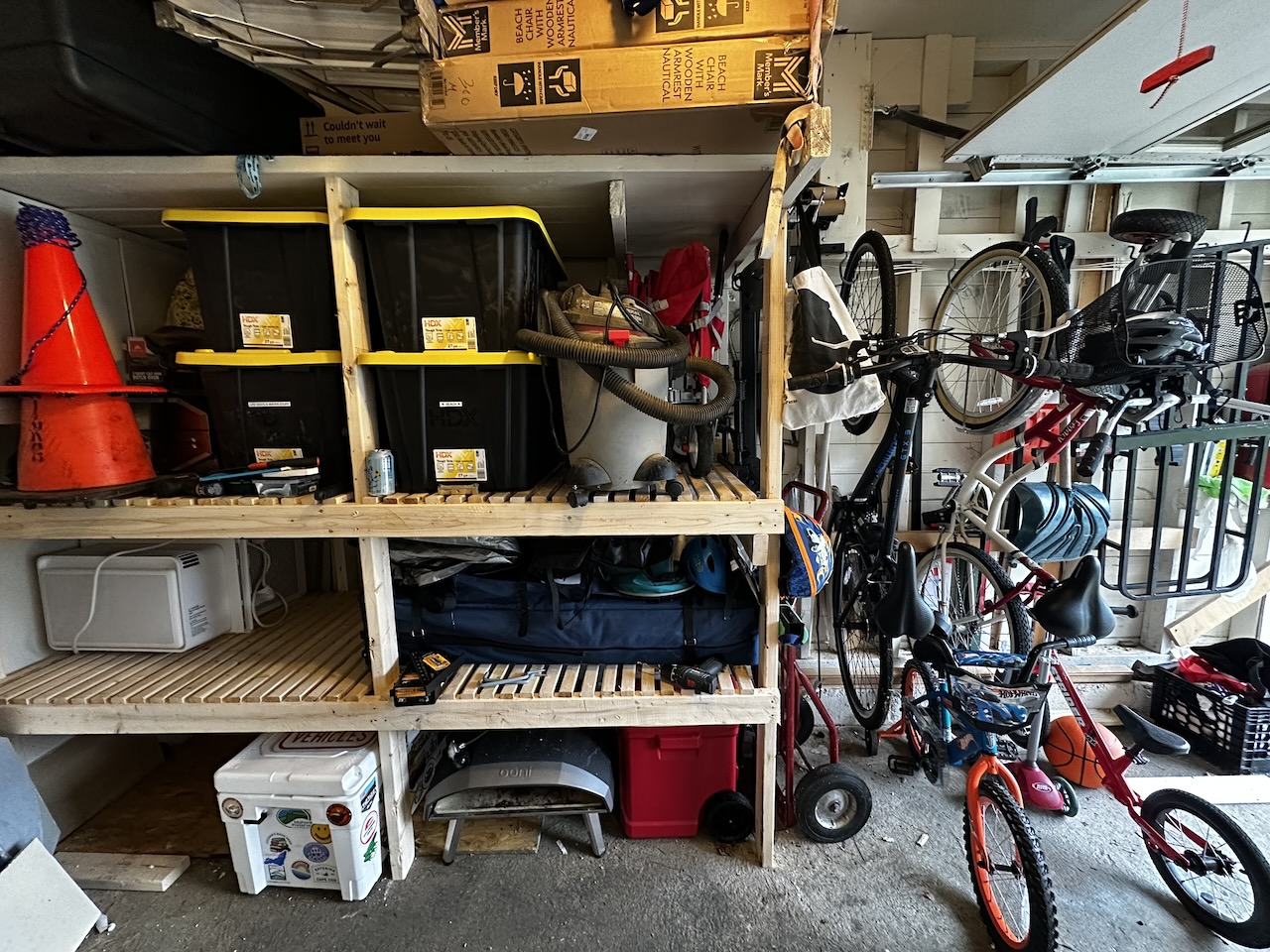
I finally admitted to myself that I’ll never get a vehicle in our one-car garage again, so I might as well build shelving to make better use of the space.
Weekends from the end of July to last week have been busy. This weekend was free, so I gave it a shot despite the rains from the nor’easter.
First I framed it out, working around the pre-existing shelf and cabinet. I originally planned on removing the cabinet, only to realize one of the previous owners had the existing shelf resting on top of the cabinet. Around it, then.
Then Charlie helped me measure, mark, and cut the slats, for which we used 1x2x8 furring strips cut into 32″ pieces. The idea to use slats instead of plywood came from Derek Hanson, who blogged about making some basement storage during his sabbatical. He wanted something that looks nicer than plywood, and I agree that the slats look great.
Charlie also enjoyed learning how to use the air stapler and how to use a spare board as a spacer. We used 1/4″ x 1 1/2″ staples.
Almost finished.
Finished and starting to load it up.
All loaded up with room to spare!
As you can see off to the right, I also put up hooks to hang bikes and various trailer hitch accessories (bike rack, storage rack, boat swivel.)
More organizing and cleaning to do, but off to a good start.
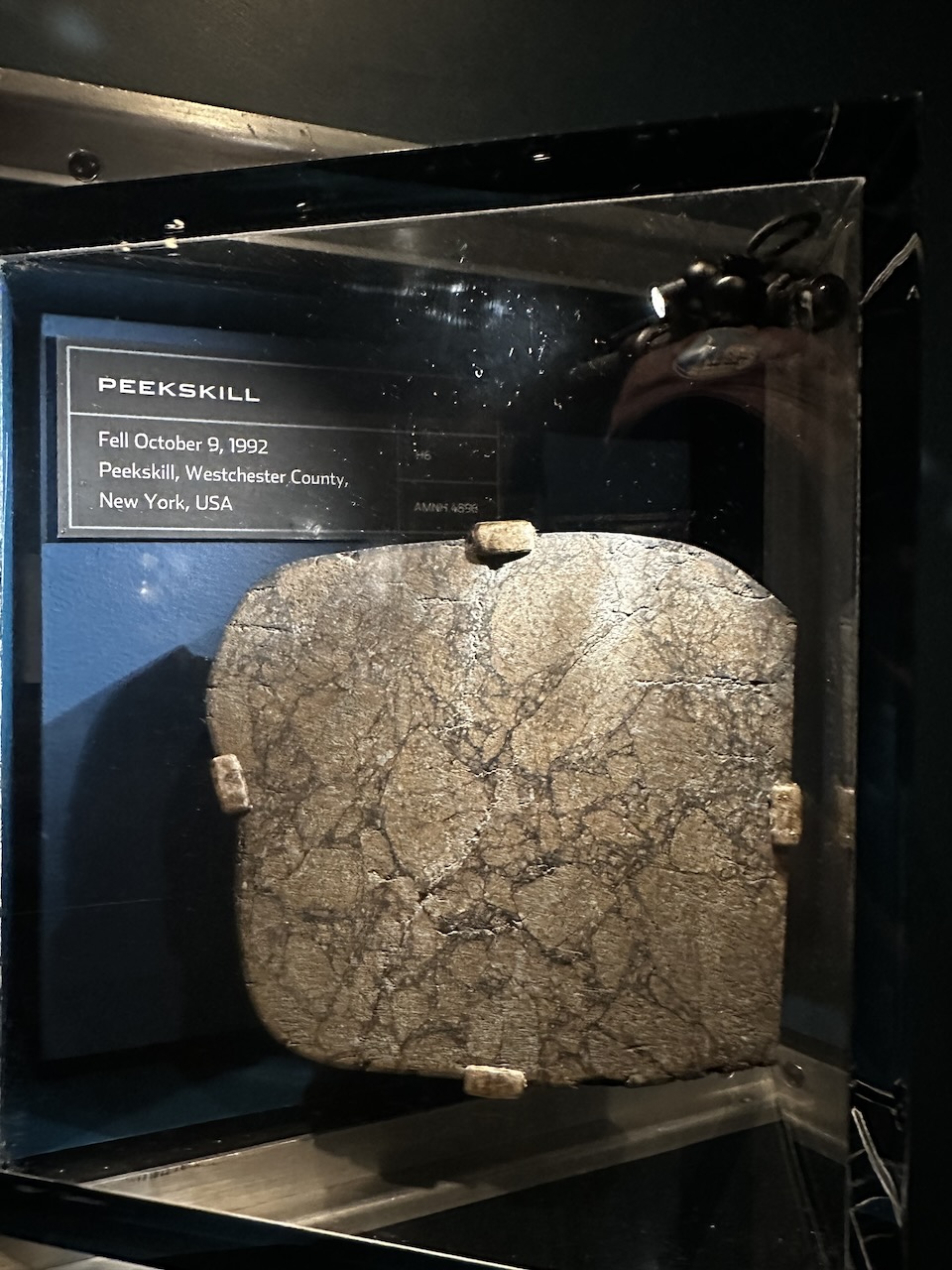
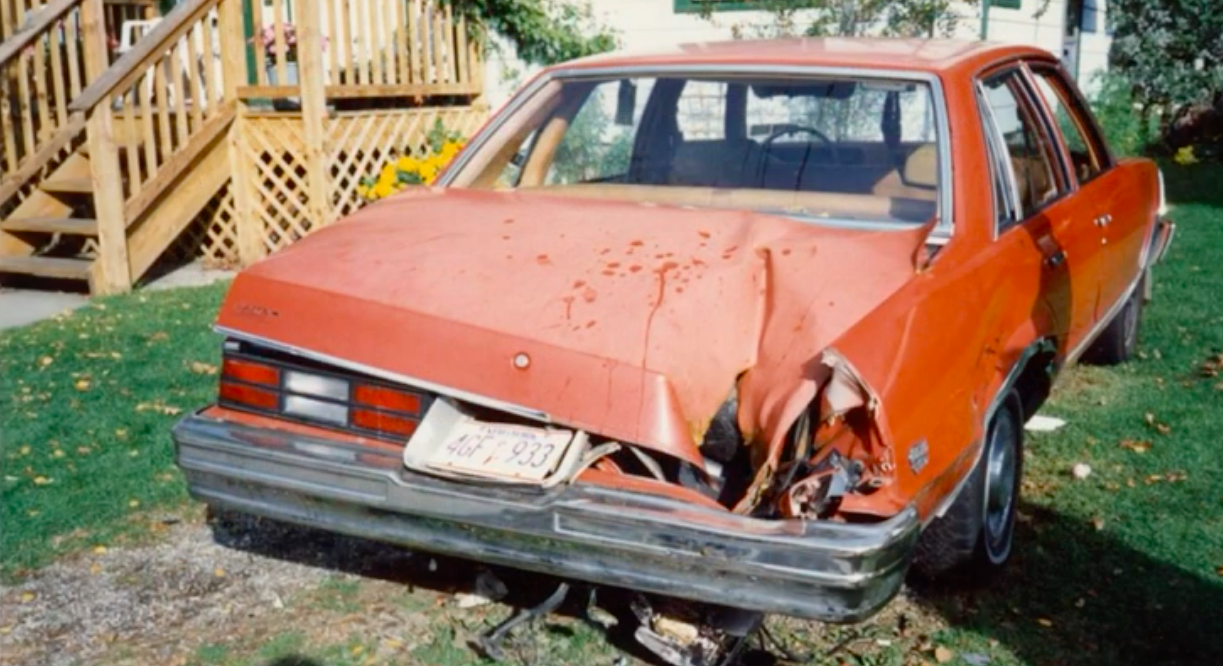
I love local interest at museums. Today Charlie and I found the Peekskill Meteorite at the American Museum of Natural History. It hit a car just a few blocks down the hill from where we live.
Charlie and I visited the American Museum of Natural History today and went to a counter to change a dollar into some quarters for the smashed penny machine.
The clerk asked, “Oh, do you want some blank pennies?”
I didn’t know want to say and must have looked confused because he added, “Because they are phasing out pennies, we keep these on hand for the souvenir machines.” I had a penny in my wallet, but I thanked him and took the blanks because I had never seen them before.
Neat!
It looks like you can buy a box of them online, though at $75 for 1000, they are a steep markup from regular ol’ pennies.
They seemed to work just fine in the machine, though they seem to match the modern post-1982 zinc-core penny, not the pre-1982 mostly copper penny.
Souvenir/smashed penny machines are already much harder to find than when I was a kid. My Dad had a collection, which I added to significantly, and now I’ve passed the collection and hobby on to Charlie. We still find them occasionally, though now I wonder how much longer they will last. Will anyone make new machines going forward, or will we be left searching out old ones in dusty tourist traps?
Will Charlie remember real pennies, or will the word become synonymous with a blank copper-colored circle used for novelty?
Living next to Blue Mountain Reservation, we regularly walk by and play in Dickey Brook. Beyond the crayfish and dace we see, I’ve been curious what else lives in there. The Big Apple Brook Trout project uses environmental DNA testing kits from Jonah Ventures, so I decided to buy my own kit and test out Dickey Brook.
Dickey Brook contains some deep pools, has lots of cover, and stays decently cool year-round. I was hopeful there might be some brook trout hiding below some of the deadfalls.
Charlie and I took a sample in late April. He loves trying to catch things with my net, so he worked on that while I pushed the water sample through the filter. In short order he caught some tiny snails, a frog, and a Blacknose Dace!
We got the results back a month later. Sadly, no trout detected from this sample, but what we got was surprising. Here is what it detected in Dickey Brook:
I was genuinely surprised by this one. I’ve never seen an eel in the brook and I didn’t realize the brook connects all the way down to the Hudson River, which is surely where the eels come in. I checked the maps, and after it goes into the ponds in Blue Mountain, there is an outflow that empties into Lents Cove, down by Charles Point / River Outpost Brewing.
I was up and out before dawn on Labor Day. The temperature on my dash read 57F. Now that water temps are back in the fishable range around here and we’ve had enough rain to keep the streams flowing, I was eager to get out.
As I pulled up to a spot I know well, there was already a vehicle in the pull-off. A tricked-out Subaru with a rod tube on top and a Patagonia Fitz Roy trout sticker, no doubt they were fishing. You know the type: Sage Euronymphing rod, C&F box full of perdigons, double chest pack, neck gaiter, Fishpond net three times the size of the largest fish in this stream. No thanks. I haven’t even finished my coffee yet. I wanted solitude. I cruised on by.
I decided to drive about ten minutes further to scout a new spot. I’ve been brainstorming new locations for DNA testing this fall, and there is one that we probably can’t do during the upcoming group training day because getting to it requires longer hike than we have time for. I thought I’d go check it out myself this morning to see if I could catch anything.
Getting to the stream took a mile hike of rocky bushwacking from the nearest road. The bugs were rough, but the flora was nice. I saw Jack-in-the-Pulpit fruiting, White turtlehead, Blue Cohosh, White Baneberry (Doll’s eyes), Jewelweed, and lots of ferns.
I almost gave up and turned back when I reached the stream and saw how choked the banks were with brambles and vines. I had to fight my way to the water’s edge, but when I did, a few shadows darting for cover caught my eye. I took a temperature reading: 61F. Promising!
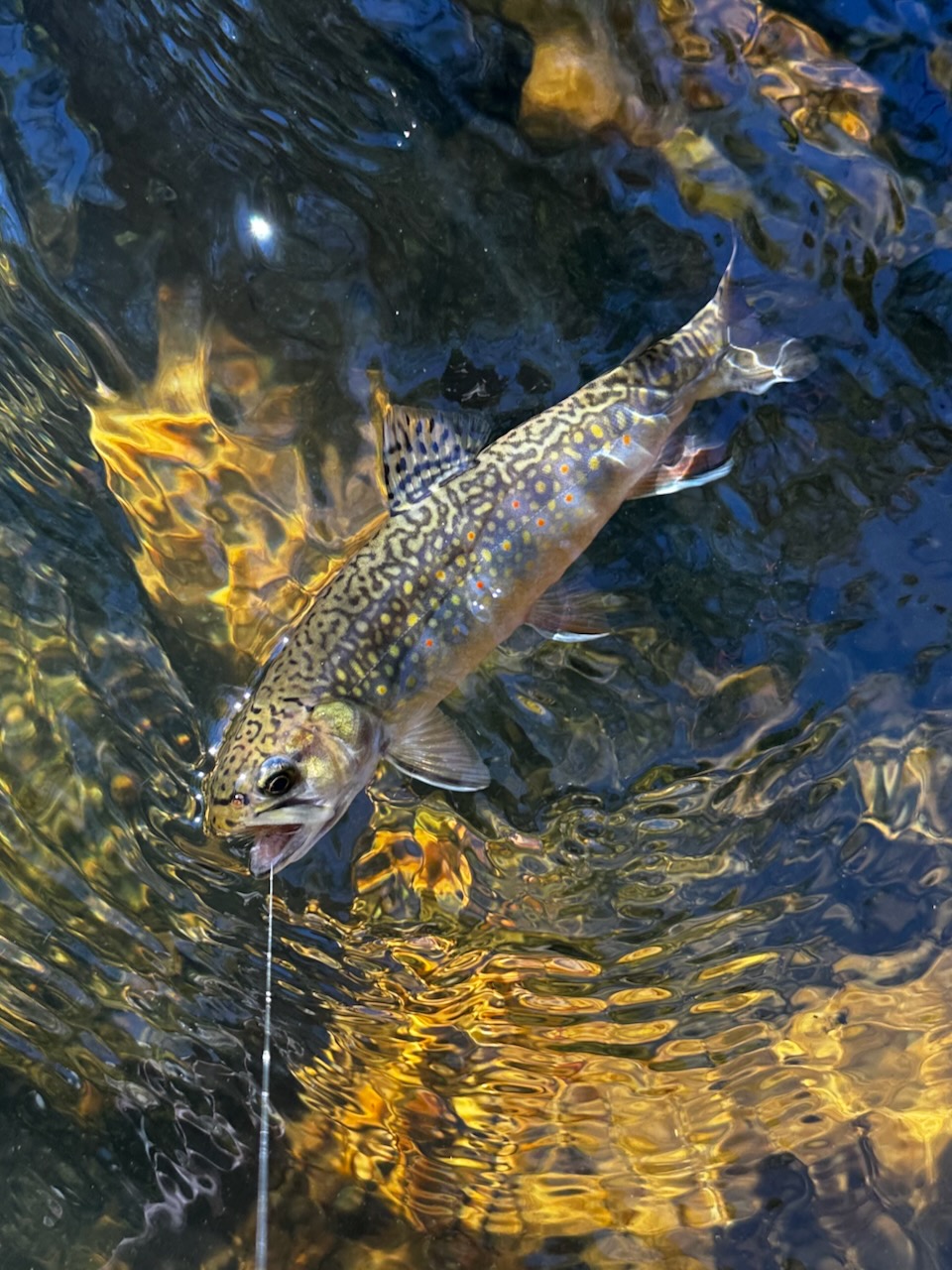
I slowly crept to another break in the brush and stood still behind the shadow of a tree and watched. Then, I saw it: A 6″ brook trout holding in a sunny spot. I could see the vermiculation, red spots, and orange belly clear as day against the sandy bottom. That revived my sweaty, mosquito-bitten spirits. Though the moment I stepped out from behind the tree and tried to get a photo, I spooked it.
My hopes renewed, I headed upstream once more. I wanted to land a brook trout here. I found another opening in the brush about 100 yards upstream with a nice plunge pool. Despite my best efforts, my casts got hung up in the branches above the pool and I had to have spooked any fish there when the branch I pulled my line from fell in to the pool.
A new approach was needed. With the tight canopy and bramble-choked banks, I wasn’t going to make any delicate casts here. The bow-and-arrow cast might work, but that doesn’t give me much distance. I turned around to survey the section behind me and saw beautiful brookie water: A deep run for a stream of this size, still in shade, with overhanging banks and some roots and treelimbs dangling into the water. What could I do?
I noticed when trying to get my line out of the brush that there was enough current to slowly pull my line downstream. I decided to take advantage of that and toss my fly and leader downstream and feed line to match the slow speed of the current. With about 15′ of line out, I thought of Leonard Wright’s Fishing the Dry Fly as a Living Insect and gave the fly a twitch. The Sudden Inch.
Splash! Fish on. After a short fight, an 8″ brook trout came to my feet, then slipped the barbless hook as I tried to get a photo.
The next 30 minutes were a blur. Every drift brought a strike. The rest of the world faded away while I focused all my attention on that little clump of deer hair slowly floating away from me, waiting for that telltale splash and sudden tightening of the line to set the hook. By the end I had brought ten fish to hand, all 5-8″ brook trout.
As the sun moved overhead and the shadows on this spot disappeared, or perhaps all the splashing from those hooked fish finally spooked the others, the action on this spot slowed down and I wandered further. I found a nice pool at a bend where I could use the same technique and caught a few more fish.
I kept my phone in my pocket most of the time, but couldn’t resist a few photos.
I could do this all day, but it was time to head back to the car. I started bushwacking my way out again.
Further downstream toward the mouth where it empties into the reservoir, the stream is wider and slower. I skipped this section earlier because it looked more like panfish water than trout water to me. Though as I walked by on my way out, I saw some rocks and a deadfall, so I decided to see if anything was holding around them. The first cast brought a splashy take of my dry fly. 10″ brook trout that also slipped the hook at my feet while I tried to get a photo. I couldn’t just stand and look at these fish, could I?
This stream is absolutely full of brook trout. It felt like fishing in the Catskills. I caught more brook trout here in two hours than I have the rest of the season east of the Hudson. The cold, clear groundwater and shaded canopy keep the water cool enough for these little char to survive while the rest of the watershed heats up, and the mile of bushwacking leaves them relatively undisturbed, except for the heron and muskrat footprints I noticed.
There’s still another mile and a half of stream to explore. I’m eager to see what the upper reaches look like. Maybe I’ll try to find a different access point from the top and hike downstream next time.
After I got home, Charlie and I played with the dog in the backyard for a couple hours while Amanda got her nails done. Then we all went to King Kone for dinner and ice cream.
Labor Day isn’t the astronomical end of the summer, that’s a couple weeks away. But with Charlie going back to school tomorrow and the cool overnight temps, this weekend was the spiritual end of summer.
What a perfect way to end it: Catching brook trout on a dry fly, playing in the yard with Charlie, and a family ice cream outing.
Second use for the pot of alubia blanca beans I made Sunday night. We have a lot of tomatillos ripening now, so I was eager to use some. I went searching and landed on this recipe:
I don’t have good photos of my own to share of this one, but it was dead simple to make and came together while the fajita steak and veggies cooked on the grill.
This was a tasty one and I’d definitely make it again. Great side dish for at home Mexican food.
Mosquitos seem worse this year. Everyone in our house is getting bitten like crazy, and the wet spring and summer mean that the swampy areas around us haven’t dried out at all, extending their use as mosquito breeding grounds.
Two things are helping us get through it:
OFF! Fragrance Free Clean Feel
It works, has no smell, and dries quickly. No greasy feel. Repels ticks and mosquitos. Forget those patches that do nothing but make you smell like citronella and end up stuck to the inside of your dryer because you forgot to peel them off.
Benadryl Itch Relief Gel
This stuff works better for me than the various itch relief sticks and hydrocortisone creams we’ve tried.
Shoe dryer
We stayed at an AirB&B in the Catskills that had a boot dryer back in February, and decided we must have one. Essential gear for people who spend lots of time outdoors.
We use ours all the time. No more worrying if Charlie’s wet shoes will air dry overnight. We toss them on here, turn it on, and they are dry in a few hours. Useful for my wading boots, too.
I don’t have strong opinions on brands for these, since I’ve only ever used two. Having any shoe dryer is better than not having one.
Trying out a different approach to working beans into our meals during the week: Sunday afternoon I cooked a pound of alubia blanca beans on the stove and stuck them in the fridge so I can quickly use them in side dishes throughout the week.
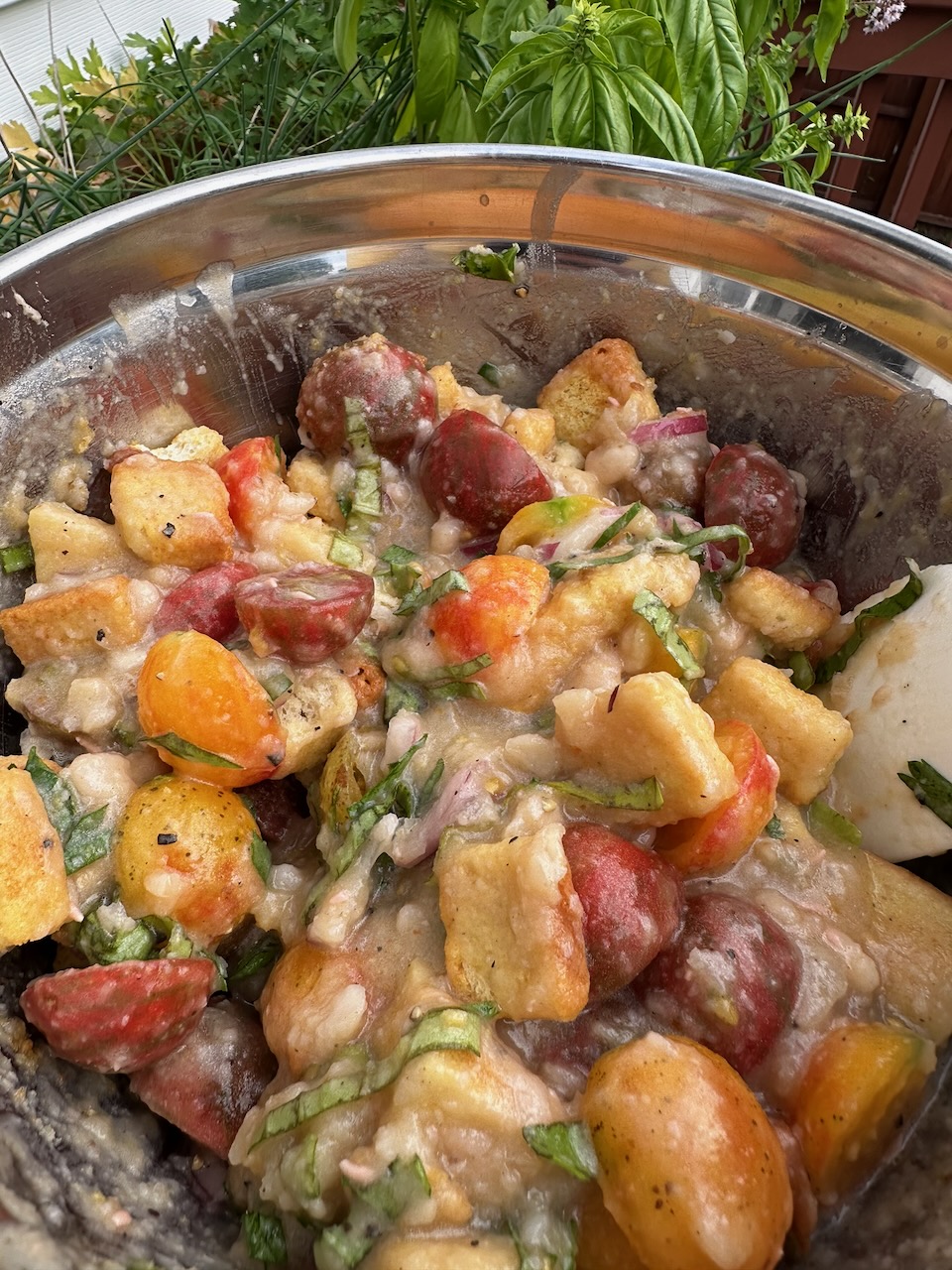
First up: White bean and tomato panzanella from The Bean Book. I can’t find this one online anywhere and I don’t feel right sharing the recipe here, so you’ll need to buy a copy of The Bean Book or check it out from your local library. You won’t regret it. Great book.
I used fresh tomatoes (bumble bee cherry tomatoes), basil, and parsley from our garden. Always lovely to use our own produce.
The dish:
It might have looked a bit more photogenic if I had drained the bean broth from the beans before I put them in the fridge, but I didn’t. Next time I will.
To give you a sense of what it tasted like, it had red onion, garlic, olive oil, red wine vinegar, salt, black pepper, croutons, white beans, tomatoes, basil, and parsley. It was acidic and herbaceous, and it was equal parts creamy and crunchy. It is served cold.
It was a cinch to make since the beans were already cooked. It came together while some sausage was cooking on the grill. I’ll definitely make this again, especially if I have a quarter loaf of dried out bread to use up.
I have two more dishes in mind for the rest of this pound of beans, both with tomatillos. One served warm, the other served cold. Stay tuned.
I had a couple hours of unexpected free time early this afternoon and made it over to my favorite local wild trout stream.
Even in the hottest part of the summer this small, shaded tailwater runs cold. While the other tailwaters here have warm water spilling over the dam after thunderstorms, this one never seems to spill. The releases and flows are remarkably consistent.
I rarely see anyone else on this stream, even when you’d be rubbing elbows with a dozen people on the other streams in the area.
Why do I so often get this stream to myself, even though it is clearly marked in the local fishing guides?
First, the trout here are small, wild fish. You’ll rarely catch anything larger than 8 inches, and when you do, it probably came up from the reservoir to spawn rather then being a permanent resident. I’ve read some old local guidebooks and it was apparently this way in the 70s and 80s, too.
Second, most of the stream is pocket water. There are four big pools on the steam, but most of it looks like this:
The great thing about this pocket water is that there is a small fish behind every rock. But they spook easily, and if you miss a take you probably won’t get a second one from the same fish. That’s okay, there’s plenty more here.
It has always been difficult for me to understand why so many trout fishermen spend most of their fishing time in pools or fairly smooth water and so little time working pocket water. Possibly-more likely, probably-they do not realize they are missing a good bet and some mighty interesting fishing.
A euro-nympher I ran into as I was arriving one day and he was leaving said, “I only come here when I can’t fish anywhere else because I kind of get tired of catching these small fish.”
Well, I don’t. I exclusively fish dry flies on this stream and love picking apart these pockets. It is hard to beat the thrill of reading the water, selecting a spot where you think a fish might be, carefully casting a dry fly, and being rewarded with a splashy take.
This one fell for a size 16 beetle. Terrestrials are often a good bet on this stream in mid-to-late summer.
Maybe one in every four times I fish this stream I might run into a kindred spirit who likes fishing pocket water for these small, wild fish, but even then it is never a concern. This stream runs two miles through the woods, without a road in sight.
Sweet solitude. Unheard of on a weekend on the other streams in this watershed.
This place has a lot to offer besides the fish, too. Life is abundant here. Frogs and toads, deer, mallards, herons, crayfish, coyote, owls, and macroinvertebrates. Trout lilies, ramps, and trilliums in the spring. Moss, ferns, fungi, and wildflowers in the summer.
Here’s a few that caught my eye today:
Today I found myself hoofing it back to the car as a thunderstorm rolled in. Despite the hurried dash, I made it back to the car feeling more calm and refreshed for having wiled away three hours rock hopping and casting dry flies to wild brown trout in cold pocket water.
I’ll take the solitude and small fish here to jockeying for a spot any day.
Ghost Pipes popped up after the recent rains. This is my first time seeing one being pollinated!
Since they are white and pop up after rain, I assumed they were a fungus, but apparently they are a plant!
It is striking in appearance because it is completely white in appearance, although individuals can have pink coloration and black specks. How does this plant survive without the green pigment chlorophyll? Chlorophyll is responsible for harnessing the sun’s energy to produce carbohydrates, a process known as photosynthesis. Ghost pipe saps nutrients and carbohydrates from tree roots through an intermediate source, myccorhizal fungi in the genera Russula and Lactarius.