Today during our Trout in the Classroom macroinvertebrate sampling we had something very cool happen: Dozens of tiny BWOs (blue-winged olives) emerged right in our sample bins! Afterward we could see the shucks in the bin. It was great to be able to show the students this happening in realtime.
Also, here is a nice example of a stick caddis we found today:
I went out on Monday to help with the macroinvertebrate sampling, student macro identification, and the releases. It was spring break for Charlie and my parents were in town, so the three of them came along for the day.
The macroinvertebrate sampling was excellent, as it always is on the Cross River.
In about 10 minutes, Ihor, George, and I collected:
2 species of Stoneflies
2 species of Mayflies
2 species of Caddis (rock cased caddis and free floating green caddis)
Crawfish
Blood midges
Water pennies
Hellgrammites/Dobson fly larvae
Crane fly larvae
Horsehair worms
Scuds
Eggs (probably fallfish)
By the time the students arrived and we were helping them identify the macros, little black stoneflies were hatching and landing on them. Some loved it and some hated it, but it was great to be able to show them both the nymph and adult stage of the stoneflies.
Charlie walked around with my Bug Book and showed the students pictures of adult stoneflies and mayflies.
“This is a stonefly. It means the water is really clean!”
Charlie, 4 years old
He is exactly right, stoneflies are an indicator species and are only found in clean water.
As much as the students are fascinated with seeing the bugs from the stream that the trout eat, the main event is definitely releasing the baby trout they hatched in their classrooms and cared for.
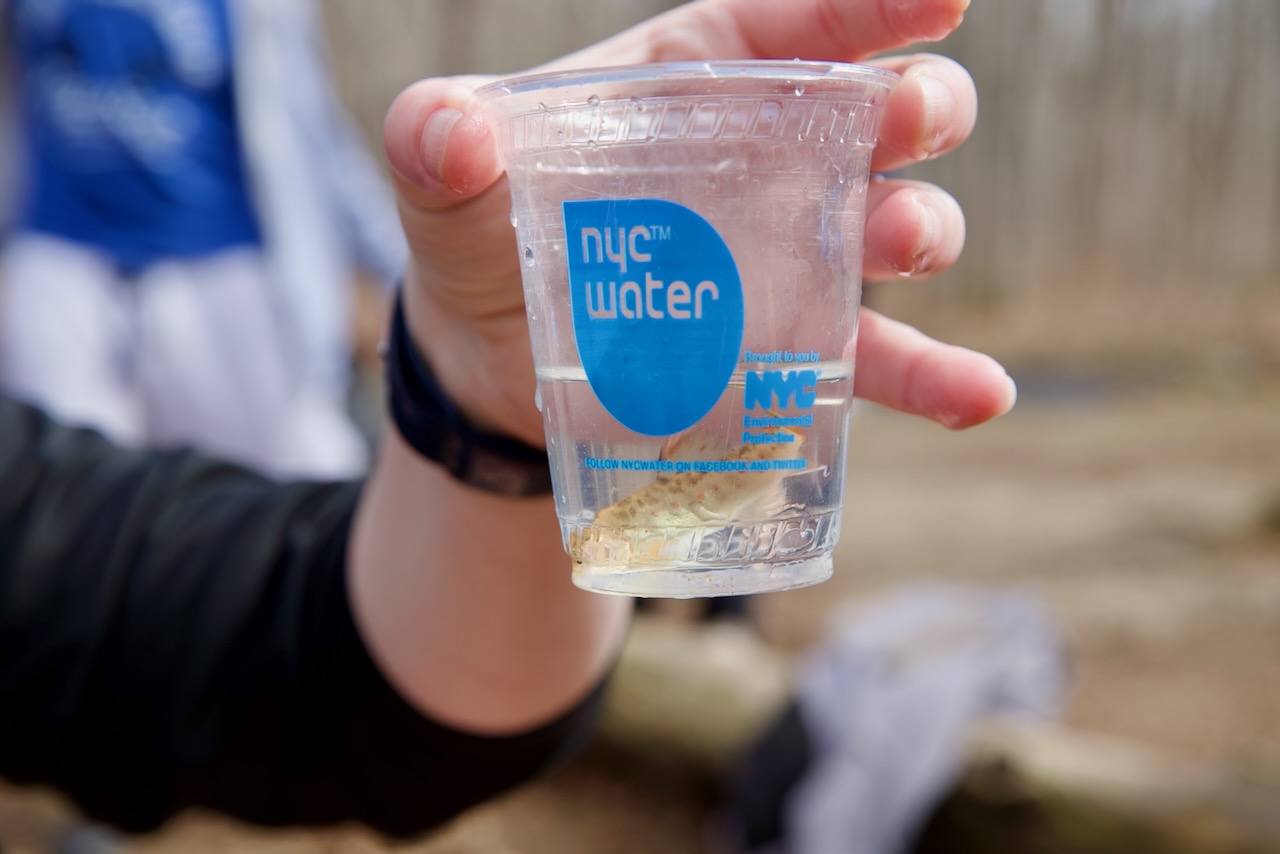
Mackenna from the NYC DEP walked them through equalizing the bucket temperature with the stream and handed out baby trout to the eager students, who said goodbye and wished the baby fish well.
After the students all got to release trout, they were nice enough to let Charlie release one, too. He was thrilled.
It was a great day. I signed up to help with another one next month.
If you are a teacher and are interested in raising trout in your classroom, or a TU member interested in helping with a TIC release, reach out!
In the fall, the New York State Department of Conservation sends trout eggs to schools. The students watch them hatch, learn about them, and care for them until spring, when they take a field trip to release the fingerlings into the wild.
Last Thursday they released brown trout. Today (and the photo above) they released brook trout.
During the field trip, the students also learn about the local watershed, test the water quality, and do some macroinvertebrate (bugs!) identification.
That is where our TU chapter comes in. Before the students arrive, we put on our waders and go out into the river with a kick net and collect samples of bugs in the stream, and set up identification stations for the students to check out. Then we give a short introduction and float from group to group to answer questions and help them identify the bugs.
It was a lot of fun. Cross River is an incredible stream, running through a protected area (Ward Pound Ridge Reservation), and the water quality is excellent. It only took us 10 minutes each day to collect more than the amount of macroinvertebrates we needed for the stations.
We found:
Stoneflies
Rock caddis
Stick caddis
Free living caddis (green)
Net spinning caddis
Scuds
Cranefly larvae
Crayfish (lots!)
Mayflies (multiple species)
Hellgrammites (Dobsonfly larvae)
Water Pennies
Nematodes
We even had an adult early stonefly land on the table so we could point out an adult stage of one of the nymphs.
A mixed sample containerUpper left: Stick cased caddis. Two mayflies, a stonefly, and a hellgrammite. Nematode, Crane fly larvae, hellgrammite, rock cased caddis, and lots of tiny mayfliesStonefly, Mayfly, nemotode, rock cased caddis, and net spinning caddis.Crane fly larvaeWater Penny
Some different kinds of caddisflies:
Net spinning caddisRock cased caddisStick cased caddis and a rock cased caddis togetherCased caddis outside of its caseCrawfish and some mayflies
I liked the charts we used for identification, so I found the PDFs online when I got home. I printed and laminated copies for myself to keep in my fishing bag!
I was taken aback at how big the stoneflies were. At least size 8 hooks. The hellgrammites and craneflies were huge, too. I need to tie some bigger flies.
I’ll no longer give the side eye to folks who tie mop flies, because I’ll be damned if they don’t look just like the crane fly larvae. The killer bugs look just like them, too.
Afterward everything goes right back to the river.
Of course, after the students leave we have a bit of free time to head upstream and fish for a bit! Last week I caught an early black stonefly hatch on the stream. All around great day!